
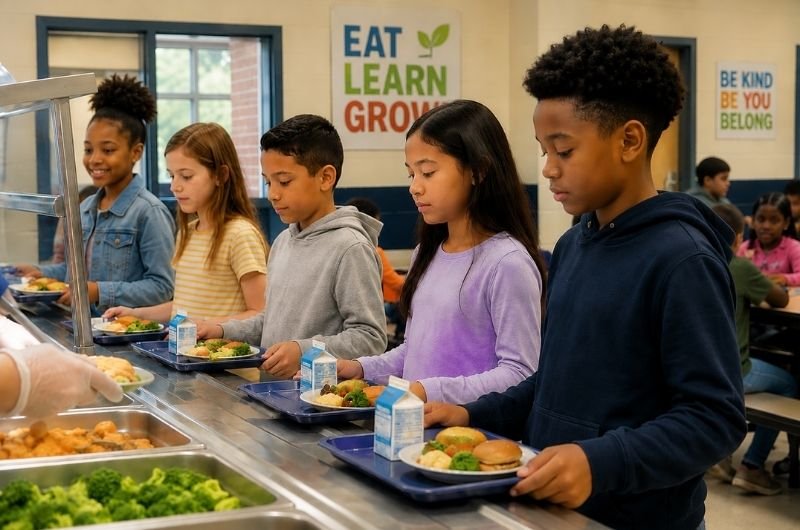
Changes to federal food-assistance rules are beginning to create a potential financial burden for families: some children who lose Supplemental Nutrition Assistance Program (SNAP) benefits could also lose automatic eligibility for free meals at school.
Children in households receiving Supplemental Nutrition Assistance Program benefits generally qualify automatically for free school breakfast and lunch, without their parents having to submit a separate meal application.. That connection means losing SNAP can also end one of the easiest pathways to receiving free school meals, even though some children may still qualify based on household income or another eligibility category.
The impact may extend beyond individual families. SNAP participation is also used in determining eligibility and federal reimbursement under the Community Eligibility Provision, which allows qualifying schools and districts in high-poverty areas to provide free breakfast and lunch to all enrolled students without collecting individual applications. Fewer students directly certified through SNAP can reduce a school’s qualifying percentage and potentially affect its ability to participate in the program.
The changes stem from provisions in the 2025 federal tax-and-spending law that tightened SNAP eligibility, including expanded work requirements and changes affecting some noncitizens. An estimate cited by CBS News from the nonpartisan Center on Budget and Policy Priorities says roughly 4.5 million people have lost SNAP benefits since the law was enacted, including about 1.5 million children.
The Readovia Lens
For families, losing SNAP may now have consequences beyond the grocery budget. Parents whose children are no longer automatically certified should not assume that free school meals are necessarily gone, however: children may still qualify under separate income guidelines or another eligibility category. The important step is checking with the child’s school or district rather than allowing an automatic SNAP-based certification to lapse without determining whether another route to free or reduced-price meals remains available.