

A man who confronted Michigan Democratic Senate candidate Abdul El-Sayed during a campaign event has been identified as the son of a Republican political strategist whose firm received $250,000 for efforts opposing El-Sayed, according to newly reported federal campaign-finance records.
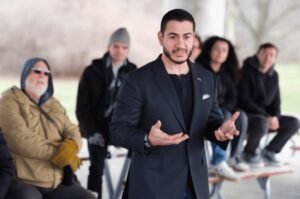
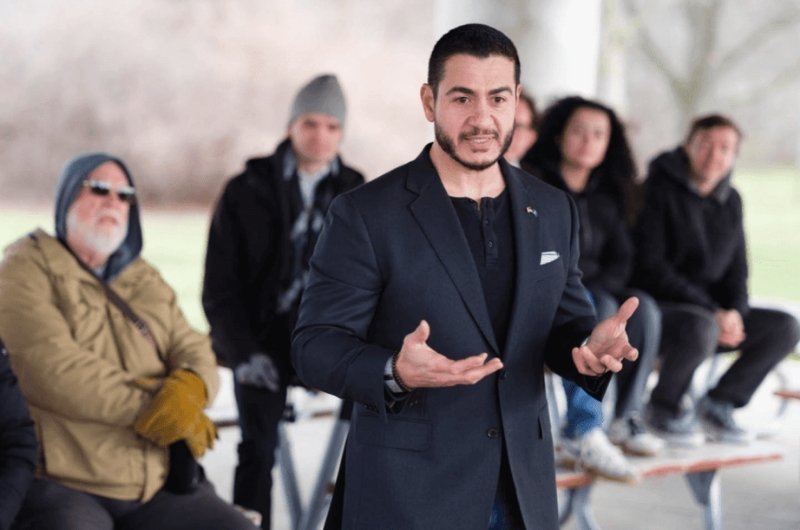
Thomas “Tommy” Teepell interrupted El-Sayed at a Saturday town hall, demanding that the Muslim candidate disavow the Muslim Brotherhood. El-Sayed immediately rejected the organization before challenging Teepell over what he described as an assumption that his religious faith could compromise his loyalty to the United States. Video of the exchange subsequently spread widely across social media.
Teepell previously worked for Republican Senator Josh Hawley of Missouri and is the son of Timothy “Timmy” Teepell, a longtime Republican strategist. According to a Federal Election Commission filing examined by The Guardian, the elder Teepell’s firm, Breakthrough LLC, received $250,000 on September 29 from America Next, a nonprofit organization founded by former Louisiana Governor Bobby Jindal. The expenditure was designated for canvassing and influencer marketing opposing El-Sayed.
The confrontation has also drawn attention to reports of efforts to recruit protesters for El-Sayed campaign events. Earlier this month, a University of Michigan College Republicans member reportedly offered students $200 to boo and question the candidate at a Flint town hall while claiming to represent America Next. However, the documented payment to Breakthrough does not establish that Thomas Teepell personally received money to confront El-Sayed, and no evidence has emerged connecting Republican Senate opponent Mike Rogers’ campaign to the disruption.
The controversy comes during Michigan’s closely watched U.S. Senate race, where El-Sayed’s Muslim faith has become a recurring subject of political attacks. During the exchange, El-Sayed invoked the Constitution’s protections for religious freedom and compared the questioning of his faith to the scrutiny John F. Kennedy faced as a Catholic presidential candidate. The newly disclosed financial connection adds another dimension to the confrontation as Michigan voters prepare for the November election.