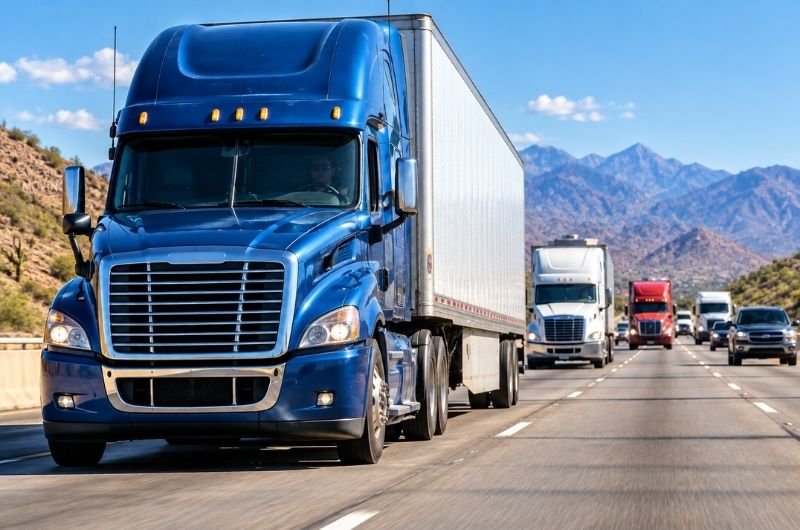
Truck drivers across the United States are feeling an increasingly severe financial squeeze as diesel prices reach record territory, prompting some owner-operators to cut back on loads while social-media calls for a nationwide trucking shutdown begin circulating.
The national average price for diesel reached approximately $6.31 a gallon on September 16, according to GasBuddy data, the highest average on record. That’s up from about $3.70 a gallon a year ago. GasBuddy petroleum analyst Patrick De Haan warned that diesel could climb to roughly $6.65 a gallon by the end of the weekend if the latest surge continues.
The impact is especially difficult for owner-operators, who generally pay their own fuel expenses. Yahathan, a truck driver with 28 years of experience, told WALB in Albany, Georgia, that he is now spending more than $2,000 a week on fuel. He said the rising cost has forced him to limit some of the loads he accepts because longer trips can become too expensive to operate profitably.
The financial pressure is also fueling calls on social media for truckers to temporarily park their rigs. Posts circulating online have proposed a nationwide shutdown around September 30 and October 1, but Readovia has found no announcement from a national trucking association, major union or identified organizer formally calling for a nationwide strike. It is therefore unclear how many drivers, if any, intend to participate.
The stakes extend well beyond the trucking industry. Diesel powers much of the nation’s freight, agriculture and commercial transportation network, meaning sustained increases can raise the cost of moving food and other products around the country. The U.S. Energy Information Administration reported an average on-highway diesel price of $6.285 a gallon on September 14, while California’s average had already surpassed $8.
The Readovia Lens
The truck driver shutdown talk may or may not develop into an organized national action, but the pressure behind it is already measurable. When independent truckers begin rejecting loads because the fuel required to deliver them costs too much, record diesel prices stop being simply a problem at the pump. They become a potential supply-chain and consumer-price problem that could reach households far beyond the trucking industry.