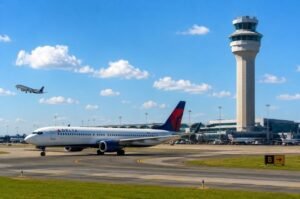


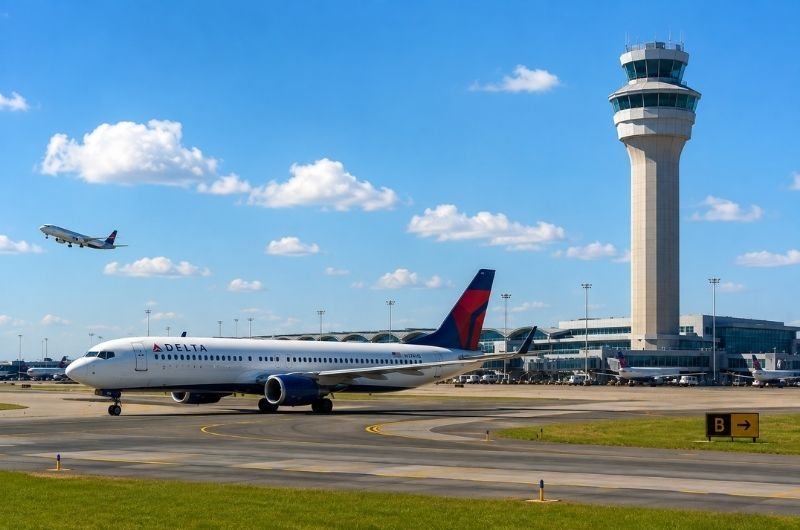
The Federal Aviation Administration has reached a major milestone in its effort to improve safety on airport runways and taxiways, with new surveillance technology now operating at 100 air traffic control towers across the United States.
The Surface Awareness Initiative, or SAI, gives air traffic controllers a real-time view of aircraft and equipped vehicles moving around an airport. The technology can continue tracking that traffic during poor weather and in areas that may not be visible from the control tower, giving controllers additional information to help prevent dangerous conflicts on the ground.
The FAA is targeting 220 airports that previously lacked surface-surveillance capabilities for the technology. The agency began installing SAI systems in 2024 and says another 44 airports are scheduled to receive them by the end of 2026. Recent installations include Ann Arbor Municipal Airport in Michigan, Billings-Logan International Airport in Montana, Gulfport-Biloxi International Airport in Mississippi, Greenville-Spartanburg International Airport in South Carolina and Corpus Christi International Airport in Texas.
SAI relies on Automatic Dependent Surveillance-Broadcast, or ADS-B, data transmitted by aircraft and properly equipped vehicles. That information is displayed for controllers on a map of the airport surface, allowing them to see activity on runways, taxiways and other movement areas. The FAA says the technology is intended to improve situational awareness and reduce runway incursions — incidents involving an aircraft, vehicle or person where they should not be on a protected airport surface.
The Readovia Lens
For travelers, the milestone represents another layer of protection being added where some of aviation’s most dangerous situations can develop: on the ground, when aircraft and airport vehicles are operating in close proximity. Reaching 100 towers means the FAA is approaching the halfway point of a 220-airport deployment designed to give controllers a clearer picture of what’s happening across the airport surface, including when weather or distance makes that activity difficult to see.