
The U.S. Supreme Court has blocked the Trump administration from enforcing new Postal Service requirements for mail ballots during the 2026 midterm elections, leaving existing state voting procedures in place just weeks before Election Day.
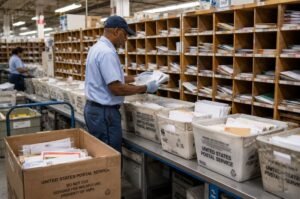
The justices on Monday denied the administration’s request to lift a lower-court injunction against the new rules. The Postal Service would have required federal ballot mail to use specially designed envelopes capable of high-speed scanning, carry specialized barcodes unique to individual voters and meet additional federal standards before being accepted for delivery.
States also would have been required to upload basic voter information to a new Postal Service portal. Ballot mail that failed to comply with the requirements could have been rejected and returned to election officials for correction, a prospect states challenging the rules said could disrupt voting as ballots are already being distributed for the November 3 election.
The Supreme Court said the government was unlikely to succeed in its challenge to the lower-court injunction and that the circumstances did not support allowing the rules to take effect now. Justice Brett Kavanaugh agreed with blocking the rules for this election, writing separately that although the Postal Service may ultimately have authority to impose such requirements, state and local election officials do not have enough time to reasonably implement them before the midterms. Justices Samuel Alito and Clarence Thomas dissented.
The dispute grew out of a March executive directive from President Trump calling for changes to the handling of election mail. The Postal Service finalized its new rule in August, but a federal judge subsequently prevented it from taking effect while challenges brought by a group of states and other plaintiffs proceed.
The Readovia Lens
For voters, the immediate result is straightforward: the Supreme Court’s action prevents a major change in mail-ballot procedures in the final weeks before the midterm elections. States can continue using their existing mail-voting systems for the November election while the broader legal fight over federal authority and election mail continues.