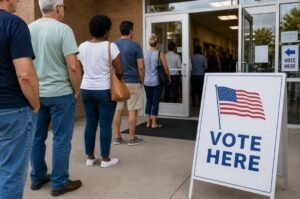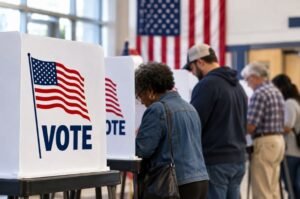

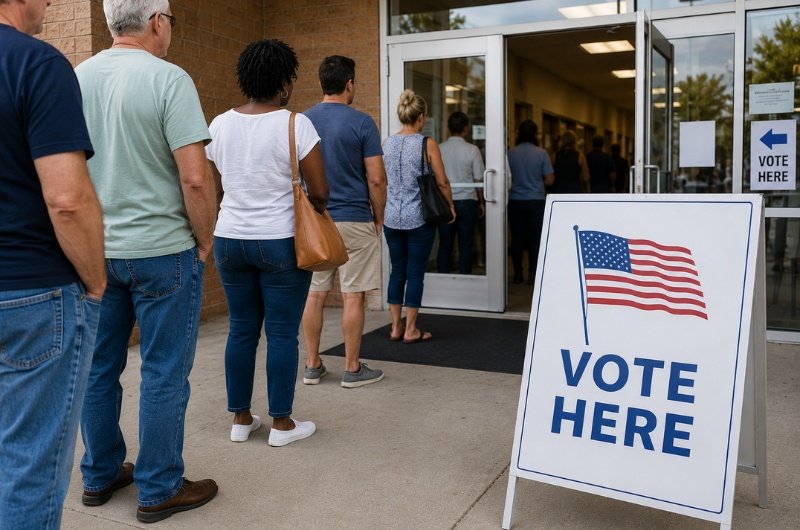
Americans are heading to the polls on Tuesday, November 3, in a closely watched midterm election that will determine which party controls Congress during the final two years of President Donald Trump’s presidency. With Republicans defending narrow majorities in both chambers, the results could significantly change the balance of power in Washington.
All 435 seats in the U.S. House of Representatives and 35 Senate seats are on the ballot, along with gubernatorial elections in 36 states. Democrats are seeking to regain control of Congress, while Republicans are fighting to preserve their majorities and maintain support for the president’s legislative agenda. More than 57 million Americans had already cast ballots before Election Day, according to figures reported by CBS News.
The economy, affordability, immigration, and the direction of federal policy have been central issues throughout the election season. Voters are weighing their concerns about household expenses and national priorities as candidates make their final appeals. Several competitive races in states including Pennsylvania, Maine, North Carolina, Georgia, and Michigan could play important roles in determining the outcome.
A Democratic victory in either chamber would create new obstacles for the Trump administration, potentially leading to increased congressional oversight, investigations, and more difficult negotiations over federal spending and legislation. If Republicans retain control of both chambers, the president would have a stronger opportunity to advance his remaining legislative priorities.
Polls will close at different times across the country Tuesday evening, but the final balance of power may not be immediately clear. Close contests, mail-in ballots, and state-specific counting procedures could delay some results for several days. With control of Congress at stake, the outcome will help define the political direction of the country through the 2028 presidential election.