

Disney is accelerating the development of its theme parks and entertainment experiences with artificial intelligence (AI) technology that can transform hand-drawn ideas into detailed visual concepts in a fraction of the time traditionally required. A newly expanded partnership with Adobe could bring those same capabilities to Disney’s film studios and ESPN, extending the technology across some of the company’s biggest businesses.
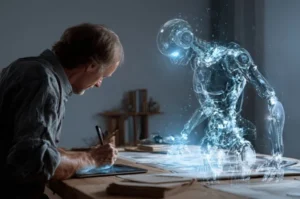
Disney’s Imagineers are already using custom artificial intelligence models to turn hand-drawn sketches into finished concept artwork. The November 9 agreement expands that work into Disney’s film studios and ESPN, including applications for visual effects, post-production and sports content. Through Adobe Firefly Foundry, the companies are developing proprietary AI models trained on Disney’s characters, environments and distinctive visual styles.
The technology goes considerably further than producing digital illustrations. Imagineers can explore multiple designs for an attraction, refine its appearance and develop three-dimensional prototypes before construction begins. Kyle Laughlin, senior vice president of research and development technology and engineering at Walt Disney Imagineering, told Reuters that creative work previously requiring months can now be completed in hours or days. Faster experimentation could also help Disney identify design problems before they become expensive construction changes.
The partnership reaches beyond theme parks. At Walt Disney Studios’ StudioLAB innovation center, Adobe and Disney will explore AI tools for creative production, including visual effects and post-production workflows. ESPN’s Edge Innovation Center will investigate ways to use the technology to enhance sports storytelling, improve audience engagement and make greater use of its extensive archive of sports footage. The companies have not announced specific films or television productions that will use the new models.
An important distinction is that Disney’s AI systems are being customized around its own intellectual property rather than relying exclusively on general-purpose models. That approach gives Disney greater control over how familiar characters and environments are represented while addressing concerns about consistency, licensing and creative ownership. Adobe describes the technology as artist-led, with human creators remaining responsible for the creative direction.
The Readovia Lens
For Disney, the potential advantage extends well beyond completing artwork faster. A company that spends years developing attractions, films and immersive experiences could use AI to test more ideas, identify costly problems earlier and move promising concepts toward production more efficiently. Disney executives maintain that the tools are intended to support Imagineers rather than replace them. The larger question for the creative industry is how companies will balance those productivity gains with the expertise and artistic judgment that make their work distinctive.