Artificial intelligence is moving from a workplace experiment to a force that is actively reshaping who companies hire, which jobs they eliminate, and the skills workers increasingly need to stay competitive.
Across the technology industry and beyond, companies are investing heavily in AI while simultaneously rethinking staffing. Microsoft has cut thousands of positions this year while acknowledging that AI is changing how work gets done. General Motors eliminated hundreds of IT jobs in May as it shifted hiring toward workers with skills in AI development, data engineering, cloud systems, analytics, and new AI workflows.
The pressure is especially visible at the entry level. A 2026 survey of nearly 1,000 U.S. business leaders found that 21% of companies had already frozen entry-level hiring because of AI, while more expected to reduce junior hiring as the technology becomes capable of handling routine research, coding assistance, customer support, scheduling, and administrative work.
But the shift does not mean technology jobs are disappearing across the board. Employer demand remains strong for people who can build, operate, secure, and improve AI systems. Hiring data released this summer showed growing demand for AI-related technical roles even as overall hiring remained much weaker than the number of available positions.
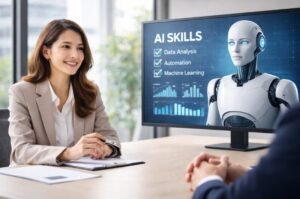
That is creating a different kind of technology workforce. Companies increasingly need AI engineers, cybersecurity specialists, data engineers, cloud experts, infrastructure workers, and employees who know how to incorporate AI tools into existing jobs. At the same time, some of the routine work once assigned to junior employees can now be completed faster with AI assistance.
For younger workers, that could make the traditional first step into a career harder to reach. Entry-level jobs have historically allowed new employees to learn basic tasks before moving into more advanced roles. If AI absorbs more of that work, companies may eventually have to rethink how they train the experienced workers they will need later.
The larger change is becoming difficult to dismiss. Artificial intelligence is no longer simply another product technology companies are selling. It is increasingly influencing how work itself is organized — which skills companies value, which positions they create, and how many people they believe they need to get the job done.
——————–
Related: