One year after Anthropic CEO Dario Amodei warned that artificial intelligence could eliminate up to half of all entry-level white-collar jobs, the conversation has shifted from speculation to observation. As AI tools become a routine part of the workplace, many employers are rethinking how they hire, train, and deploy early-career talent.
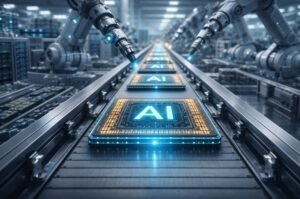
Across industries including technology, finance, consulting, marketing, and customer service, companies are increasingly using AI to handle routine tasks that were once assigned to junior employees. Some employers have slowed hiring for entry-level positions, while others now expect new hires to arrive with practical AI skills already in place. Although the long-term impact remains uncertain, there is growing evidence that AI is reshaping the first rung of the career ladder.
When Amodei made his remarks in 2025, his prediction drew widespread attention because of its scale. He warned that AI could eventually eliminate up to half of all entry-level white-collar jobs and significantly increase unemployment if businesses and governments failed to prepare for the transition. At the time, many viewed the comments as a bold forecast rather than an immediate reality.
A year later, the picture is more nuanced. AI has not replaced half of all entry-level office jobs, but it has changed how many organizations approach hiring and productivity. Rather than eliminating entire professions overnight, companies are often redesigning roles, automating repetitive work, and expecting employees to accomplish more with AI as a daily coworker. For many businesses, AI has become less about replacing workers and more about changing what employers value.
For students and professionals entering the workforce, the message is becoming increasingly clear: technical knowledge alone may no longer be enough. Employers are placing greater emphasis on critical thinking, communication, adaptability, and the ability to use AI effectively to solve real-world problems. As the technology continues to evolve, learning how to work alongside AI may prove to be one of the most valuable career skills of the decade.