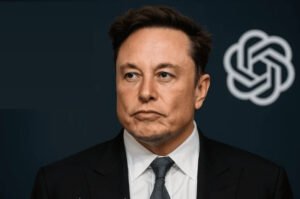


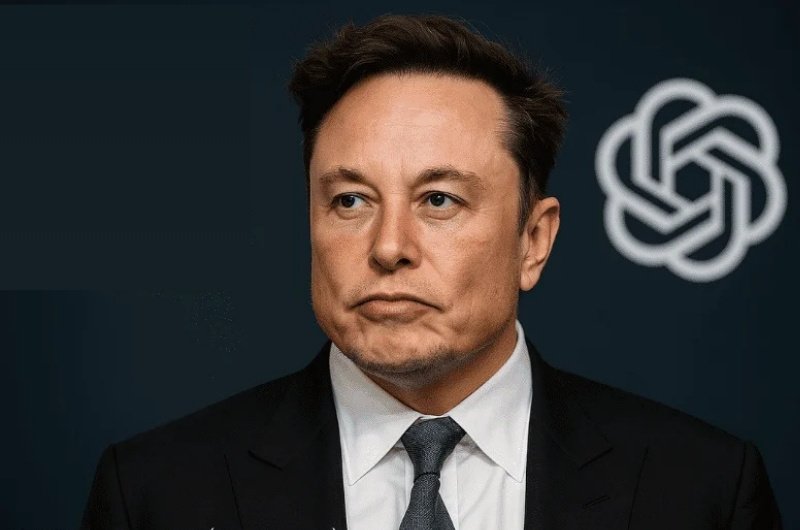
Elon Musk and OpenAI returned to court this week as closing arguments intensified in a high-profile legal battle over the future direction, governance, and commercialization of artificial intelligence. The increasingly public conflict between the billionaire entrepreneur and the company he once helped launch is evolving into far more than a courtroom dispute between former allies.
Closing arguments in the latest phase of the legal fight have drawn renewed attention to Musk’s accusations that OpenAI abandoned its original nonprofit mission in pursuit of commercial dominance and massive corporate influence. OpenAI, meanwhile, has defended its evolution as necessary to compete in an AI race that now requires enormous computing power, infrastructure investment, and global-scale deployment.
What began years ago as a research-focused effort to develop artificial intelligence responsibly has since transformed into one of the most influential technology companies in the world. OpenAI’s rapid rise — fueled in part by its partnership with Microsoft and the explosive adoption of ChatGPT — helped ignite a global AI arms race that is reshaping industries, governments, education, media, and the broader economy.
For Musk, the dispute appears to center on whether artificial intelligence should remain open, transparent, and aligned with humanity’s interests rather than concentrated inside a handful of powerful corporations. But the broader implications now extend well beyond the individuals involved. The case has become symbolic of a much larger question facing the tech industry: whether AI will ultimately evolve as a public-serving technology ecosystem or become controlled primarily by a small number of companies with unprecedented influence over information, automation, and digital infrastructure.
The stakes are enormous because artificial intelligence is no longer viewed as a niche technology sector. AI is increasingly becoming foundational infrastructure — comparable to electricity, the internet, or cloud computing — with the potential to shape economic power, military capability, scientific advancement, and global competitiveness for decades to come.
The legal fight also arrives during a period of extraordinary investment across the AI economy. Companies are pouring billions into data centers, advanced semiconductors, cloud infrastructure, robotics, and large-scale AI systems as competition intensifies between the United States, China, and other global powers seeking leadership in the field.
While the courtroom battle itself may take months or years to fully resolve, the public confrontation between Musk and OpenAI is already exposing the deeper tensions now emerging across the artificial intelligence industry: speed versus safety, openness versus control, and innovation versus concentration of power.
The Readovia Lens
The most important part of the Musk-OpenAI conflict may not be who wins the case. It may be what the battle reveals about the next era of technology itself. Artificial intelligence is rapidly becoming a new layer of global infrastructure — and the companies controlling it could hold extraordinary influence over how modern society functions in the years ahead.