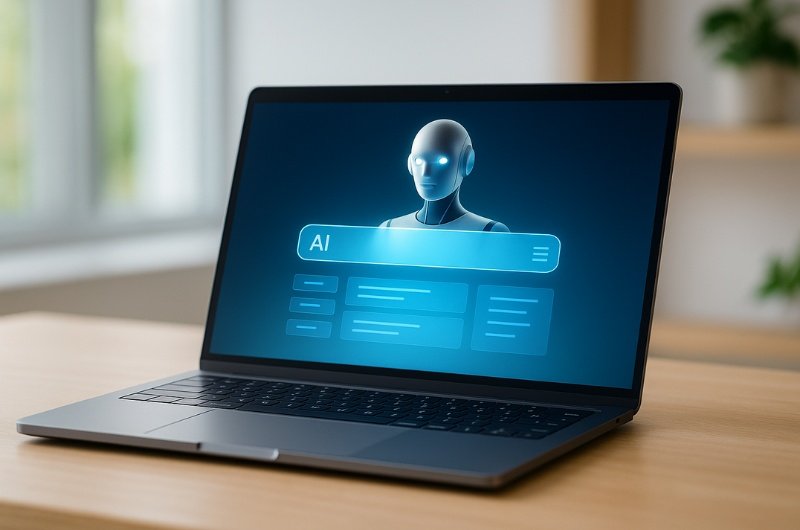
AI assistants are rapidly becoming the first stop for millions of people seeking answers online. Tools like ChatGPT, Gemini, Claude, and Perplexity now deliver streamlined summaries, personalized context, and direct instructions that sidestep the need to sift through search results. Traffic data across the web shows a quiet but unmistakable decline in traditional search activity, particularly for informational queries where AI responses are faster and more convenient.
Tech analysts say the shift began in early 2024 and accelerated sharply in 2025 as AI tools became integrated into operating systems, mobile keyboards, browsers, and productivity suites. Instead of “searching,” users increasingly ask AI assistants to find, generate, or decide things for them. Google itself has acknowledged the trend by rolling out more AI-first features and experimenting with reduced-link answer panels — a move that has drawn mixed reactions from publishers.
For consumers, the upside is obvious: instant answers and less noise. For platforms dependent on search traffic, the change has been disruptive. Multiple analytics firms have reported year-over-year declines in organic search referrals, particularly for how-to content, factual lookups, and news summaries. Some publishers are already restructuring their content strategies around AI visibility rather than search visibility.
AI companies also see opportunity. Perplexity, for example, has positioned itself as an “answer engine,” combining AI reasoning with curated citations from verified sources — a hybrid model gaining traction with younger users. Other platforms are leaning on personalization, enabling assistants to remember preferences, previous queries, and long-term tasks.
The shift isn’t sudden, but it is structural. As AI assistants absorb more of the informational workload, traditional search engines are becoming less central to everyday online navigation. For publishers, marketers, and platform operators, the next phase of the internet will belong not to who ranks highest — but to who earns visibility inside AI-driven answers.