

The United Arab Emirates (UAE), a federation of Gulf states rapidly positioning itself as a global hub for artificial intelligence, has become a key U.S. technology partner — even as the Trump administration draws a sharp line against rivals like China. The White House is barring access to America’s most powerful Nvidia chips for certain nations while granting new export licenses to trusted allies such as the UAE.
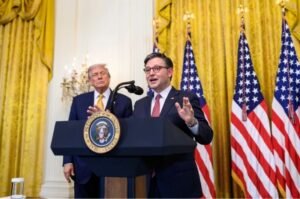
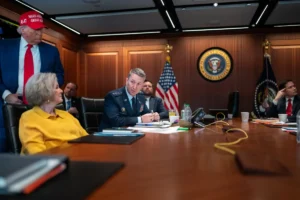
During recent remarks, President Trump said Nvidia’s top-tier Blackwell processors would be reserved for U.S. companies, describing them as vital to national security and too strategic to share with “other people.” The statement signals an expansion of current export controls and highlights how AI hardware has become a core lever of geopolitical power.
Yet even as those restrictions take hold, the administration quietly approved a deal allowing Microsoft to ship advanced Nvidia chips to the UAE. The company is also planning a multibillion-dollar investment in AI and cloud infrastructure across Abu Dhabi — a move that underscores Washington’s shift toward a “trusted partner” model rather than a full export freeze.
Analysts say the contrast reveals a more nuanced strategy than a simple ban. Rather than walling off U.S. technology entirely, policymakers are channeling it toward nations seen as stable allies, hoping to maintain global influence while protecting national interests. Still, the decision raises new questions for multinational firms: how to navigate a world where access to the same AI hardware now depends as much on diplomacy as on demand.