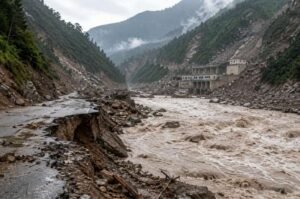

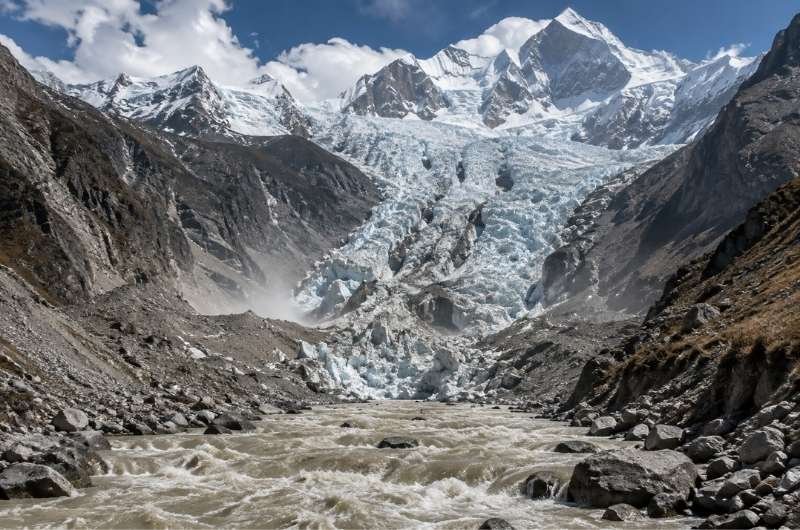
A massive glacier collapse along the Nepal-Tibet border has triggered catastrophic flooding and mudslides across the Himalayan region, killing at least 273 people and leaving more than 1,300 missing. Entire communities were hit by torrents of water, ice, rock and mud, while damaged roads and bridges have complicated efforts to reach survivors.
The disaster struck Wednesday after part of a glacier collapsed high in the mountains, sending debris into the river system below. The U.S. Geological Survey initially detected what appeared to be an earthquake near the Nepal-China border, but later determined that the seismic event was actually a magnitude 5.2 glacier collapse. Researchers say water levels at one point along the Trishuli River rose by as much as 27 feet in roughly 30 minutes.
The scale of the destruction extends across both sides of the border. Nepal has reported at least 270 deaths and 826 people missing, while authorities in Tibet have reported three deaths and 558 missing. Hundreds of foreign travelers and pilgrims are among those unaccounted for, including more than 60 Americans in Nepal. Helicopters have been deployed as damaged roads make some of the hardest-hit areas difficult to reach.
Scientists are still working to determine exactly how the disaster unfolded. Preliminary evidence suggests a huge mass of ice and rock plunged into a river, potentially creating a temporary blockage before water surged downstream with enormous force. Homes, roads, bridges and other infrastructure were swept away or buried under thick mud, and more than 1,200 people have been displaced from several villages.
The catastrophe is also drawing attention to the growing instability of the Himalayan ice system. Scientists caution that it is too early to directly attribute this particular glacier collapse to climate change, but the Hindu Kush Himalayan region is warming rapidly and its glaciers are retreating at an accelerating rate. As ice disappears and frozen mountain slopes become less stable, researchers warn that glacier collapses, landslides and sudden floods could pose an increasing threat to communities throughout the region.