
Moderna shares exploded higher after the company and Merck announced that their personalized mRNA cancer vaccine succeeded in a pivotal Phase 3 melanoma trial — a major milestone that could move the technology closer to patients and open a new chapter for mRNA beyond infectious disease.
The experimental treatment, called intismeran autogene, was tested alongside Merck’s Keytruda in 1,137 patients with high-risk melanoma whose tumors had been surgically removed. The combination significantly improved the amount of time patients remained free of cancer recurrence and reduced the risk of the disease spreading to distant parts of the body compared with Keytruda alone.
Unlike a traditional vaccine given to healthy people to prevent disease, this treatment is created individually for someone who has already developed cancer. Scientists analyze a patient’s tumor to identify mutations unique to that cancer, then use mRNA to help train the immune system to recognize and attack cells carrying those mutations. Keytruda works alongside it by helping remove one of the mechanisms cancer cells use to evade an immune response.
The companies have not yet disclosed the detailed Phase 3 efficacy numbers and plan to present the results at a medical meeting and submit them for publication. They said the improvements were statistically significant and clinically meaningful, with no new safety concerns identified. Moderna and Merck are also testing personalized mRNA treatments in other cancers, including lung, kidney and bladder cancer.
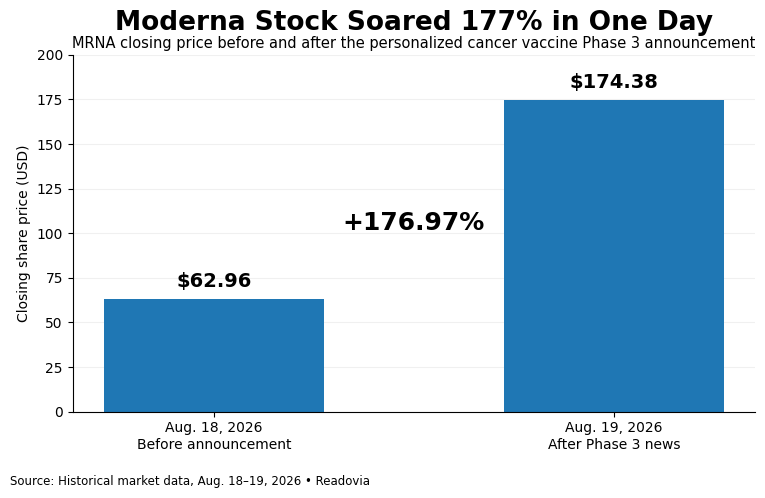
Wall Street’s reaction was extraordinary. Moderna shares surged nearly 177% Wednesday, adding tens of billions of dollars to the company’s market value in one of the most dramatic trading days in its history. The reaction reflects something much larger than melanoma: investors are suddenly confronting the possibility that Moderna’s mRNA platform could have an important commercial life far beyond COVID vaccines.
The Readovia Lens
The remarkable part of this development is the word personalized. Instead of designing one cancer treatment for millions of people, researchers are attempting to create a vaccine around the genetic fingerprint of one person’s tumor. A successful Phase 3 trial does not mean cancer has been cured, and regulatory review still lies ahead. But it provides the strongest evidence yet that personalized mRNA cancer vaccines may be moving from an ambitious scientific idea toward a new form of cancer treatment.