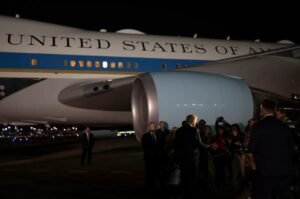



Oil prices jumped and U.S. stock futures fell Wednesday after President Donald Trump said the Iran ceasefire was “over,” fueling concerns that rising tensions in the Middle East could disrupt global energy supplies.
The market reaction was immediate. Brent crude rose above $78 a barrel, while U.S. benchmark oil climbed above $74, according to the Associated Press. Stock futures also moved lower, with the S&P 500, Dow Jones Industrial Average, and Nasdaq all pointing to a weaker open as investors reacted to the growing uncertainty.
The main concern is the Strait of Hormuz, one of the world’s most important oil transit routes. Any threat to shipping through the narrow waterway can quickly affect global oil prices because so much of the world’s crude supply moves through the region.
Higher oil prices can ripple through the economy by raising gasoline costs, increasing transportation expenses, and renewing inflation concerns. Energy companies may benefit from higher crude prices, but airlines, consumers, and interest-rate-sensitive parts of the market often face pressure when oil spikes.
The next question is whether the latest escalation remains limited or grows into a broader disruption for energy markets. For American consumers and investors, the issue is how quickly developments in the Middle East can show up in fuel prices, market volatility, and the cost of everyday life.