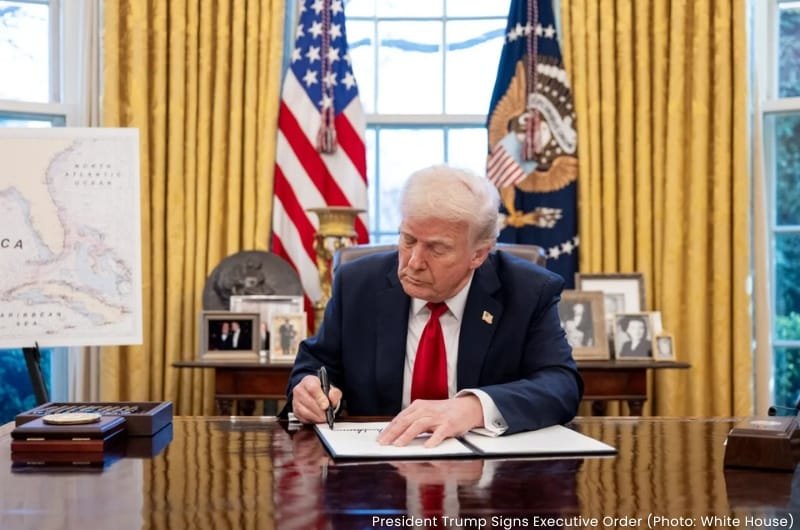
President Donald Trump signed a new executive order Wednesday aimed at increasing accountability among senior federal executives and policy-making officials, marking the latest effort by the administration to reshape how parts of the federal government are managed.
According to the White House, the order is designed to ensure that senior government officials remain accountable to elected leadership and faithfully implement the policies chosen by American voters. Administration officials argue that individuals serving in influential policy-making roles should be held to higher performance and accountability standards than traditional career civil-service positions.
The order focuses on a relatively small segment of the federal workforce that occupies senior executive and policy-influencing positions across government agencies. The White House says these officials play a significant role in developing, interpreting, and carrying out federal policy, making accountability especially important when administrations change and new priorities are established.
Supporters of the move describe it as a long-overdue reform that will make government more responsive to elected leadership. They argue that voters ultimately expect presidents and their administrations to have greater authority over the officials responsible for implementing major policy initiatives.
Critics, however, warn that the order could weaken longstanding civil-service protections that were designed to preserve continuity and political independence within the federal government. Opponents argue that career officials provide institutional expertise that extends beyond any single administration and help ensure stability across changing political leadership.
The action is likely to reignite a broader debate that has been building in Washington for years: how much authority elected leaders should have over senior government officials who help shape and implement public policy. While supporters see the order as a necessary accountability measure, critics view it as a significant shift in the balance between political leadership and the career federal workforce.
The Readovia Lens
The larger significance of the order may extend well beyond the positions immediately affected. At its core, the debate centers on who should ultimately drive the direction of the federal government: career officials who provide continuity across administrations, or elected leaders who argue they have a mandate from voters to carry out their agenda.
As administrations from both parties continue searching for ways to make government more effective, challenges surrounding accountability, expertise, and executive authority are likely to remain at the center of the national conversation.