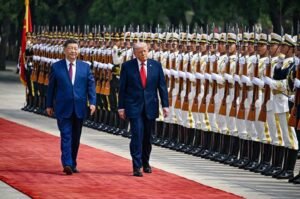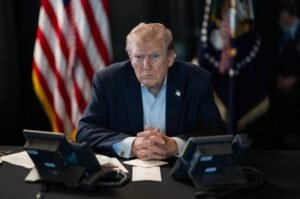


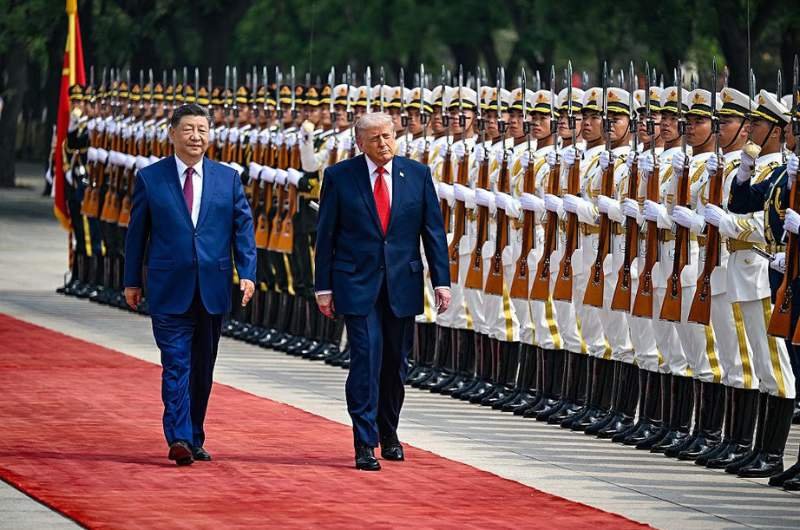
China confirmed Monday that President Donald Trump, Chinese President Xi Jinping and Russian President Vladimir Putin will meet in Shenzhen, China, on Thursday for an unprecedented three-way summit focused on global security and nuclear arms control. The meeting, scheduled alongside the Asia-Pacific Economic Cooperation (APEC) summit, will bring together the leaders of the world’s three major nuclear powers for discussions that could influence international security relations.
China’s Foreign Ministry described the upcoming meeting as a significant diplomatic development intended to promote international peace and stability. The White House and Kremlin had previously confirmed the gathering, which is expected to include discussions about reducing nuclear weapons and improving relations among the three countries. U.S. officials have cautioned that no formal agreement is expected from the initial talks.
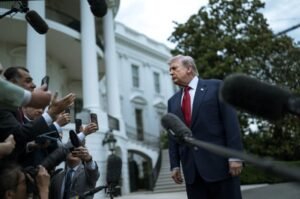
Trump is scheduled to depart Washington on Monday for a diplomatic tour beginning in the Philippines, where he will meet with regional leaders before traveling to China. His itinerary includes a separate meeting with Xi to address U.S.-China relations, including trade and economic cooperation. The three-way summit with Putin is expected to conclude the president’s visit to China.
Nuclear arms control presents a significant challenge for the negotiations. The United States and Russia maintain substantially larger nuclear arsenals than China, which has historically resisted joining agreements that would place comparable restrictions on all three countries. The expiration of the last U.S.-Russia nuclear arms treaty earlier this year has added urgency to discussions about establishing a new international framework.
The Readovia Lens
The planned summit between the United States, China and Russia represents an unusual opportunity for the world’s leading nuclear powers to discuss strategic security directly. However, their competing interests and disagreements over nuclear weapons could limit immediate progress. Even without a formal agreement, the meeting could establish a foundation for future negotiations at a time when international arms control arrangements face considerable uncertainty.