

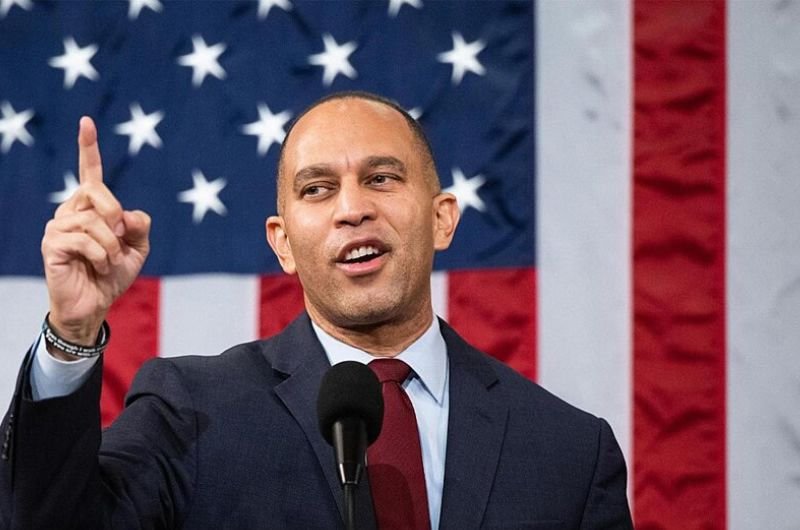
House Democrats nominated New York Rep. Hakeem Jeffries on November 18 to become the next speaker of the U.S. House of Representatives, placing the 56-year-old Brooklyn native on the verge of becoming the first Black American to hold the position. Jeffries received 251 votes in a closed-door caucus election, with 11 Democrats opposing his nomination. The full House will elect its next speaker when the new Congress convenes on January 3, 2027.
Jeffries’ nomination follows Democrats’ sweeping victories in the November midterm elections, which returned the party to control of both chambers of Congress. Having served as House Democratic leader since 2023, Jeffries is preparing to move from leading the minority to overseeing a substantial House majority. If elected in January, he would become the first Black speaker in the House’s more than 230-year history and second in the presidential line of succession.
Although Jeffries faced no challenger for the nomination, the vote revealed disagreements within the incoming Democratic majority. Seven progressive members-elect publicly opposed his selection, seeking stronger commitments on healthcare, immigration, campaign finance, and U.S. policy toward Israel. Their opposition highlights the competing priorities Jeffries will need to navigate as Democrats prepare to govern.
The leadership transition carries additional historic milestones. Massachusetts Rep. Katherine Clark has been selected as the incoming majority leader, while California Rep. Pete Aguilar will serve as majority whip. Rep. Ted Lieu has been elected Democratic caucus chair, becoming the first Asian American to hold that position. Together, the appointments represent a significant change in the composition of the House’s senior leadership.
The Readovia Lens
Hakeem Jeffries’ nomination brings the House of Representatives closer to a milestone that has never occurred in American history. But the responsibilities awaiting him extend well beyond the symbolism of becoming the first Black speaker. Leading a diverse Democratic majority, managing disagreements within his party, and negotiating with a Republican president will test his ability to turn a historic leadership opportunity into legislative results.