
Holiday shopping has a new favorite phrase: “buy now, pay later”. With retailers rolling out early deals and shoppers looking for ways to stretch their budgets, installment payment services are becoming an increasingly attractive checkout option. But those cheerful little payment plans have a habit of sticking around long after the wrapping paper hits the trash.
A 2026 NerdWallet holiday spending survey found that 38% of Americans planning holiday-related purchases expect to use buy now, pay later services. More concerning, 38% of those prospective installment-payment users anticipate difficulty making their payments in full and on time. That’s a considerable number of shoppers heading into the holidays with financial obligations that could follow them straight into the new year.
Services such as Klarna, Affirm and Afterpay allow eligible shoppers to divide purchases into smaller payments, often through four-installment plans. Some offer interest-free repayment when payments are made on schedule, making them useful for managing planned purchases. The trouble begins when shoppers start treating the installment amount as the actual price. A $200 gift may look harmless at $50 per payment, but the gift still costs $200. Breaking the bill into smaller pieces doesn’t make it any smaller.
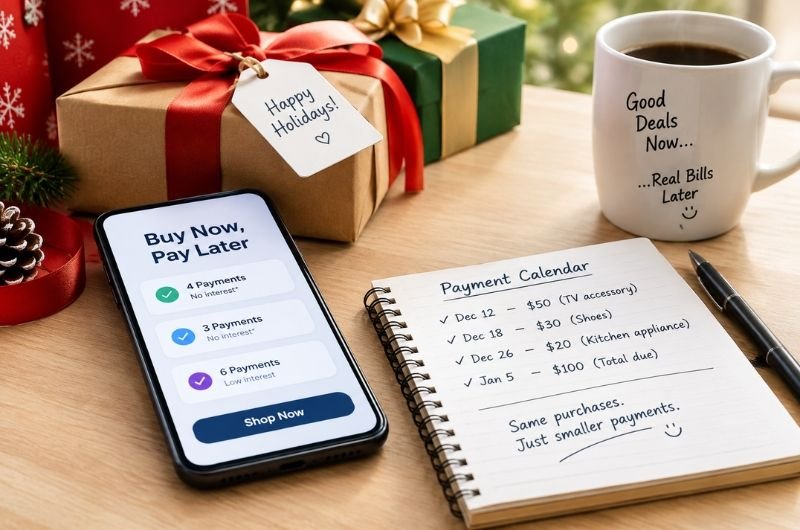
And those obligations can multiply quickly. Imagine financing a $200 television accessory, a $120 pair of shoes and an $80 kitchen appliance, all through four-payment plans. That’s $400 in purchases and $100 due during each installment round, assuming the payments fall together. Add groceries, utilities and the usual monthly expenses, and suddenly January has a rather unfriendly welcome committee. Missed payments can also trigger late fees, while automatic withdrawals may lead to bank overdraft charges when funds run short.
The Readovia Lens
A payment plan can make a purchase easier to manage without making it more affordable. That’s the distinction holiday shoppers need to keep in mind as retailers compete for every dollar. Before accepting another installment offer, consumers should look at their total outstanding balances, upcoming payment dates and the money they’ll actually have available when those payments arrive. A simple calendar or spending tracker can prevent several seemingly manageable purchases from becoming one very uncomfortable week.
Buy now, pay later isn’t inherently a bad financial tool. Used carefully, it can provide flexibility without the interest associated with some traditional borrowing. But a bargain stops looking quite so impressive when paying for it interferes with rent, groceries or other necessities. The holidays should leave people with good memories, not a collection of payment reminders that outlast the decorations.