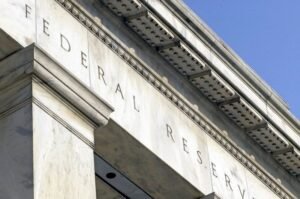
The Federal Reserve left its benchmark interest rate unchanged Wednesday for the fifth consecutive meeting. But for anyone shopping for a home, that wasn’t the biggest financial development of the day.
Long-term Treasury yields climbed to their highest levels in nearly two decades after the Fed’s announcement, pushing mortgage rates higher—even though the central bank itself never touched its benchmark rate.
A Split Decision
The Federal Open Market Committee voted 9-3 to keep the federal funds rate in its current range of 3.50% to 3.75%. Three regional Federal Reserve Bank presidents—Cleveland’s Beth Hammack, Minneapolis’s Neel Kashkari, and Dallas’s Lorie Logan—dissented, arguing that inflation, which remains above the Fed’s 2% target, warranted another quarter-point increase.
Fed Chair Kevin Warsh described the disagreement as a sign of healthy debate rather than division, emphasizing that policymakers are weighing competing economic signals as they work toward restoring price stability.
The committee pointed to an economy that remains resilient. Hiring has generally kept pace with workforce growth, unemployment has remained relatively stable, and productivity has stayed strong, even as ongoing conflict in the Middle East continues to add uncertainty to energy prices and inflation.
Why Your Mortgage Rate Moved Anyway
Here’s the part that surprises many borrowers: the Fed didn’t raise interest rates, but the bond market reacted as if financial conditions had become tighter.
The 30-year Treasury yield climbed above 5.2%, its highest level in nearly two decades, while the benchmark 10-year Treasury yield also moved higher. Stocks sold off following the Fed’s announcement as investors reassessed the outlook for inflation and future interest-rate policy. That distinction matters because fixed mortgage rates are driven primarily by long-term Treasury yields and investor expectations for inflation—not directly by the Fed’s benchmark rate. As bond yields rose, the average 30-year fixed mortgage rate also edged higher, illustrating why mortgage costs don’t always move in lockstep with the Federal Reserve.
What This Means for Your Wallet
- Mortgage shoppers: If you’re buying a home or refinancing, remember that mortgage rates often respond more to movements in the bond market than to the Fed’s headline decision. If you’re comfortable with today’s rate, it may be worth discussing a rate lock with your lender.
- Credit card and auto loan borrowers: Most variable-rate credit cards and many short-term loans are tied more closely to the Fed’s benchmark rate. Since the Fed left rates unchanged, those borrowing costs are generally unaffected for now.
- Savers: High-yield savings accounts and certificates of deposit also tend to track the Fed’s policy rate. With rates unchanged, most banks are unlikely to make immediate changes, although future Fed decisions could influence where savings rates go later this year.
What Happens Next
Financial markets have shifted toward expecting at least one additional interest-rate increase before the end of 2026 if inflation remains stubbornly high. Investors will now focus on upcoming inflation and employment reports, along with Fed Chair Kevin Warsh’s remarks at the Jackson Hole Economic Policy Symposium in late August, for clues about the central bank’s next move.
The Readovia Lens
The Fed’s headline decision was “no change.” But the bigger story for many Americans was what happened after the announcement. Mortgage rates rose because bond yields climbed—not because the Federal Reserve increased its benchmark rate. It’s a reminder that while the Fed has enormous influence over the economy, your mortgage rate often follows Wall Street’s expectations just as much as Washington’s decisions.