

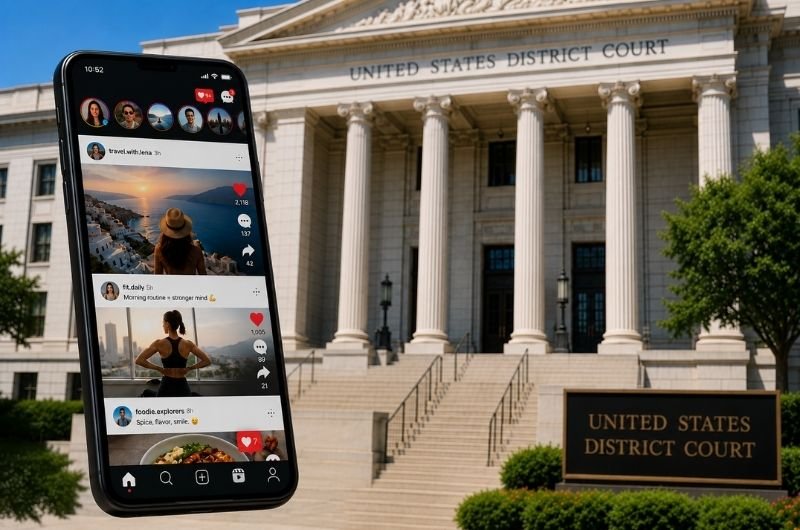
Some of the most familiar features on Instagram and Facebook — including infinite scrolling, likes and engagement-driven recommendations — are at the center of a major federal trial that could ultimately change how Meta’s platforms operate for younger users.
The case stems from lawsuits brought by a coalition of U.S. states accusing Meta of designing Facebook and Instagram in ways that encourage compulsive use among children and teenagers while failing to adequately protect younger users. The states also allege that Meta improperly collected data from children under 13 and misrepresented aspects of its safety practices. Meta denies the allegations and says it has invested extensively in protections for young people.
What makes the case especially consequential is the possibility of changes to the products themselves. Features designed to keep people moving continuously through content — including infinite scroll, autoplay, notifications, likes and algorithmic recommendations — have become fundamental to the modern social-media experience. The states contend that some of those mechanisms can be particularly problematic for younger users and are seeking stronger restrictions on how Meta serves them.
Former Meta engineer Arturo Bejar, one of the first witnesses in the trial, has testified about concerns he raised while working with the company on user safety. He has argued that Meta’s internal measurements did not always capture the harmful experiences users reported encountering on its platforms. Meta disputes the states’ broader characterization of its safety record and maintains that it has introduced numerous protections, including Teen Accounts and tools that help younger users manage their time.
The Readovia Lens
For years, the debate over children’s social-media use has largely focused on what parents, schools and teenagers should do differently. This trial puts a different possibility before the courts: changing the platforms themselves. If the states ultimately succeed in forcing substantial design changes, the effects could reach well beyond Meta and establish a new expectation that social-media companies bear greater responsibility for how the mechanics of their products affect younger users.
——————–
Related:
Meta Heads to Court as Opening Arguments Begin in Landmark Child Safety Case