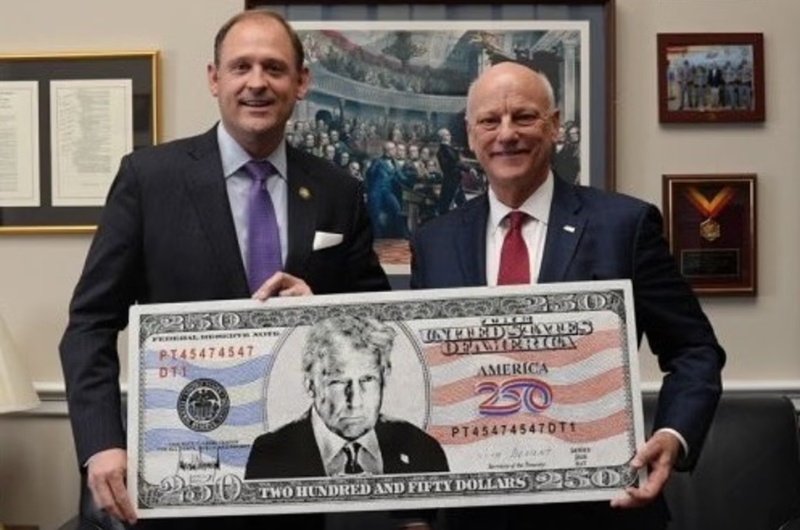
A proposal that once seemed unlikely is moving closer to reality after Treasury officials confirmed preparations for a potential $250 bill featuring President Donald Trump. The development follows growing support among some lawmakers and allies of the president who argue that Trump’s influence on modern American politics warrants consideration for a new denomination tied to the nation’s upcoming 250th anniversary celebration. Recent reports indicate the Treasury Department has already prepared preliminary designs should Congress ultimately authorize the move.
The proposal faces a significant hurdle. Current federal law generally prohibits living individuals from appearing on U.S. currency, meaning Congress would need to change longstanding rules before any such bill could be issued. Supporters view the idea as a way to commemorate a president they believe reshaped American politics, while critics argue that placing a living political figure on U.S. currency would break with long-established traditions intended to keep the nation’s money above contemporary political disputes.
The discussion comes as the United States prepares for a series of events marking the country’s 250th anniversary. The semiquincentennial celebration has become a major priority for the administration, with officials emphasizing patriotism, national heritage, and America’s founding story. In that context, the proposed $250 bill has evolved from a symbolic political idea into a broader debate about how the nation chooses to recognize influential leaders and historic moments.
Even if Congress were to approve the proposal, a new denomination would represent a significant departure from modern U.S. currency practices. The highest denomination currently circulated is the $100 bill, and economists have long questioned whether larger notes would serve a practical purpose in an increasingly digital economy. Still, the proposal has succeeded in capturing national attention, ensuring that the debate extends far beyond the design of a single piece of currency.
Whether the idea ultimately becomes reality or remains a political symbol, the conversation highlights a larger question: how should America honor the figures who shape its history? As the nation’s 250th birthday approaches, that debate is likely to continue well beyond the halls of Congress.