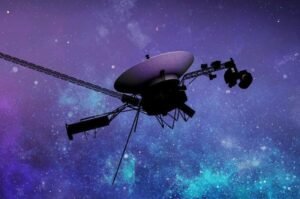

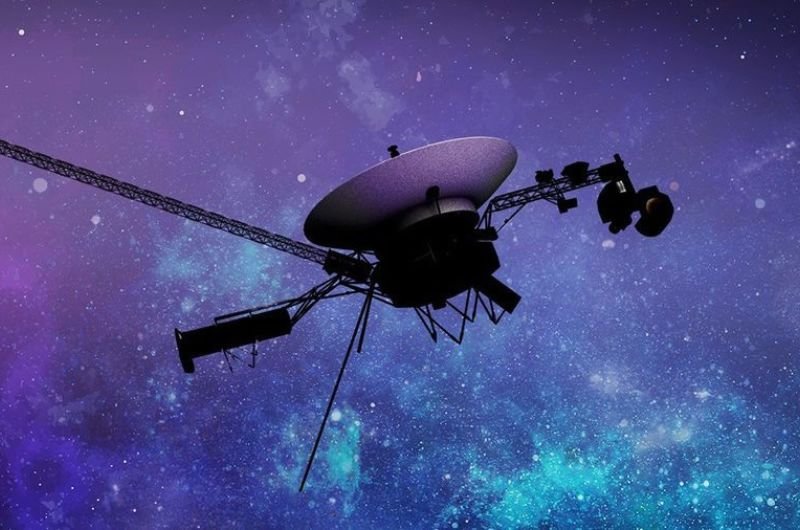
NASA’s Voyager 1 spacecraft reached a historic milestone on November 18, 2026, becoming the first human-made object to travel one light-day from Earth. Launched in September 1977, the spacecraft is now more than 16 billion miles away in interstellar space, where even a signal traveling at the speed of light takes 24 hours to reach it.
The milestone was confirmed by engineers at NASA’s Jet Propulsion Laboratory in California, who received a radio signal from Voyager 1 approximately one day after it crossed the historic distance. Although the spacecraft remains in contact with Earth, NASA reported that it has not received science or engineering data since November 14. Engineers are investigating the problem while continuing to detect the spacecraft’s carrier signal.
At Voyager 1’s current distance, a message sent from Earth takes 24 hours to arrive, and a response requires another 24 hours to return. That means even a simple exchange between mission controllers and the spacecraft takes approximately two days. NASA’s Deep Space Network, a worldwide system of powerful antennas, makes those extraordinary communications possible.
Keeping Voyager 1 operating has become an engineering achievement of its own. Earlier in 2026, NASA engineers replaced three power-consuming devices with lower-energy alternatives to preserve the spacecraft’s dwindling electricity supply. Powered by a radioisotope generator that converts heat from decaying plutonium into electricity, Voyager 1 loses approximately four watts of available power each year. Engineers hope the latest conservation measures will help extend its scientific operations through the mission’s 50th anniversary in 2027.
The Readovia Lens
Voyager 1’s extraordinary journey is a reminder that space exploration is measured not only by how far humanity can travel, but by how long we can sustain the technology that takes us there. Nearly half a century after leaving Earth, the spacecraft continues moving through territory no human-made object had previously reached. Its ongoing communication challenges make the achievement even more remarkable—and illustrate the ingenuity required to keep a distant piece of human history connected to home.