
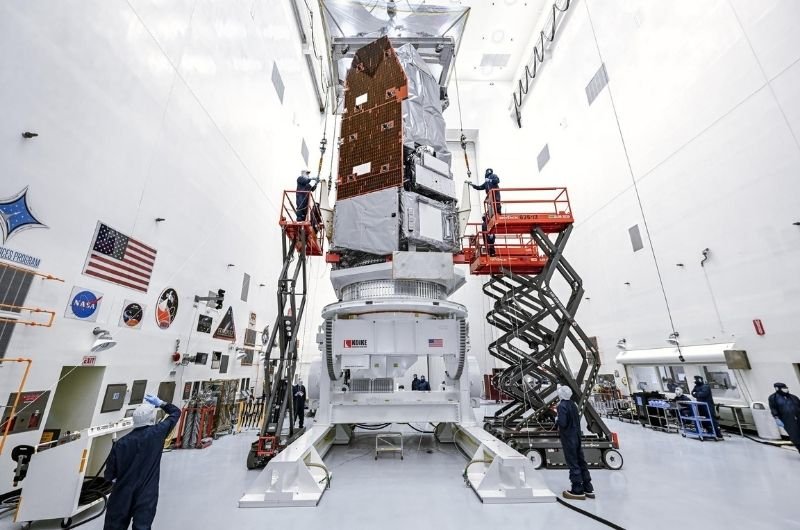
NASA is preparing to launch a new space telescope capable of surveying enormous stretches of the universe far faster than Hubble, giving astronomers a powerful new tool for studying everything from distant galaxies to planets beyond our solar system.
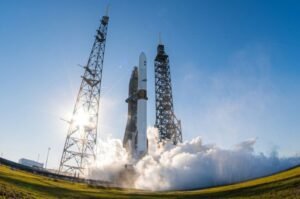
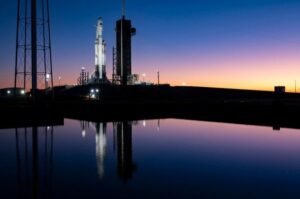
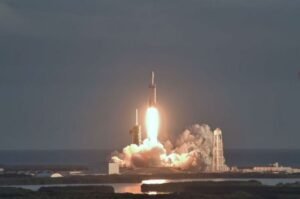
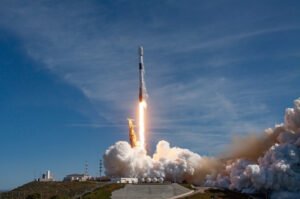
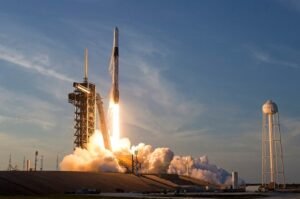
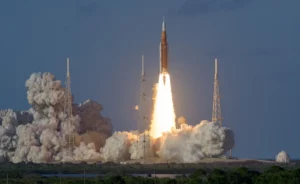
The Nancy Grace Roman Space Telescope is scheduled to launch Sunday, August 30, aboard a SpaceX Falcon Heavy from Kennedy Space Center in Florida. NASA, SpaceX and the Roman mission team completed their Flight Readiness Review Friday, clearing one of the final major hurdles before liftoff. The mission is arriving remarkably early: NASA says Roman’s August launch date is eight months ahead of its original schedule.
What makes Roman different is its view. Its primary camera can capture an area of the sky at least 100 times larger than Hubble can in a comparable observation while maintaining similar infrared sensitivity and resolution. That will allow Roman to survey the sky up to 1,000 times faster than Hubble, potentially observing billions of cosmic objects and measuring light from as many as a billion galaxies during its mission.
Scientists plan to use that enormous view to investigate some of astronomy’s biggest mysteries, including dark energy — the still poorly understood phenomenon associated with the accelerating expansion of the universe. Roman will also conduct a massive search for worlds beyond our solar system. NASA scientists say its observations could reveal as many as 100,000 new exoplanets, while an experimental coronagraph aboard the telescope will test technology for directly imaging some large planets orbiting other stars.
Roman isn’t being sent into orbit around Earth. After launch, it will travel roughly a million miles away to a region of space known as the Sun-Earth L2 point, where it can maintain a stable view of the cosmos. Once there, Roman will work alongside Hubble and the James Webb Space Telescope rather than replace them. Hubble and Webb can examine relatively narrow regions of space in extraordinary detail; Roman’s advantage will be its ability to find and map interesting objects across vast areas of the universe — effectively giving astronomers a much bigger cosmic picture to explore.