

ICE Agents Deployed to U.S. Airports as Security Lines Stretch for Hours
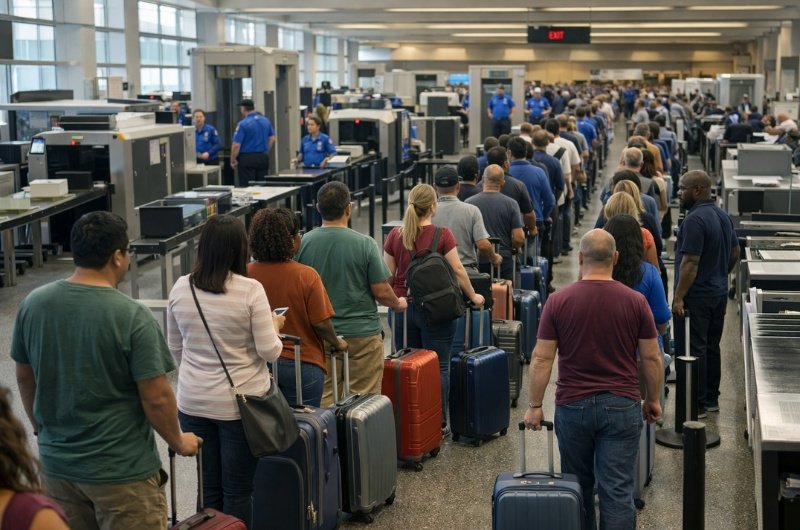
Air travelers across the United States are facing hours-long security delays as federal authorities deploy Immigration and Customs Enforcement (ICE) agents to assist overwhelmed airport operations. The move comes as Transportation Security Administration (TSA) staffing shortages—driven by a Department of Homeland Security funding lapse—push wait times at major airports like Houston’s Bush Intercontinental to as long as four hours, disrupting travel nationwide. At several major hubs, travelers are being urged to arrive at least three to four hours before departure as standard screening operations struggle to keep pace. Reports from affected airports describe missed flights, long lines spilling through terminals, and limited access to expedited services such as TSA PreCheck and CLEAR in certain locations. Federal officials say ICE personnel are being used to support logistical and operational functions rather than traditional immigration enforcement. The deployment is intended to stabilize airport throughput as TSA staffing levels remain strained, with increased callouts and reduced workforce availability compounding delays. The situation highlights growing pressure on critical travel infrastructure, where even short-term staffing disruptions can ripple quickly into nationwide delays. With spring travel demand rising, the timing has intensified the impact, leaving airlines and passengers navigating an increasingly unpredictable airport experience. For travelers, the message is simple but urgent: arrive earlier than usual, expect delays, and prepare for longer security processing times as federal agencies work to stabilize operations across the country.
Breaking News: Two Killed After Air Canada Plane Collides With Fire Truck at LaGuardia, Airport Shuts Down

A deadly collision at New York’s LaGuardia Airport has left two people dead and forced a complete shutdown of one of the nation’s busiest travel hubs. The incident occurred when an Air Canada Express aircraft struck a fire truck on the runway, triggering an immediate emergency response and halting all airport operations. Authorities confirmed that two crew members were killed in the crash, while additional personnel on the ground were evaluated for injuries. Emergency crews quickly secured the area as investigators began assessing how the aircraft and emergency vehicle ended up in the same active runway zone. In the aftermath, officials ordered a full closure of LaGuardia Airport, disrupting flights across the country. Departures and arrivals were suspended as airlines scrambled to reroute passengers and manage delays, with ripple effects expected throughout the national air travel system. The crash has raised urgent questions about runway safety and coordination between aircraft and ground operations. Federal investigators are expected to examine communication protocols, visibility conditions, and emergency response procedures as part of a comprehensive review. For travelers, the shutdown serves as a stark reminder of how quickly a single incident can impact the broader aviation network. As the investigation unfolds, attention will remain focused on both the cause of the crash and how long it will take for normal operations to resume. 🖼️ Caption An Air Canada Express aircraft collided with a fire truck on the runway at LaGuardia Airport, prompting a full shutdown and nationwide travel disruptions.
Trump Issues Iran Ultimatum, Then Delays Strikes as Conflict Nears Breaking Point
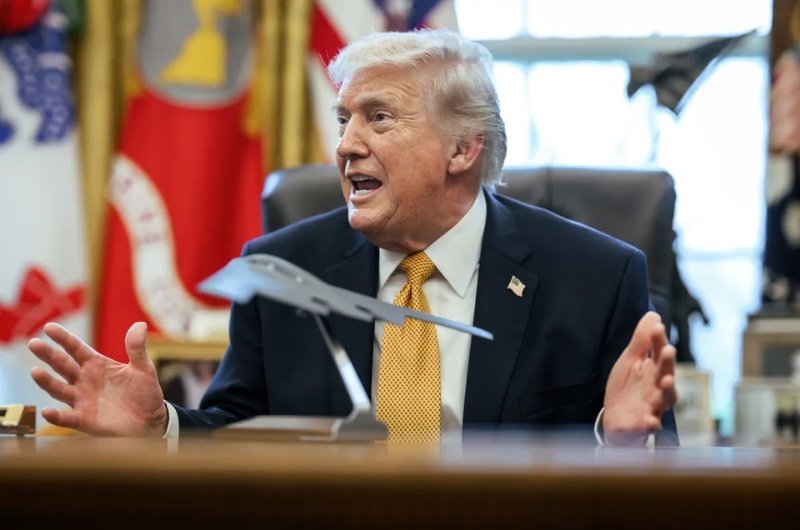
The United States and Iran have moved to the brink of a major escalation, as a 48-hour U.S. ultimatum quickly gave way to a sudden and unexpected pause in military action. President Donald Trump had warned Iran to reopen the Strait of Hormuz or face strikes targeting its power and energy infrastructure. Instead, just hours before the deadline, the White House announced a five-day delay, citing what Trump described as “very good and productive” conversations aimed at de-escalation. The reversal follows days of intensifying threats on both sides. Iran had responded to the ultimatum with warnings that any attack on its infrastructure would trigger widespread retaliation across the Middle East, including strikes on energy facilities and critical systems in neighboring countries. The Strait of Hormuz, one of the world’s most vital oil corridors, remains heavily restricted, amplifying global economic concerns and raising the stakes of the standoff. Despite the announcement of “productive” discussions, Iranian officials have publicly denied that any direct talks with the United States have taken place. Instead, Tehran has suggested the delay reflects the seriousness of its counter-threats rather than any diplomatic breakthrough. Regional tensions remain high, with ongoing military activity and continued warnings of broader conflict. The conflict, now entering its fourth week, has already resulted in significant casualties and widespread instability across the region. Israeli air operations have continued, while Iran has signaled its willingness to expand retaliation, including potential disruptions to water and energy systems across Gulf nations. For now, the five-day pause offers a narrow window for diplomacy — but with both sides holding firm and the global economy already feeling the impact, the situation remains volatile. What happens next may determine whether this conflict moves toward resolution or escalates into a broader regional crisis.
Gas Prices Surge as Iran Crisis Sends Oil Markets Into Shock

As tensions between the United States and Iran push closer to open conflict, Americans are beginning to feel the impact where it hits hardest — at the pump. Gas prices are climbing nationwide after global oil markets reacted to disruptions in the Strait of Hormuz, a critical artery for the world’s energy supply. Oil prices surged past $100 per barrel in early trading, driven by fears that prolonged restrictions or a full closure of the strait could choke off a significant portion of global oil shipments. The waterway handles roughly one-fifth of the world’s petroleum supply, making it one of the most strategically important routes in the global economy. Advertisement The shift is already showing up in real numbers. The national average for regular gas has climbed to $3.95 per gallon, up from $3.71 just one week ago and $2.93 a month ago. Mid-grade fuel is now averaging $4.46 per gallon, reflecting a sharp and steady upward trend in a short period of time. The sudden spike is putting renewed pressure on household budgets, especially as many Americans were just beginning to see relief in fuel and transportation costs. Analysts warn that if tensions escalate further — or if military action resumes — prices could rise even more quickly, intensifying inflation concerns across multiple sectors. Markets briefly stabilized after news of a five-day delay in potential U.S. strikes, but volatility remains high. For American consumers, the situation underscores how quickly global conflict can ripple into everyday life, with the cost of uncertainty now visible on nearly every gas station sign in the country.
Student Loans Move to Treasury in Major Federal Power Shift

The Trump administration has begun transferring federal student loan management from the Department of Education to the U.S. Treasury, marking one of the most significant structural changes to the student loan system in decades. The shift starts with defaulted loans but signals a broader realignment that could eventually move the entire $1.7 trillion portfolio out of Education oversight. At its core, the move reframes student debt as a financial asset to be managed rather than a social policy tool tied to education. Treasury, equipped with advanced financial infrastructure and collections authority, is expected to take a more aggressive and systemized approach to repayment and enforcement. Supporters argue the transition could streamline operations, reduce inefficiencies, and bring long-overdue discipline to a system that has struggled with servicing failures and borrower confusion. Critics, however, warn that shifting control away from the Education Department may weaken borrower protections and create new layers of complexity for millions of Americans already navigating repayment. The timing is equally notable. The move comes amid broader efforts to reshape or reduce the role of the Department of Education, raising questions about whether this is an operational fix or the first step in a larger institutional overhaul. For borrowers, the immediate impact may be subtle, but the long-term implications are significant. The system governing how Americans repay their education debt is no longer anchored solely in education policy. It is becoming part of the federal government’s financial machinery — and that shift could redefine how student debt is treated for years to come.
Congress Moves to Expand Federal AI Surveillance Powers as Privacy Debate Intensifies
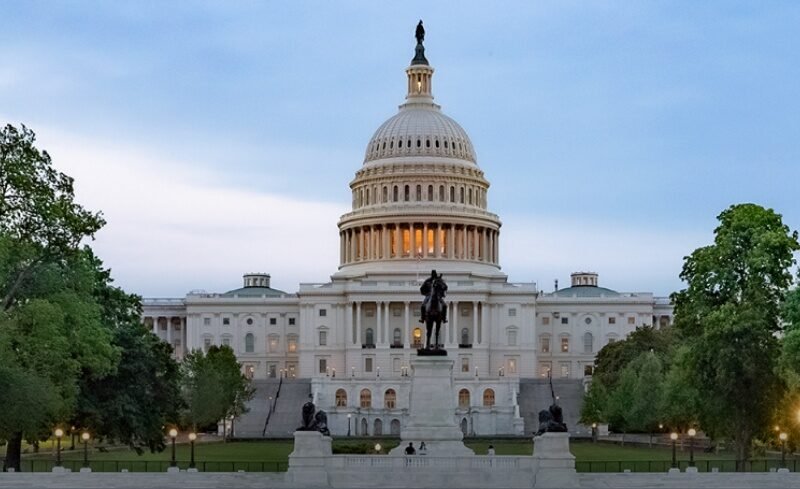
Federal lawmakers are advancing new legislation that would significantly expand the government’s ability to use artificial intelligence for surveillance, triggering immediate backlash from privacy advocates and civil liberties groups. The proposal would allow federal agencies to deploy AI tools to monitor digital communications, financial transactions, and public activity patterns at scale, all under the banner of national security. Supporters argue the move is necessary as global threats evolve faster than traditional intelligence methods can handle. With adversaries increasingly using AI for cyberwarfare, misinformation, and financial disruption, officials say the U.S. must modernize its capabilities or risk falling behind. The bill includes provisions aimed at streamlining data-sharing across agencies and accelerating AI deployment in active investigations. Critics, including privacy advocates, however, warn that the scope of the legislation is too broad and lacks sufficient guardrails. Concerns center on potential overreach, including mass data collection on ordinary Americans without clear transparency or accountability. Several advocacy groups have called for stricter limitations, independent oversight, and explicit protections against misuse. The debate reflects a growing tension in Washington: how to balance national security with individual privacy in an AI-driven world. As the bill moves toward a vote, lawmakers on both sides are under pressure to define where that line should be drawn.
Housing Market Shows Signs of Cooling as High Rates Continue to Squeeze Buyers

The U.S. housing market is beginning to show signs of a slowdown as elevated mortgage rates continue to pressure affordability and sideline potential buyers. After years of rapid price growth and fierce competition, new data suggests demand is softening in several key markets, with homes taking longer to sell and price increases leveling off. Buyers are increasingly hesitant to commit, faced with borrowing costs that remain near multi-year highs. Monthly payments have climbed significantly compared to just a few years ago, forcing many would-be homeowners to delay purchases or adjust expectations. First-time buyers, in particular, are feeling the strain. Sellers, meanwhile, are entering a more balanced market environment. While inventory remains relatively tight, the urgency that once defined the market has cooled. Price cuts, once rare, are becoming more common in certain regions as sellers adapt to shifting conditions. Economists say the market is not crashing, but recalibrating. Much will depend on the Federal Reserve’s next moves and whether mortgage rates begin to ease later this year. For now, the housing market appears to be entering a new phase—one defined less by frenzy and more by caution.
Trump Threatens to Bomb Iran’s Largest Gas Field if Qatar Is Attacked Again
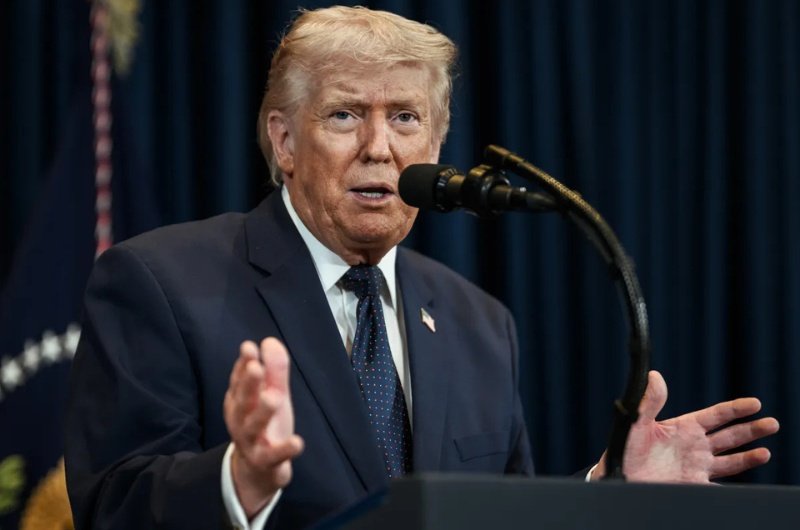
As tensions in the Middle East continue to escalate, President Donald Trump has issued a stark warning to Iran: any further attacks on Qatar could trigger a direct and devastating U.S. response targeting one of Iran’s most critical energy assets. The warning centers on Iran’s South Pars gas field, the largest natural gas reserve in the world and a cornerstone of the country’s energy supply. Trump stated that the United States would “massively blow up” the entire field if Iran launches additional strikes against Qatar’s energy infrastructure. The threat comes amid a rapid escalation in the region. Recent strikes targeting energy infrastructure have intensified fears of a broader conflict, with key Gulf nations now facing increased risk. Qatar, home to one of the world’s largest liquefied natural gas hubs, has already seen damage to critical facilities, raising concerns about global supply disruptions. Trump has also sought to distance the United States from earlier strikes in the region, emphasizing that Washington was not directly involved. However, his latest warning signals a clear red line: further escalation involving Qatar could draw the U.S. deeper into the conflict. The implications extend far beyond the region. Any direct strike on Iran’s primary gas infrastructure would not only deal a severe economic blow to Tehran but could also send shockwaves through global energy markets, impacting prices and supply chains worldwide.
Top U.S. Counterterrorism Chief Resigns, Says Iran Posed “No Imminent Threat”

In a sudden and highly consequential move, former National Counterterrorism Center Director Joe Kent announced his resignation, citing deep opposition to the United States’ involvement in the ongoing war with Iran. The decision immediately raises questions about internal divisions at the highest levels of U.S. national security leadership. In a statement posted publicly on X, Kent made his reasoning clear: “After much reflection, I have decided to resign from my position as Director of the National Counterterrorism Center, effective today. I cannot in good conscience support the ongoing war in Iran. Iran posed no imminent threat to our nation, and it is clear that we started this war due to pressure from Israel and its powerful American lobby. It has been an honor serving under @POTUS and @DNIGabbard and leading the professionals at NCTC. May God bless America.” Kent’s resignation comes just weeks after President Donald Trump nominated him to lead the National Counterterrorism Center in early February, underscoring the abrupt nature of his departure from one of the government’s most sensitive intelligence positions. The resignation is notable not only for its timing, but for the bluntness of his criticism. Senior intelligence officials rarely break publicly with an administration’s foreign policy, especially on active military operations. His remarks suggest a serious fracture within parts of the national security apparatus over both the justification for the conflict and the influence shaping U.S. decision-making. The National Counterterrorism Center plays a central role in coordinating intelligence efforts across agencies, meaning Kent’s departure leaves a critical leadership gap at a time of heightened global tension. It also places additional scrutiny on the administration’s strategy in Iran, which has already sparked debate in Washington and beyond. For now, the White House has not issued a detailed response to Kent’s resignation. But the implications are clear: this is a signal that the war in Iran may be facing growing resistance from within the very institutions tasked with carrying it out.
Credit Card Debt Hits Record High as Americans Adapt to Economic Pressures

Credit card debt in the United States has reached a new record, surpassing $1 trillion, as higher prices and elevated interest rates continue to strain household budgets. For many Americans, everyday expenses — from groceries to utilities — are increasingly being charged rather than paid in cash. But beneath the headline numbers, a shift is quietly taking place. More consumers are becoming strategic about how they manage their debt. Instead of carrying balances indefinitely, many are prioritizing aggressive repayment tactics such as the avalanche method, focusing on high-interest balances first, or consolidating debt into lower-rate personal loans. Others are taking advantage of balance transfer offers to buy time and reduce interest costs. Advertisement At the same time, spending behavior is beginning to change. Households are cutting back on discretionary purchases, canceling unused subscriptions, and rethinking how often they rely on credit for non-essential items. The psychological shift is subtle but meaningful: credit is increasingly being treated as a tool, not a safety net. Financial institutions are also adapting, offering more flexible repayment options and tools to help consumers track and manage balances in real time. While debt levels remain elevated, the growing awareness around interest costs and long-term financial impact may signal a more disciplined phase ahead. For now, the numbers show rising debt, but the behavior behind them signals a more intentional approach to managing it.