


Bank of America Settles Epstein Victims Lawsuit, Avoiding Trial That Could Have Exposed Banking Ties
Bank of America has reached a settlement with women who accused the financial giant of enabling the sexual abuse network run by disgraced financier Jeffrey Epstein, bringing a closely watched lawsuit to a sudden halt just weeks before key testimony and a potential trial. The agreement was disclosed during a court proceeding in Manhattan and must still receive final approval from a federal judge. The lawsuit, filed by a woman identified in court records as “Jane Doe,” alleged that the bank ignored suspicious financial activity connected to Epstein despite warning signs surrounding his trafficking operation. Plaintiffs argued that financial institutions often serve as a critical line of defense against crimes such as money laundering and human trafficking, and that in this case those safeguards failed. Bank of America has denied any wrongdoing, maintaining that it provided routine banking services and was not aware of criminal activity tied to the accounts involved. Still, a federal judge earlier allowed key claims in the case to move forward, including allegations that the bank knowingly benefited from Epstein’s financial network. The settlement effectively ends what could have become a high-profile courtroom battle. A scheduled deposition of billionaire investor Leon Black, who previously acknowledged paying Epstein millions for tax and estate planning advice, is now unlikely to move forward if the agreement receives final approval. The case is part of a broader wave of litigation examining the role major financial institutions may have played in handling Epstein’s finances. In recent years, several large banks have faced lawsuits and settlements connected to the disgraced financier’s network, intensifying scrutiny on how global banks monitor suspicious activity tied to powerful clients. The litigation surrounding Epstein’s finances has already produced hundreds of millions of dollars in settlements. JPMorgan Chase agreed to pay roughly $290 million to victims, while Deutsche Bank paid $75 million in a separate case. Additional settlements tied to Epstein’s estate and related claims have pushed total payouts well into the hundreds of millions of dollars. The settlement is the latest chapter in the financial reckoning tied to Epstein’s network. A compensation fund established by the Epstein estate has already distributed about $121 million to more than 130 survivors through the Epstein Victims’ Compensation Program, underscoring the continuing legal and financial fallout from one of the most notorious trafficking cases in recent history.
Trump Supports FCC Warning That Broadcasters Could Lose Licenses Over Iran War Coverage

President Donald Trump has backed a warning from Federal Communications Commission Chair Brendan Carr that U.S. broadcasters could face penalties for spreading misinformation about the war with Iran. Those penalties could include the revocation of a station’s FCC broadcast license. Carr indicated that television stations operating under federal broadcast licenses must ensure their reporting serves the public interest, cautioning that outlets promoting what he described as “news distortions” about the conflict could face scrutiny during future license reviews. Broadcast licenses in the United States are granted by the federal government and must be periodically renewed, giving regulators oversight over stations that use the public airwaves. Trump endorsed the FCC chair’s stance, accusing some news organizations of spreading misleading narratives about the war. The president has also argued that Iran and its allies are attempting to influence global opinion through digital propaganda, including the use of artificial intelligence to circulate fabricated images and misleading battlefield claims. The warnings have drawn criticism from lawmakers and free-speech advocates who argue that threatening broadcast licenses over wartime coverage risks crossing into government pressure on the press. Critics say the First Amendment protects the ability of news organizations to scrutinize government actions, particularly during military conflicts when public accountability is most critical. The dispute reflects a broader struggle over how modern wars are reported in a fragmented media landscape. As military conflict increasingly intersects with disinformation campaigns and sharply divided political narratives, the fight over public perception is unfolding not only on the battlefield but across television networks, digital platforms, and the global information ecosystem.
Congress Advances Major Plan to Tackle America’s Housing Shortage

The U.S. housing crisis has reached a point where policymakers in Washington are now moving forward with new legislation aimed at expanding the nation’s housing supply. The proposal focuses on encouraging new construction, easing development barriers, and helping communities convert unused commercial buildings into residential housing. For many Americans, the push comes years after housing affordability began slipping out of reach. Home prices and rents have climbed sharply across much of the country, leaving first-time buyers and younger families struggling to find attainable options. Economists say the root of the problem is simple: the country does not have enough homes. Years of underbuilding, population growth, and changing migration patterns have created a housing gap that continues to put pressure on both buyers and renters. The proposed legislation aims to encourage more development and remove obstacles that slow down housing construction. While the plan still faces debate in Congress, it reflects a growing recognition that the housing shortage is reshaping how Americans live, where they move, and whether homeownership remains possible for the next generation.
Trump Says 100 Million Barrels of Venezuelan Oil Are Coming — But Gas Prices Are Rising
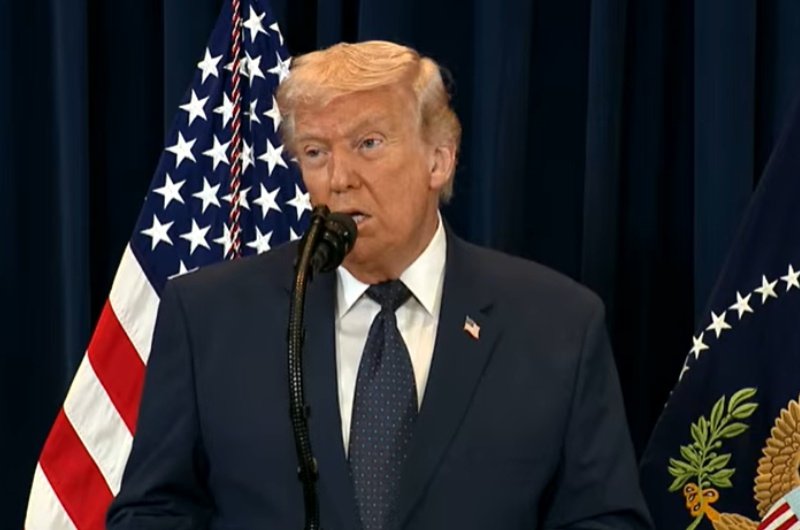
President Donald Trump sought to reassure Americans about the nation’s energy supply during a March 9 press conference, saying the United States has more than enough oil despite rising global tensions. “It doesn’t really affect us. We have so much oil. We have tremendous oil and gas, much more than we need,” Trump said. He added that Venezuela has become “our new partner, great partner,” describing the country as “a massive source of oil, gas, everything.” The comments come as the administration highlights new oil shipments from Venezuela, with more than 100 million barrels projected to enter the supply chain and be refined for U.S. use. Officials say the additional supply is intended to help offset market anxiety tied to conflict in the Middle East and uncertainty surrounding major global shipping routes. Yet across the United States, drivers are beginning to see gasoline prices climb. Energy markets often react quickly to geopolitical risk, and the possibility of disruption in major oil-producing regions can push prices higher even before any real supply shortages appear. For consumers, the situation underscores how closely domestic fuel costs are tied to global events. While new partnerships and additional supply may ease pressure over time, uncertainty in international energy markets can quickly translate into higher prices at the pump.
U.S. Submarine Sinks Iranian Warship, Leaving 87 Dead in Major Naval Escalation
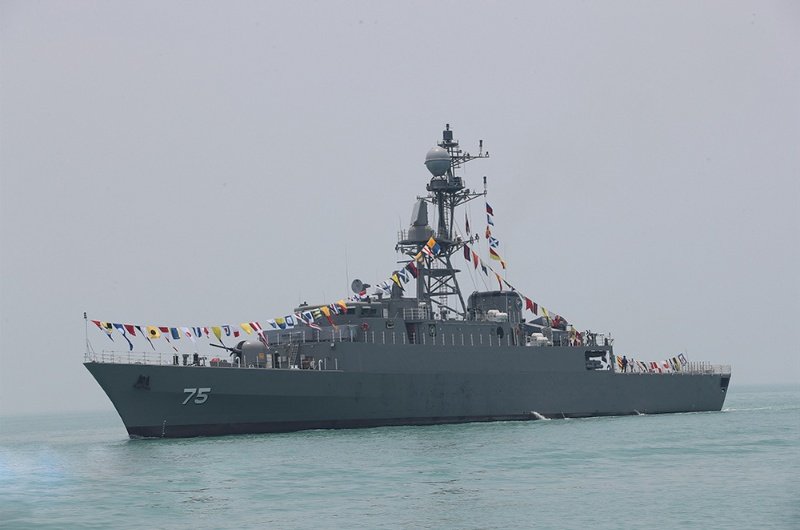
An Iranian naval vessel has been sunk in the Indian Ocean after being struck by a torpedo fired from a U.S. submarine, marking a dramatic escalation in the widening confrontation involving Iran and its adversaries. The ship, identified as the Iranian frigate IRIS Dena, had recently taken part in international naval events hosted by India before beginning its return journey. The attack occurred in international waters south of Sri Lanka, where the vessel issued a distress signal before ultimately sinking. Sri Lanka’s navy responded to the emergency and launched a rescue operation in the area. Officials reported that 32 Iranian sailors were rescued, while 87 bodies were recovered as search efforts continued around the site of the sinking. Military analysts note that the incident is highly unusual in modern naval warfare. The use of a submarine-launched torpedo to destroy a surface warship is rarely seen in contemporary conflicts and has not occurred often since World War II. Iran has condemned the attack and warned of consequences, raising concerns that tensions in the region could expand further into key maritime corridors and international shipping lanes.
Markets Jittery as Oil Surge and Conflict Fears Shake Wall Street

Financial markets are showing signs of strain today as rising oil prices and escalating geopolitical tensions inject new uncertainty into the global economy. U.S. stocks wavered as energy prices surged following the latest developments in the Middle East, with investors increasingly concerned that disruptions to oil supply could ripple across the global financial system. Energy markets reacted quickly, pushing crude prices higher and adding pressure to already fragile inflation expectations. Advertisement For Wall Street, the risk is twofold. Higher oil prices can drive up transportation, manufacturing, and shipping costs, while also complicating the Federal Reserve’s ongoing effort to stabilize inflation and guide the economy toward a soft landing. Market analysts say investors are closely watching whether the current surge in oil prices becomes a short-term spike or the beginning of a longer disruption. Extended volatility could push energy costs higher across the economy and trigger broader market instability. For American households, the first signs of the shift may appear at the gas pump. If energy prices continue climbing, drivers could begin seeing higher fuel prices in the coming weeks, adding another layer of pressure to already stretched household budgets.
Who Decides War? Congress Prepares Vote as Iran Conflict Widens
As the military conflict between the United States, Israel, and Iran intensifies, Congress is preparing for a pivotal vote that could redefine who controls America’s path to war. The U.S. Senate is set to vote Wednesday on a bipartisan war powers resolution requiring congressional approval for continued military action against Iran, with the House expected to follow Thursday. The measure, led by Senator Tim Kaine and supported by several Democrats and a small group of Republicans, is designed to reassert Congress’s constitutional authority over decisions of war and peace. Critics argue the recent air campaign against Iran, launched without explicit congressional authorization, raises fundamental questions about the balance of power between the White House and Capitol Hill. Supporters of the resolution say the United States risks sliding into a broader Middle East conflict without a clear debate or vote by the nation’s elected representatives. Opponents, including many Republican leaders, warn that restricting presidential authority during an active military confrontation could weaken U.S. strategy and signal division to adversaries. Even if the resolution passes Congress, its future remains uncertain. President Donald Trump is expected to veto any measure that limits his authority to continue military operations, meaning lawmakers would need a two-thirds majority to override the veto — a difficult political hurdle. The vote revives a long-running constitutional debate over war powers in Washington. As tensions with Iran continue to escalate, lawmakers are once again confronting a central question: who ultimately decides when America goes to war.
State Department Warns Americans Overseas: Depart Immediately

The U.S. Department of State has issued urgent guidance urging American citizens in parts of the Middle East to depart immediately, expanding evacuation advisories as regional tensions intensify. Officials are advising U.S. travelers and residents in more than a dozen countries to use available commercial transportation to leave as soon as possible, citing escalating security risks and an increasingly unpredictable environment. The advisory now covers Bahrain, Egypt, Iran, Iraq, Israel (including the West Bank and Gaza), Jordan, Kuwait, Lebanon, Oman, Qatar, Saudi Arabia, Syria, the United Arab Emirates, and Yemen. The expansion follows rising hostilities linked to recent U.S.- and Israeli-led military actions targeting Iranian leadership and infrastructure. Officials warn that retaliatory actions and shifting security conditions could affect civilian safety, airspace access, and regional travel routes with little notice. Americans currently in the affected countries are encouraged to enroll in the State Department’s Smart Traveler Enrollment Program (STEP) for real-time alerts and to maintain contact with the nearest U.S. embassy or consulate. Travelers are urged to monitor local developments closely and to consider all available departure options where safe and feasible. The broadened advisory underscores the widening impact of the conflict and signals continued concern from U.S. officials that conditions across the region may deteriorate further in the coming days.
AI in the Kill Chain: How the Speed of Modern Warfare is Changing
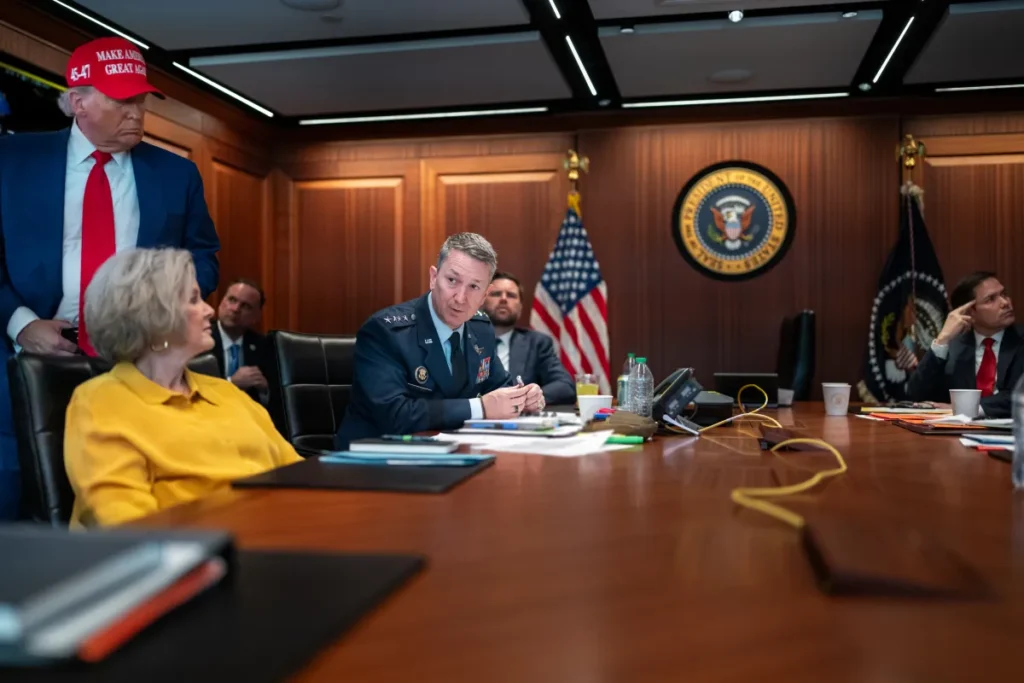
Modern warfare is entering a new and unsettling phase. Artificial intelligence systems are accelerating military decision-making, dramatically shortening the time between identifying targets and authorizing strikes. In some cases, that timeline has been reduced to near real time. Recent reports indicate that U.S. military leaders employed advanced artificial intelligence tools during the latest joint U.S.-Israeli strikes on Iran. These systems were used to assist with intelligence assessment, target identification, and battlefield modeling, helping commanders process massive volumes of data at unprecedented speed. Defense analysts say AI-driven platforms are increasingly capable of analyzing satellite imagery, drone feeds, intercepted communications, and other intelligence streams within seconds. What once required layered review and hours of coordination can now unfold in compressed timeframes, fundamentally altering what military strategists refer to as the “kill chain.” Supporters argue that such systems enhance precision and responsiveness in fast-moving conflicts, allowing commanders to adapt quickly to emerging threats. But critics warn that compressing decision timelines may reduce opportunities for human scrutiny — particularly in complex environments where civilian infrastructure and non-combatants are present. The central debate is how much authority AI should wield in life-and-death decisions. Artificial intelligence has moved beyond the realm of research labs and battlefield simulations. It is now embedded in active military strategy. As global powers continue integrating AI into combat operations, policymakers face mounting questions about oversight, accountability, and whether legal frameworks can evolve quickly enough to keep pace with machines operating at what some describe as the “speed of thought.”
Iran Closes Strait of Hormuz After Strikes, Threatening Global Oil Supply
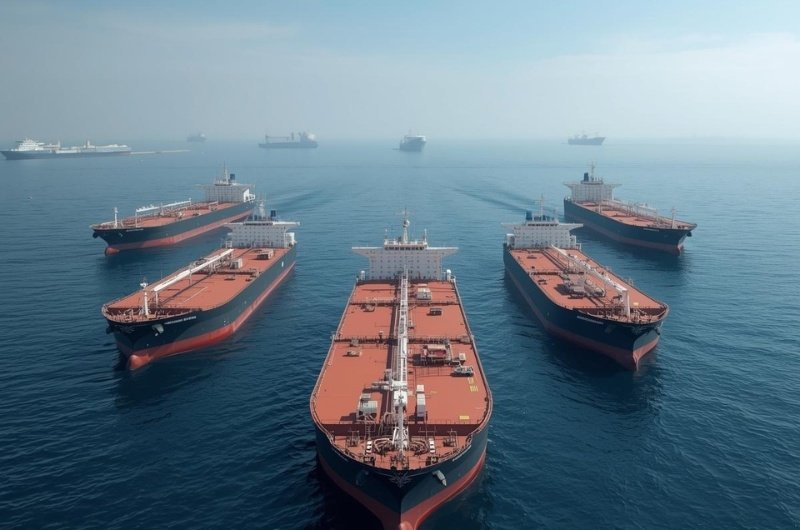
In a direct response to the U.S. and Israeli strike, Iran has closed the Strait of Hormuz — one of the world’s most strategically critical oil shipping routes. The narrow passage serves as a major shipping route for oil exports from Saudi Arabia, the United Arab Emirates, Qatar, Kuwait, and Iraq. A significant portion of the world’s energy supply passes through this corridor. With the strait effectively blocked, global oil markets are already reacting. Analysts warn that prolonged disruption could send energy prices sharply higher, fueling inflation concerns and adding new pressure to economies still navigating post-pandemic recovery and global instability. The closure may also shift global demand patterns. Russia, another major oil producer, could see increased interest from buyers seeking alternative supply routes. Venezuela, which holds some of the largest crude reserves in the world, remains a more complicated option due to refining challenges tied to the quality of its oil. U.S. energy companies have historically expressed hesitation about scaling Venezuelan imports for that reason. The ripple effects extend far beyond the Middle East. Shipping insurers, commodity traders, and central banks are all recalculating risk exposure as volatility increases. If the standoff continues, the economic consequences could reach consumers quickly in the form of higher fuel prices and broader cost increases. As military tensions rise and economic uncertainty spreads, the Strait of Hormuz is once again at the center of a global power struggle — with implications that stretch from regional security to household budgets worldwide. ——————– Related: BREAKING NEWS: U.S. and Israel Strike Iran; Supreme Leader Reported Dead as Region Erupts