

The U.S. government shutdown is freezing vital economic data — leaving markets, analysts, and policymakers flying blind.
The federal government’s shutdown entered its sixth day on Monday, paralyzing key agencies that release the nation’s most-watched economic data. Reports from the Bureau of Labor Statistics, Census Bureau, and Bureau of Economic Analysis — including the jobs report and inflation data — are all on hold until a funding agreement is reached.
This unprecedented blackout of economic data is unsettling markets and businesses alike. Without regular updates on inflation, employment, and GDP, investors are operating without visibility into real-time trends — an issue that could distort everything from stock valuations to rate forecasts.
Federal Reserve officials are also facing uncertainty. Economists warn that without reliable data, the Fed’s next policy decision could be based on incomplete information — potentially prolonging volatility.
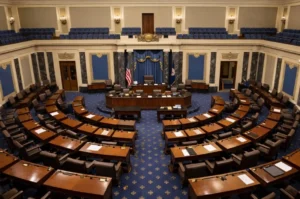
Meanwhile, hundreds of thousands of federal employees remain furloughed, amplifying political pressure in Washington. But negotiations remain stalled, with both parties blaming each other for the impasse.
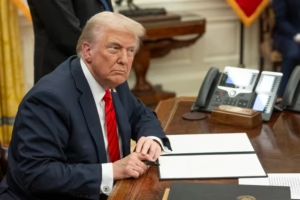
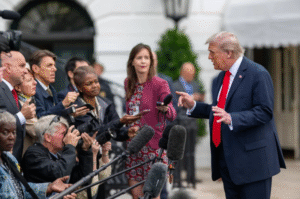
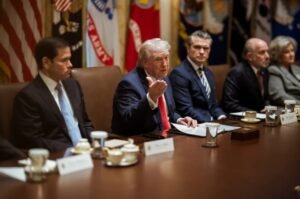
The political fallout is also growing. On Sunday night, President Trump confirmed that layoffs of federal workers were already underway, describing the action as part of the ongoing budget standoff. He again placed blame on Democrats for the impasse but offered no details about the scale or scope of the dismissals.
According to the White House, thousands of federal employees could be permanently let go if the shutdown continues — an escalation that transforms a temporary funding lapse into a long-term employment crisis.
In a separate move, Budget Director Russell Vought has frozen roughly $28 billion in infrastructure funding earmarked for New York, California, and Illinois — states with large Democratic constituencies and vocal critics of the president. The move effectively halts dozens of ongoing and planned projects, adding economic pressure to the regions most affected by the freeze.
The Takeaway
The shutdown is no longer just about delayed paychecks. It’s triggering layoffs, halted infrastructure projects, and widening the political divide over who bears the blame.