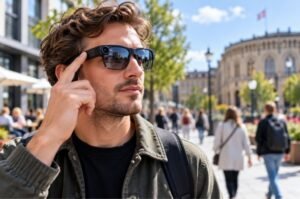


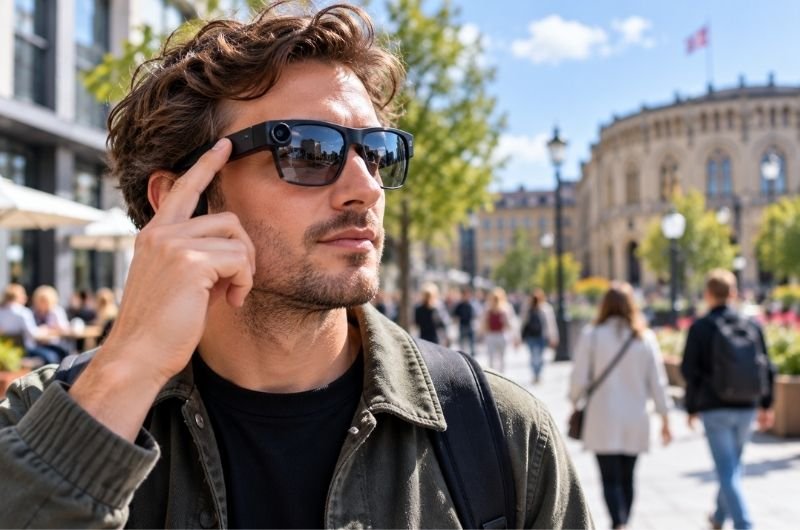
Norway is moving toward a temporary ban on AI-powered smart glasses in some public spaces, as the devices raise new concerns about people being photographed, filmed or recorded without realizing it.
The Norwegian government announced Monday that it plans to send legislation to Parliament that would temporarily prohibit the use of AI glasses in selected locations. Officials say the pause would give the country time to study the technology and develop permanent national rules.
The restrictions could reach far beyond particularly sensitive locations. The government says parks, beaches, museums, shopping centers, public events and other places where people regularly gather are among the locations being considered. Schools, kindergartens, playgrounds and youth clubs could also be included, along with healthcare facilities, swimming pools and gyms with changing rooms or showers.
Smart glasses can place cameras, microphones and increasingly powerful AI capabilities into something that looks much like an ordinary pair of glasses. That makes the technology considerably less noticeable than holding up a smartphone to take a photograph or record video — and creates a new privacy problem for people standing nearby.
Norway is not proposing a complete ban. Private use and use in some locations would remain possible, and the government plans to consider exceptions for vulnerable groups and socially beneficial uses of wearable technology. Officials also have not yet determined whether the temporary rules will apply only to glasses combining cameras with AI or extend to other wearable devices capable of recording audio or video.
An expert group will examine the broader implications of wearable technology and recommend permanent regulations. The government says it wants the temporary restrictions in place while that work proceeds.
The Readovia Lens
Smart glasses are beginning to test a privacy boundary smartphones never fully crossed. A person holding up a phone provides a visible clue that a camera may be recording. When the camera is built into something worn on the face, that signal can disappear — and Norway is essentially asking whether the rules should change with it.