


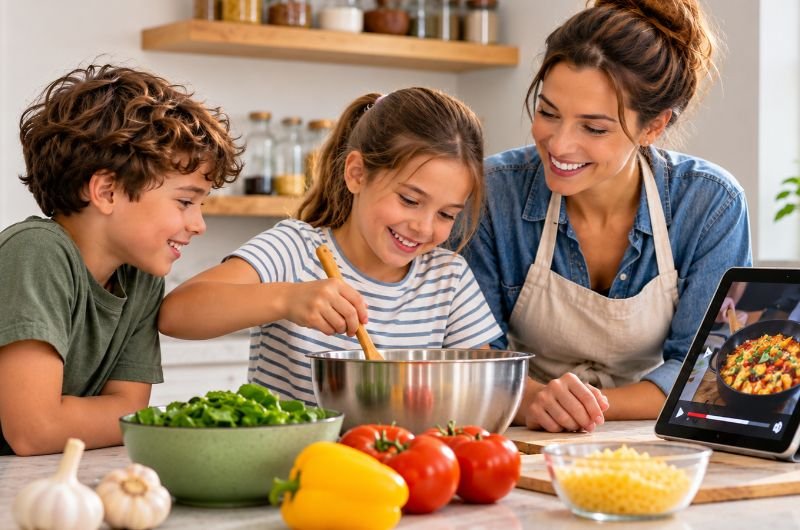
Americans are changing how they decide what to eat, with more households turning to home cooking, plant-based meals, meal kits, and recipes discovered on social media. Research released in August 2026 by FMI, The Food Industry Association, found that approximately half of surveyed grocery shoppers were cutting back on restaurant meals, takeout, and delivery. Meanwhile, 44% reported having more family meals at home, and 35% said they were cooking more frequently.
Social media is helping turn ordinary home cooks into serious competition for restaurants. According to the Spring 2026 Food Pulse survey from communications firm MorganMyers, 68% of surveyed consumers used social media for recipe inspiration. Instagram, YouTube, and TikTok cooking creators are showing viewers how to prepare everything from restaurant-style pasta and crispy chicken sandwiches to elaborate dinners and desserts. Recipes that once seemed intimidating are now accessible through step-by-step videos, often using ingredients already available at the grocery store.
Healthier eating is adding another dimension to Americans’ changing food choices. Some consumers are exploring vegetarian and vegan diets, while others are simply reducing meat consumption, incorporating more vegetables and whole foods, or paying closer attention to ingredients and portion sizes. Preparing meals at home gives people greater control over what goes into their food, although homemade meals are not automatically healthier. These preferences also create opportunities for grocery retailers and food brands offering plant-based alternatives and fresh meal solutions.
Convenience remains essential, and companies such as HelloFresh and Home Chef are offering another alternative to the drive-thru. Meal kits deliver measured ingredients and cooking instructions, reducing the planning involved in preparing dinner, while ready-to-heat meals and grocery-store prepared foods offer even quicker solutions. Although these options vary in price and preparation time, they give households more ways to enjoy convenient meals without relying on traditional fast-food restaurants. The competition for America’s next meal now extends from restaurant counters to grocery aisles, delivery boxes, and home kitchens.
The Readovia Lens
Fast-food restaurants built their popularity around convenience, familiar meals, and affordable prices. Those advantages still matter, but Americans now have more choices about what to eat and how to prepare it. A vegan dinner, a meal-kit subscription, or a restaurant favorite recreated from a YouTube tutorial can all compete for the same household food budget. As restaurant operators confront rising costs and changing customer habits, the American kitchen is becoming an increasingly important part of the competition.
——————–
Related:
The Competition for America’s Next Meal Is Sizzling — and Fast-Food Restaurants Are Feeling the Heat