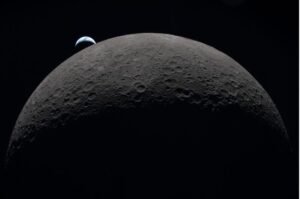

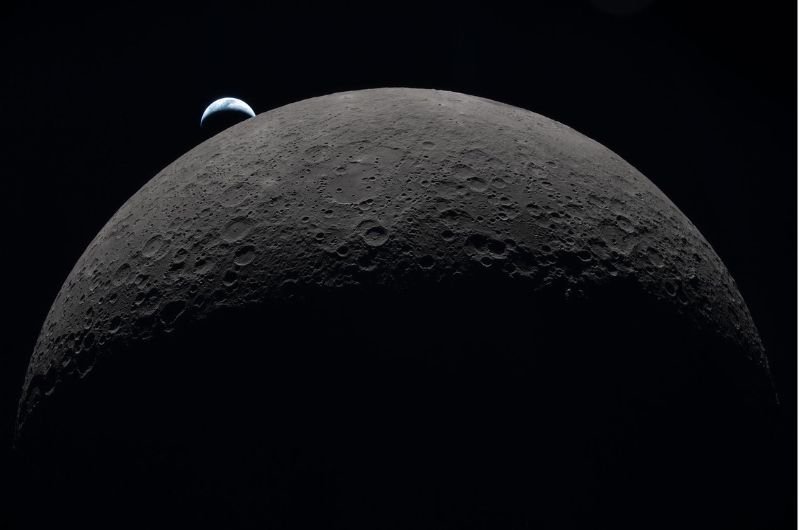
Before the next astronauts establish a foothold on the Moon, robotic explorers could already be surveying the terrain, searching for water ice, and preparing the infrastructure needed for humans to live and work there. The National Aeronautics and Space Administration (NASA) announced a new series of lunar missions and commercial contracts on November 7, bringing its vision of a permanent human outpost another step closer to reality.
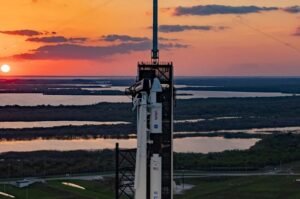
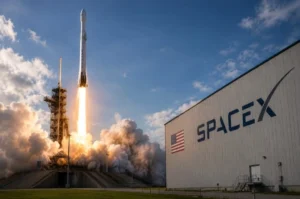
The ambitious plan calls for far more than rockets and landing vehicles. NASA intends to establish a network of robotic explorers, cargo transportation services, communications systems, and power infrastructure near the Moon’s South Pole. Eight aerospace companies, including SpaceX, Blue Origin, and Lockheed Martin, have been selected to compete for future lunar deliveries under a contract framework with a combined maximum value of $10 billion over 10 years. The objective is to begin assembling the essential components of a lunar base before astronauts arrive.
Among the most intriguing developments is a nuclear-powered rover called Polar Rover for Observation, Mapping, and In-Situ Exploration (PROMISE). The six-wheeled vehicle will venture into some of the Moon’s darkest and coldest regions, where scientists believe valuable deposits of water ice may be preserved. Equipped with a drill capable of reaching approximately three feet beneath the lunar surface, PROMISE will investigate underground materials, analyze potential resources, and help identify suitable locations for future exploration. NASA plans to launch the rover in late 2028 for an 18-month mission, using components adapted from its successful Mars rover program.
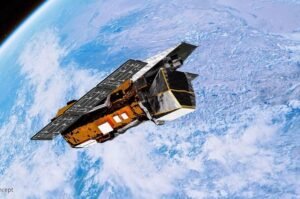
But PROMISE won’t be exploring alone. NASA is also developing highly mobile MoonFall drones designed to investigate terrain beyond the reach of conventional rovers. Meanwhile, commercial spacecraft will test ways to transport cargo between Earth and lunar orbit, and SpaceX has been selected for a 2028 demonstration involving communications satellites that could eventually help keep astronauts connected with mission controllers. NASA is also investing in compact solar-power and communications infrastructure to support equipment operating on the lunar surface.
The Moon’s South Pole presents an extraordinary opportunity—and an equally formidable challenge. Some crater interiors remain in permanent shadow, potentially preserving water ice that could support future exploration. Other areas offer access to sunlight that may help generate electricity. Yet the environment is unforgiving, with extreme temperatures, difficult terrain, and no existing infrastructure. By sending machines ahead of people, NASA hopes to learn where to operate, what resources may be available, and how to reduce the risks of future human missions.
The Readovia Lens
Imagine arriving at a remote destination where the roads have already been surveyed, essential supplies delivered, and communications established. That is increasingly the approach NASA is taking to lunar exploration. Rather than treating each Moon landing as an isolated expedition, the agency is attempting to build a transportation and support network that could make repeated missions—and eventually extended stays—possible.
Much remains uncertain. Developing dependable lunar infrastructure will require successful landings, reliable equipment, sustained investment, and cooperation among numerous commercial partners. The newly announced contracts represent opportunities and planned missions, not a completed Moon base. Still, the strategy marks an important shift in space exploration: the next chapter of humanity’s relationship with the Moon may begin not with astronauts planting a flag, but with robots preparing a place for them to stay.