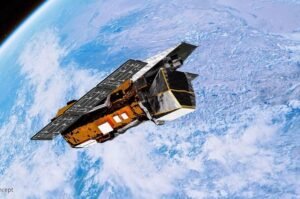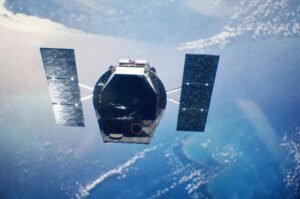


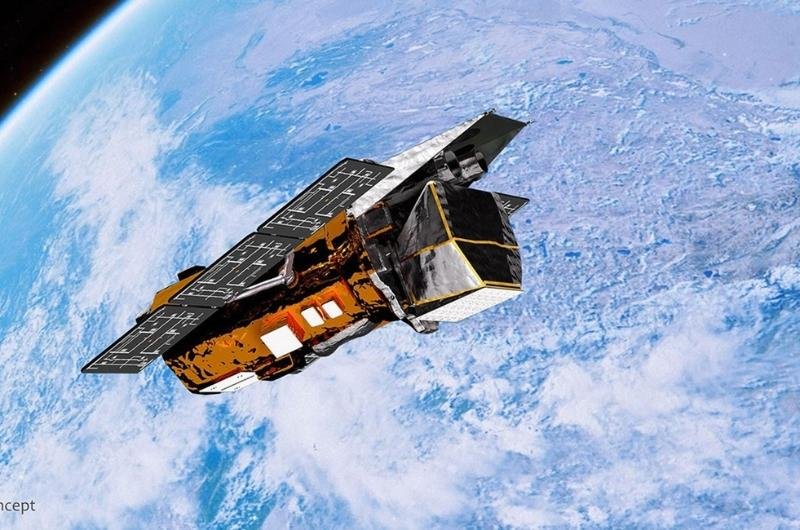
NASA’s Neil Gehrels Swift Observatory is approaching the end of an extraordinary mission, with the aging spacecraft expected to re-enter Earth’s atmosphere on November 4 after nearly 22 years in orbit. Originally designed to operate for just two years, the space telescope became one of NASA’s most productive tools for studying powerful explosions and other rapidly changing events across the universe.
Launched in November 2004, Swift was built to detect gamma-ray bursts, enormous flashes of energy associated with some of the most violent events in space. Its three telescopes allowed scientists to study these explosions using different wavelengths of light, while the spacecraft’s ability to quickly change direction helped astronomers observe events that might otherwise disappear before they could be studied.
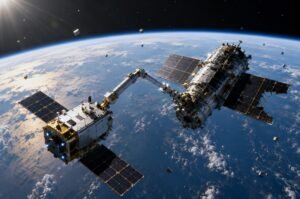
Swift’s long mission eventually faced a challenge that even its remarkable durability could not overcome. Increased solar activity accelerated atmospheric drag, gradually pulling the spacecraft into a lower orbit. NASA partnered with Katalyst Space Technologies on an ambitious robotic rescue mission intended to raise Swift to a safer altitude, but problems with the rescue spacecraft prevented the planned boost. The attempt was abandoned in August.
Despite the unsuccessful rescue, Swift continued making scientific observations until October 20, when its declining altitude made stable operations impossible. NASA subsequently ended the mission and prepared the spacecraft for re-entry. The approximately 3,200-pound observatory is expected to largely burn up in Earth’s atmosphere, although some components could survive. NASA has estimated that the likelihood of harm to anyone on the ground is low.
Swift leaves behind an extraordinary scientific legacy. During nearly 22 years in space, the observatory detected more than 2,000 gamma-ray bursts and observed approximately 1,400 supernovas, helping astronomers investigate exploding stars, distant galaxies, supermassive black holes and other cosmic phenomena. Its observations contributed to approximately 7,000 scientific papers, while its rapid alerts enabled telescopes around the world to capture fleeting astronomical events. Although Swift’s mission is ending, the wealth of scientific data it collected will continue supporting discoveries for years to come.