NASA’s Nancy Grace Roman Space Telescope is officially on its way, beginning a million-mile journey that could transform scientists’ understanding of dark energy, dark matter and planets beyond our solar system.
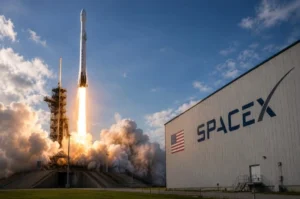
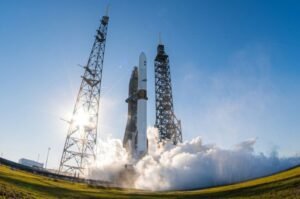
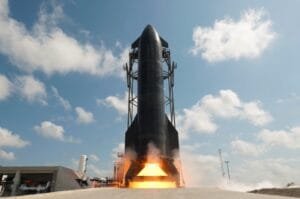
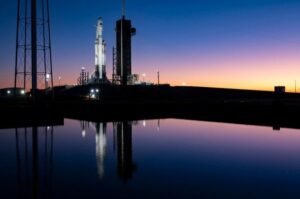
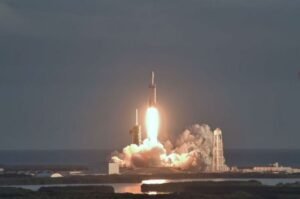
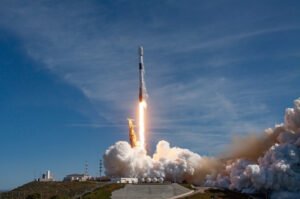
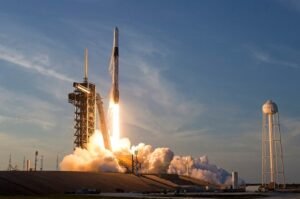
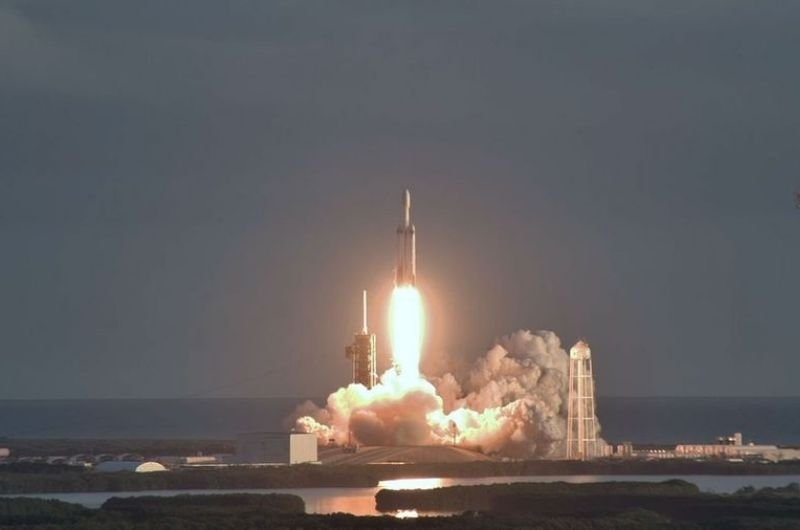
Roman lifted off Sunday at 7:26 a.m. EDT aboard a SpaceX Falcon Heavy rocket from Launch Complex 39A at NASA’s Kennedy Space Center in Florida. The telescope separated from the rocket about 31 minutes later and began flying on its own, while ground controllers successfully established communications with the observatory.
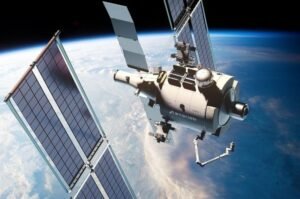
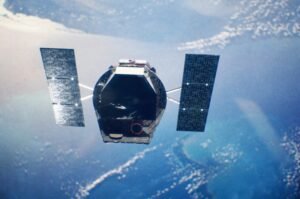
The telescope is now traveling toward the second Sun-Earth Lagrange point, known as L2, about one million miles from Earth. The journey will take roughly three months as NASA powers up and calibrates Roman’s instruments. Its solar panels and lower instrument sunshade have already deployed successfully, marking two of the first major post-launch milestones.
Once science operations begin, Roman will survey enormous portions of the universe using a 300-megapixel infrared camera equipped with 18 detectors. Its combination of a wide field of view and rapid scanning will allow it to survey the sky as much as 1,000 times faster than the Hubble Space Telescope, helping scientists map galaxies across cosmic history and investigate how dark matter and dark energy have shaped the universe. Roman will also search for thousands of exoplanets and test technology designed to directly image worlds orbiting other stars.
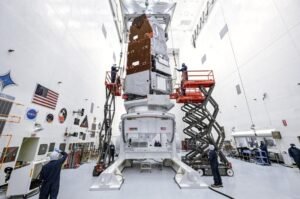
Roman’s origins are nearly as unusual as its mission. The telescope’s primary mirror traces back to hardware donated to NASA by the National Reconnaissance Office in 2012, giving technology originally developed for reconnaissance a new purpose looking outward into deep space. The observatory ultimately launched ahead of schedule, and NASA says it will transmit about 1.4 terabytes of data every day — the highest data rate yet for a NASA astrophysics mission. Scientists, artificial intelligence systems and citizen scientists will help sift through that enormous stream of observations.
NASA expects Roman’s first images in early 2027. If everything proceeds as planned, those images will mark the beginning of a five-year primary mission designed not simply to look deeper into individual corners of space, but to give astronomers a sweeping new view of the universe — including some of the parts we still understand the least.