
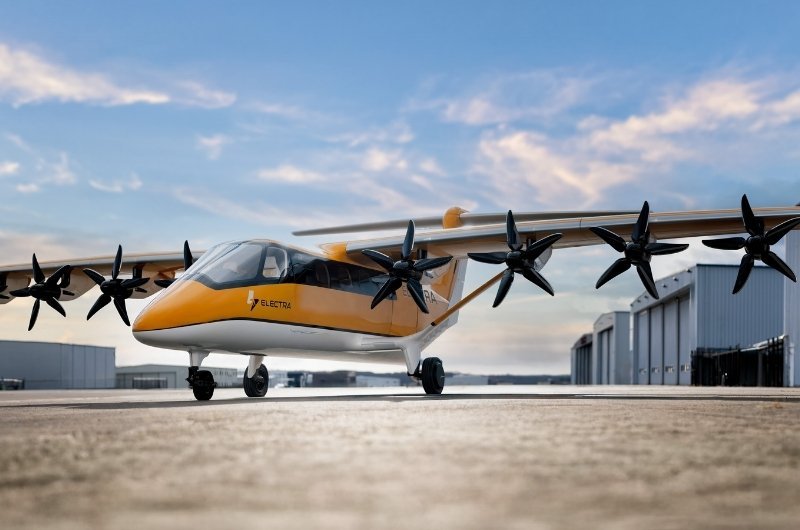
A new kind of regional air network is being tested in the Northeast, where hybrid-electric aircraft could eventually allow travelers from smaller communities to reach major airline hubs without first making a long drive to a large airport.
The FAA announced Tuesday that Electra and transportation agencies in Pennsylvania and New Jersey completed demonstration flights between Manassas, Virginia, and Philadelphia. The route included stops at smaller airports in New Jersey and Pennsylvania before reaching Philadelphia International Airport, giving regulators a real-world look at how advanced aircraft could operate between local airports and major commercial hubs.
The technology behind the idea is unusual. Electra is developing the EL9, a nine-passenger hybrid-electric airplane designed to take off and land in about 150 feet. Instead of relying on a conventional runway, the aircraft uses multiple electric motors to blow air across its wings, generating enough lift to operate at very low speeds. The company says the production aircraft is being designed for trips of up to 330 nautical miles while carrying nine passengers.
That short-runway capability could dramatically expand the number of places capable of supporting regional flights. Small general-aviation airports that see relatively little passenger service today could potentially become feeder points for larger hubs, while other compact aviation sites could eventually support some operations. The FAA is using the demonstrations to identify regulatory and operational gaps before advanced-air-mobility aircraft are integrated more broadly into the national airspace system.
The Readovia Lens
The most interesting part of this experiment may not be the hybrid-electric aircraft itself. It is the possibility of changing where an airline journey begins. Instead of driving an hour or more to a major airport, some travelers could eventually start at a small airport much closer to home and connect by air to a larger hub. The technology is still moving through certification and testing, but the FAA is now examining what the network around these aircraft could actually look like.