

You don’t need to be in the Middle East to feel the pressure. After the U.S. launched airstrikes on Iran’s nuclear sites, cities across America are quietly shifting into high alert.
In New York City, Washington, D.C., Los Angeles, and Chicago, local authorities have increased security around synagogues, mosques, government buildings, and major transportation hubs. Homeland Security has issued a domestic threat bulletin citing the potential for “inspired retaliation” following the U.S. military action overseas.
In simple terms: America just stepped into a war, and the ripple effect is making its way to our streets, airports, and inboxes.
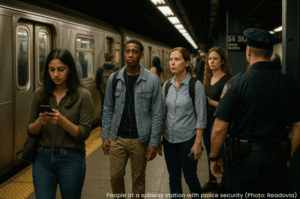
Subways, Sidewalks, and Silent Precautions
You won’t see tanks in the streets—but you might notice a few things: more patrol cars parked outside houses of worship. TSA pulling more bags for inspection. Metal detectors where there weren’t any last week.
These are the early layers of preparedness—the kind of things cities do when global tension turns personal.
For some Americans, it stirs memories of 2003. For others, it raises new questions about how much protection feels like too much.
Public Pulse: Cautious, But Not Panicked
While cable news is locked on missiles and airbases, regular people are talking about safety. Parents are checking school updates. Social feeds are filling up with commentary, concern, and confusion.
And for many, the question isn’t just “Are we safe?”—it’s “What’s next?”
The Author

Ava Rhodes
Staff Writer, Readovia