

Trump Expected to Sign Order Accelerating Cannabis Reclassification

President Donald Trump is expected to sign an executive order this week aimed at accelerating the federal reclassification of cannabis, a move that would mark a significant shift in U.S. drug policy and regulatory oversight. According to officials familiar with the matter, the order would direct federal agencies to expedite the review process under the Controlled Substances Act, where marijuana is currently listed in the most restrictive category. Reclassification would reduce federal barriers that have long limited medical research and complicated regulatory frameworks for cannabis-related activity. The administration has framed the move as a way to modernize federal policy, particularly in areas related to scientific study and medical use. Trump has said easing restrictions could unlock broader research opportunities that are currently constrained by marijuana’s classification under federal law. While the executive order would not legalize cannabis nationwide, it could reshape how federal agencies regulate the substance and how states align their own policies. A lower classification could also ease compliance burdens for researchers and clarify legal uncertainties that have affected businesses operating in states where cannabis is already legal. The White House has not released specific details on the timeline or scope of the reclassification process, but the expected order signals growing momentum toward a federal reassessment of marijuana policy after decades of unchanged classification.
BREAKING NOW: Nick Reiner, Son of Hollywood Power Couple, to Face Double Murder Charges, Prosecutor Says

4:15 pm (EST) Los Angeles County prosecutors are expected to formally file double murder charges this afternoon against Nick Reiner, the 32-year-old son of acclaimed filmmaker Rob Reiner and producer Michele Singer Reiner, according to the district attorney’s office. District Attorney Nathan Hochman announced that the case will move forward with two counts of murder, along with a special allegation involving the use of a deadly weapon. Prosecutors allege that a knife was used in the killings, elevating the severity of the charges and potential penalties. The announcement marks a significant escalation in a case that has drawn national attention due to the prominence of the victims and the familial relationship at the center of the investigation. Authorities have not publicly disclosed a motive, and additional details surrounding the circumstances of the deaths remain limited. Nick Reiner remains in custody as the case advances. Prosecutors are expected to outline the charges in greater detail once filings are officially entered later today. ——————– Related: UPDATE: Hollywood Director Rob Reiner and Wife Found Dead at Los Angeles Home Michelle Obama Responds to Trump’s Remarks With a Personal Tribute to the Reiners
U.S. Unemployment Hits Four-Year High as Job Cuts Begin to Spread

The U.S. labor market is showing clear signs of strain, according to newly released employment data covering both October and November. The unusually combined report reflects months of disrupted data collection during a prolonged federal government shutdown, offering a rare, uneven snapshot of an economy losing momentum. Employers cut roughly 105,000 jobs in October, followed by a modest rebound of 64,000 jobs added in November. While the November gain helped offset part of the earlier decline, it fell short of expectations and underscored how fragile hiring has become as businesses pull back on expansion plans. The unemployment rate climbed to 4.6% in November, its highest level in four years, signaling that job losses and slower hiring are beginning to affect more workers. Economists caution that the figure may still understate the broader slowdown, as gaps in survey responses during the shutdown likely left some labor market stress uncounted. Job growth in November was concentrated in a narrow set of sectors, including healthcare, construction, and social assistance, while manufacturing employment continued to contract. At the same time, wage growth cooled sharply, with average hourly earnings rising only modestly — one of the slowest monthly increases in years — adding to concerns that workers are losing leverage after several years of strong gains. The delayed data release itself has become part of the story. The 43-day federal government shutdown disrupted labor surveys, furloughed hundreds of thousands of federal workers, and created unusual gaps in reporting, making it harder for policymakers and businesses to assess real-time economic conditions. Taken together, the figures reinforce a broader shift underway. Hiring momentum has slowed, businesses are growing more cautious, and wage pressures are easing — trends that align with the Federal Reserve’s decision to cut interest rates multiple times in 2025 as officials respond to cooling economic activity. While the labor market remains far from collapse, the latest data suggests the era of easy job gains has passed. What replaces it — a soft landing or a deeper slowdown — will likely hinge on whether hiring stabilizes in the months ahead or continues to weaken under mounting economic pressure.
UPDATE: Hollywood Director Rob Reiner and Wife Found Dead at Los Angeles Home

——————————– 10:51 a.m. (Eastern) UPDATE: Reiners’ Son Arrested in Stabbing Deaths of Director and Wife Authorities have arrested the adult son of actor and director Rob Reiner following the deaths of Reiner and his wife, who were found stabbed at their Los Angeles home over the weekend. Law enforcement officials said the suspect was taken into custody without incident and is expected to face criminal charges. Investigators said there is no ongoing threat to the public as the case remains under active investigation. ——————————– Actor and director Rob Reiner and his wife were found dead Sunday at their Los Angeles home, according to reports, prompting an active investigation by local authorities. Emergency responders were called to the residence after a welfare check request. Upon arrival, officers discovered two deceased individuals inside the home. Officials have not released further details about the circumstances surrounding the deaths. Authorities said there is no indication of an immediate threat to the public. The investigation remains ongoing as detectives work to determine the events leading up to the discovery. Reiner, a prominent figure in American film and television, is best known for directing acclaimed works including The Princess Bride, When Harry Met Sally…, and This Is Spinal Tap, as well as his early acting role on All in the Family. No official statement has been released by the family.
Mass Shooting at Bondi Beach Kills at Least 15 in Sydney

At least 15 people were killed and dozens more wounded in a mass shooting Sunday evening at Sydney’s Bondi Beach, where hundreds had gathered for a Hanukkah celebration near the iconic shoreline, Australian authorities said. Police said two armed men opened fire on attendees in a park area near the beach, turning what had been a festive community gathering into a scene of panic and violence. Officers responded quickly, killing one suspect at the scene and taking the second into custody in critical condition. Authorities later classified the attack as an act of terrorism targeting the Jewish community during the first day of the holiday. Investigators identified the attackers as a father and his adult son, who officials said acted alone and were not part of a broader terror network. Authorities said they expect to bring criminal charges against the surviving suspect once his medical condition allows. At least 38 people remain hospitalized, with victims ranging in age from 10 to 87. Emergency responders described chaotic scenes as families and children fled amid gunfire. Authorities said the older suspect, a 50-year-old man, was shot and killed by police. His 24-year-old son remains hospitalized in a coma. The father had lived in Australia for decades after arriving on a student visa in the late 1990s and legally possessed a firearm through a recreational hunting license. Neither suspect had a known criminal history, though the younger man had previously come to the attention of police several years ago. Intelligence officials said no evidence of radicalization had been found at that time. Police also confirmed that two improvised explosive devices were discovered at the scene and safely disabled. A bystander who intervened and disarmed one of the attackers was seriously injured and remains hospitalized. Officials praised his actions, saying his bravery likely saved lives. National leaders condemned the attack and said discussions are underway about strengthening Australia’s gun laws, including potential limits on firearm ownership and tighter licensing requirements. Authorities said the investigation remains ongoing and that additional details will be released as they become available.
Home Price & Mortgage Outlook for 2026

As Americans head into 2026, housing market forecasts point toward a year of gradual stabilization rather than dramatic shifts. After years of sharply rising prices and elevated borrowing costs, analysts now expect slower home price growth, modestly lower mortgage rates, and incremental improvements in affordability for prospective buyers. National projections suggest home prices will continue rising next year, but at a much slower pace than in recent years. Instead of double-digit gains, growth is expected to flatten in many regions, signaling a cooling market that may ease pressure on buyers who have been priced out. Mortgage rates, while still elevated by historical standards, are expected to drift lower in 2026. Analysts anticipate rates settling into a more manageable range, offering modest relief for borrowers without returning to the ultra-low levels seen during the pandemic era. Affordability is likely to improve gradually rather than dramatically. Slower price growth combined with steady wage gains could help stabilize monthly housing costs, though high interest rates and limited inventory will continue to challenge many households. Sales activity is expected to remain mixed. Some markets may see renewed buyer interest as conditions improve slightly, while others—particularly those that overheated in recent years—could experience price corrections as inventory builds and demand softens. Overall, 2026 is shaping up to be a transitional year for U.S. housing. While the market is unlikely to swing decisively in favor of buyers, the era of runaway price growth appears to be fading, replaced by a more balanced landscape where patience and regional strategy matter more than timing alone.
Winter Storm Intensifies Over Great Lakes, Bringing Travel Delays Across Northeast
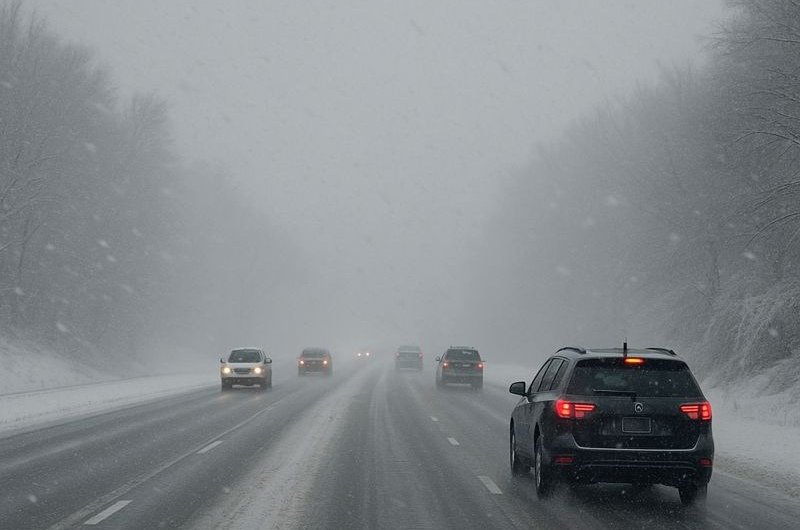
A powerful winter storm that swept through the Midwest earlier this week has now shifted into the Great Lakes and Northeast, bringing strong winds, fresh snowfall, and challenging travel conditions to millions of residents. The system’s core is currently centered over Michigan and tracking northeast through the day. Forecasters say gusts could reach up to 65 mph in parts of the Great Lakes region, creating blowing snow, reduced visibility, and hazardous road conditions. Snowfall totals vary widely, with heavier bands forming over areas downwind of the lakes as colder air continues pushing in behind the storm. While the Midwest experienced the storm’s initial impact days earlier, today’s conditions are hitting the Great Lakes and interior Northeast most directly. Winter Weather Advisories and Winter Storm Watches are in effect for parts of upstate New York and Pennsylvania, where the storm is expected to intensify through the afternoon and evening. Air travel has already been affected at airports in Detroit, Cleveland, and Buffalo, with airlines warning of additional delays as snow bands shift and winds strengthen. Travelers heading into the region are encouraged to monitor airline updates and prepare for changing conditions. Meteorologists expect the storm to gradually weaken late tonight into Friday, though lingering snow showers and wind gusts may continue to disrupt travel. Officials across affected states are urging motorists to use caution and remain alert to updated forecasts as crews work to keep highways clear.
Trump Considers Potential Withdrawal of U.S. Support for Ukraine

President Donald Trump indicated this week that his administration may reconsider the level of American support provided to Ukraine, raising questions about the future of U.S. involvement in the ongoing conflict with Russia. Speaking during recent remarks, Trump suggested that U.S. aid commitments could be reviewed as part of a broader reassessment of foreign policy priorities. While no formal policy change has been announced, the comments signal a potential shift from the current approach. The United States has been Ukraine’s largest source of military, financial, and humanitarian assistance since Russia’s full-scale invasion, with aid approved through successive congressional packages. Any adjustment to that support would represent a significant change in U.S. foreign policy. Trump’s remarks arrive as debates continue in Washington over defense spending, overseas commitments, and the scope of U.S. involvement in global conflicts. Lawmakers from both parties have previously expressed differing views on long-term aid to Ukraine. No timeline or specific details were provided regarding possible changes, and the administration has not issued additional clarification. For now, Trump’s comments stand as the clearest indication to date that U.S. backing of Ukraine may face renewed scrutiny.
Gas Prices Fall Below $3 in Most States, Offering Broad Relief for U.S. Drivers

The national average price for a gallon of regular gas has dropped below $3.00 for the first time since May 2021, bringing noticeable relief to American drivers as the year winds down. New data shows prices are now under that mark in a majority of U.S. states, easing a cost that has weighed heavily on household budgets for years. According to figures from GasBuddy, regular gas prices have fallen below $3 per gallon in 37 states, below $2.75 in 22 states, and below $2.50 in five states as of early December. The declines mark one of the broadest nationwide pullbacks in fuel prices in more than three years. The drop is being driven by a combination of lower global crude oil prices and the seasonal transition to winter-blend gasoline, which is cheaper to produce than the fuel used during peak summer driving months. Together, those factors have helped push prices downward at a speed not seen since before the inflation surge of the early 2020s. The White House has pointed to the declining prices as evidence that broader inflation pressures are continuing to ease, noting that fuel costs influence everything from commuting to food transportation. While officials highlight the trend as a positive economic signal, analysts caution that fuel markets remain sensitive to global events and supply disruptions. Still, for millions of drivers, the immediate impact is tangible. With fuel prices now well below recent highs, the decline offers rare breathing room for households adjusting to elevated costs across much of the economy — even if questions remain about how long the relief will last.
Trump Announces $12 Billion Aid Package for U.S. Farmers Amid Market Strain

President Donald Trump announced a $12 billion aid package for American farmers, aimed at offsetting significant financial losses caused in part by reduced exports to China. The emergency assistance targets growers hit by falling crop prices and lost foreign sales after China sharply curtailed purchases of U.S. agricultural products. The administration described the funding as a bridge for farmers producing staple crops such as soybeans, corn, wheat, cotton, and rice — commodities that once relied heavily on Chinese demand. Before trade disruptions, China was the largest buyer of U.S. soybeans, and the sudden decline in exports left many farmers with oversupply and diminished income. As Chinese buyers shifted to alternative suppliers in South America and elsewhere, American farmers were forced to sell at lower prices or store excess crops, further straining already tight margins. Combined with rising costs for seed, fertilizer, and fuel, the loss of access to the Chinese market has had a lasting impact on farm profitability. Supporters of the plan say the $12 billion package acknowledges those losses and provides necessary relief for rural communities that absorbed the economic shock of disrupted trade flows. The payments are expected to be distributed through existing federal agriculture programs, allowing funds to reach farms relatively quickly. Critics argue that while the assistance helps address short-term damage, it does not resolve the longer-term challenge of rebuilding export markets once dominated by China. Still, the announcement signals a renewed effort by Washington to stabilize the farm economy while broader trade negotiations and market adjustments continue.