


Republicans Break Ranks With Trump Over Greenland Strategy
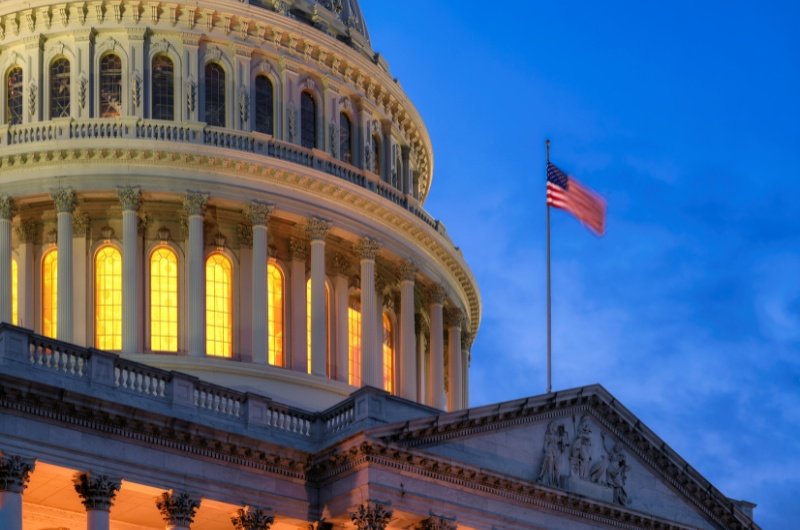
President Trump’s push to assert U.S. control over Greenland is facing rare resistance from within his own party, as several Republican leaders publicly criticize the strategy and warn of long-term consequences for U.S. alliances. Prominent Republicans have expressed concern that threatening tariffs — and floating more aggressive measures — against NATO allies could fracture relationships that have anchored U.S. foreign policy for decades. Some lawmakers described the approach as risky, arguing it underscores the need for diplomacy rather than economic or political pressure. Several GOP figures emphasized that Greenland’s future cannot be dictated unilaterally and cautioned that escalating tensions with European partners could weaken NATO’s collective strength. Others pointed to Congress’s constitutional role in foreign policy and defense matters, signaling limits to executive authority. Behind the scenes, congressional leaders are reportedly working to reassure European counterparts that the United States remains committed to cooperation and alliance stability, even as the White House escalates its rhetoric. The internal pushback marks one of the clearest foreign-policy splits within the Republican Party in recent years and reflects broader unease about the direction of U.S. engagement with long-standing allies.
Fixed vs. Adjustable-Rate Mortgages: Why Fixed Loans Are the Safest Bet for Most Buyers

Buying a home is one of the largest financial decisions most people will ever make. Yet one of the most important choices buyers face — fixed-rate versus adjustable-rate mortgages — is often misunderstood or rushed through during the excitement of house hunting. While adjustable-rate mortgages (ARMs) can look appealing at first glance, fixed-rate mortgages remain the safest and most predictable option for the vast majority of homebuyers. Here’s why. The Key Difference, Explained Simply A fixed-rate mortgage locks in your interest rate for the life of the loan. Your monthly principal and interest payment never changes, regardless of what happens in the broader economy. Advertisement An adjustable-rate mortgage, on the other hand, starts with a lower introductory rate for a set period — often five, seven, or ten years — before adjusting periodically based on market conditions. Once that adjustment period begins, your payment can rise significantly. On paper, ARMs can look cheaper. In real life, they often introduce risk that many homeowners are unprepared for. Why Predictability Matters More Than a Low Introductory Rate Housing costs don’t exist in a vacuum. Property taxes rise. Insurance premiums increase. Maintenance costs are unpredictable. A fixed-rate mortgage removes at least one major variable from the equation. With a fixed loan: Your interest rate stays the same Your principal and interest payment remain stable Budgeting becomes easier Long-term planning is clearer Worth Noting If your property taxes and homeowners insurance are rolled into your monthly mortgage payment through an escrow account, that total payment can still increase over time. This typically happens when taxes or insurance premiums rise — not because your mortgage rate has changed. Even so, locking in a fixed interest rate protects the largest and most volatile portion of your housing cost, which is why fixed-rate loans continue to offer greater peace of mind for most buyers. The Hidden Risk of Adjustable-Rate Mortgages ARMs are often marketed with the promise that homeowners can refinance before the rate adjusts. But refinancing is never guaranteed. It depends on: Interest rate conditions Home values Credit scores Income stability Is Refinancing Guaranteed? If rates rise sharply or a borrower’s financial situation changes, refinancing may not be possible — leaving homeowners exposed to higher payments at exactly the wrong time. In many cases, ARM borrowers are betting on the future. Fixed-rate borrowers are planning for it. When an Adjustable Rate Might Make Sense There are limited situations where an ARM can be reasonable. These include: Buyers who are certain they will sell within a short time frame Households with significant financial buffers Investors using short-term financing strategies Weighing In Even if an ARM appears feasible, the risks should be clearly understood. For most families planning to stay in their homes for years, the potential downside often outweighs the initial savings. The Bottom Line A fixed-rate mortgage isn’t about chasing the lowest possible payment today. It’s about protecting yourself from uncertainty tomorrow. For buyers who value stability, long-term planning, and peace of mind — especially first-time homeowners — fixed-rate mortgages remain the safest and most responsible choice.
Will AI Take My Job — Or Change It? The Question Everyone Is Asking in 2026

As artificial intelligence becomes more visible in everyday work, one question is rising above the rest: will AI take my job — or change it? In 2026, that question is showing up in workplace conversations across industries as employees and employers alike try to understand and navigate what comes next. Across industries, AI is increasingly handling routine, repetitive, and time-consuming tasks. But instead of eliminating entire roles, many companies are reshaping jobs around human strengths like judgment, creativity, communication, and strategic thinking. In practice, that often means fewer manual steps and more responsibility — not fewer people. Workers who feel the most pressure right now tend to be those whose roles haven’t evolved yet. Employers are signaling that adaptability matters more than any single technical skill. Knowing how to work with AI — not compete against it — is quickly becoming part of the modern job description. That doesn’t mean disruption isn’t real. It is. But the data so far suggests AI is changing how work gets done faster than it’s eliminating work altogether. The biggest risk may not be AI itself, but standing still while roles continue to evolve. For now, the job market’s message is clear: AI isn’t waiting in the lobby to take your seat, but it may be sitting beside you sooner than expected. In 2026, learning AI is about staying relevant. The workers who invest time now to understand how AI fits into their roles are better positioned to adapt as jobs change. The technology isn’t standing still, and neither is the job market.
AI Hiring Surges as Demand Grows for Human-AI Collaboration Skills

After years of experimentation, artificial intelligence is now reshaping how companies hire. In 2026, employers are increasingly seeking professionals who know how to work alongside AI effectively. Across industries, job postings are shifting to reflect this new reality. Roles in marketing, operations, finance, healthcare, and media now regularly list AI fluency as a core requirement. The emphasis is less on coding expertise and more on the ability to use AI tools strategically, improve workflows, and make informed decisions faster. For many workers, this shift is already being felt firsthand. Companies are quietly prioritizing candidates who can demonstrate real-world AI usage — from automating routine tasks to enhancing analysis, content creation, and customer engagement. In some cases, AI proficiency is becoming a deciding factor between equally qualified applicants. Executives say the change reflects a broader realization: AI delivers the most value when paired with human judgment, creativity, and context. Rather than replacing workers outright, organizations are redesigning roles so employees can focus on higher-level thinking while AI handles repetitive or time-consuming work. As hiring accelerates in this direction, the message is clear. In 2026, understanding how to collaborate with AI is quickly becoming a baseline expectation for staying competitive in the modern workforce.
7 Quiet Money Moves Americans Are Making in 2026

While headlines often spotlight market swings, rate speculation, and headline-grabbing trends, many Americans are making quieter financial adjustments in 2026 — moves that don’t draw attention but may prove far more consequential over time. 1. Moving idle cash into accounts that actually earn Rather than letting money sit in low-interest checking accounts, more Americans are shifting cash into modern savings and cash-management options that generate meaningful returns while remaining accessible. This includes money-market accounts, certificates of deposit, and app-based tools such as Cash App’s savings feature, which currently offers a 3.25% yield. These quiet optimizations can add up without adding complexity. Advertisement 2. Parking cash more intentionally Instead of constantly chasing the highest advertised yield, savers are prioritizing stability and simplicity. Fewer accounts, clearer access to funds, and predictable returns are increasingly valued as uncertainty around rate cuts and economic direction lingers. 3. Trimming expenses without formal “budgeting” Rather than rigid budgets, households are cutting recurring costs that quietly piled up over the years. Subscription clean-ups, fewer impulse purchases, and more mindful spending habits are becoming routine — even among higher earners. 4. Staying put in housing With home prices still elevated and mortgage rates easing unevenly, many homeowners are choosing patience over movement. Renovations, refinancing strategies, and long-term planning are replacing the once-common urge to upgrade quickly. 5. Reframing side income as protection, not identity Side hustles remain widespread, but the motivation behind them is shifting. Extra income is increasingly viewed as a financial cushion rather than a lifestyle badge. Instead of chasing constant growth, many are using side income to offset inflation, strengthen savings, or create flexibility — without turning every spare hour into a second career. 6. Rebuilding emergency funds with renewed urgency Emergency savings have re-entered the financial spotlight. Surveys show Americans heading into 2026 with a renewed focus on cash buffers, often using automation and higher-yield savings tools to rebuild financial resilience after several volatile years. 7. Treating debt reduction and credit health as strategy With credit card rates still elevated, paying down high-interest debt has become a proactive financial move rather than a reactive one. Improving credit scores, lowering balances, and strengthening borrowing profiles are increasingly seen as long-term investments in financial flexibility. The Wallet Perspective None of these moves feel dramatic — and that’s the point. In 2026, financial confidence is being built less through bold bets and more through restraint, structure, and intention. Americans aren’t abandoning ambition; they’re just giving it a seatbelt. Instead of chasing short-term wins, many are quietly building foundations sturdy enough to handle whatever comes next — without needing to check the market every five minutes.
Trump Introduces ‘Great Healthcare Plan’ Focused on Lowering Costs

President Donald Trump has unveiled a new health care proposal aimed at lowering costs for Americans. The plan outlines a four-part strategy focused on drug prices, insurance premiums, accountability, and transparency. A major pillar of the proposal targets prescription drug prices. The administration says it plans to expand earlier efforts to rein in costs by pressuring pharmaceutical companies and Pharmacy Benefit Managers to reduce markups. The plan also explores making more medications available over the counter, a move intended to lower costs and improve access for consumers. The proposal also aims to reduce insurance premiums by shifting how financial assistance is delivered. Instead of extending Affordable Care Act subsidies, which expired at the end of 2025, the plan would direct money straight to eligible Americans rather than insurance companies. Supporters argue this could increase competition and give consumers more control over how they purchase coverage. Another key focus is accountability and transparency. Insurance companies would be required to clearly disclose pricing, coverage details, and overhead costs in plain language. The administration says these measures are designed to help consumers better understand their options and compare plans more easily. The White House has said the plan is not expected to affect protections for people with pre-existing conditions. While many details remain unresolved and legislative approval would be required, the announcement signals a clear policy direction as health care affordability becomes a central issue in 2026.
Mortgage Rates Fall to Lowest Levels Since 2022, Offering Buyers Fresh Relief

Mortgage rates have dropped to their lowest point since 2022, offering a welcome shift for homebuyers and homeowners after years of elevated borrowing costs. The average 30-year fixed mortgage rate has now fallen to 6.06%, marking a notable decline from the 7%-plus levels that dominated much of 2024 and early 2025. According to data from Freddie Mac, this marks the lowest reading in more than three years. The 15-year fixed rate has also eased, giving borrowers additional flexibility as affordability pressures begin to soften, even if modestly. The decline reflects a broader cooling in financial markets, driven by easing inflation trends and expectations that interest rates may remain stable or trend lower in the months ahead. Mortgage rates typically track long-term Treasury yields, which have fallen as investors grow more confident that the most aggressive phase of rate tightening is behind us. Early signs suggest buyers are responding. Mortgage application activity has picked up, and some real estate agents report renewed interest from buyers who had been sidelined by higher monthly payments. Refinancing interest is also beginning to return, particularly among homeowners who purchased or refinanced near recent rate peaks. Still, today’s rates remain well above the historic lows seen earlier in the decade, and housing affordability remains strained by elevated home prices and limited inventory. Whether this rate drop marks the beginning of a sustained trend or a temporary pause will depend on economic conditions in the months ahead — but for now, borrowers are getting their first real taste of relief since 2022.
Senate Republicans Block Vote to Limit Military Authority on Venezuela

Senate Republicans moved Wednesday to block a Democratic-led effort that would have required congressional approval before the U.S. could take certain military actions involving Venezuela. The proposal aimed to reaffirm Congress’s role in decisions related to war and military force. Supporters said it was a safeguard against the president acting alone on matters that could draw the U.S. into deeper involvement abroad. Republicans rejected the measure, arguing it would limit the president’s ability to respond quickly to international threats. GOP leaders said existing law already provides sufficient oversight and warned that additional restrictions could weaken U.S. foreign policy flexibility. The blocked vote underscores a familiar divide in Washington over who should have the final say on military action. While the measure will not advance, it highlights growing tensions as lawmakers debate the scope of presidential power amid ongoing global instability.
U.S. Suspends Immigrant Visa Processing for Nationals of 75 Countries

The United States will suspend the processing of immigrant visas for citizens of 75 countries, marking a major shift in federal immigration policy and significantly limiting legal pathways to permanent residency. Under the new policy, U.S. embassies and consulates will pause approvals for people seeking to immigrate to the United States permanently. The suspension applies only to immigrant visas, which are used for long-term relocation, including family-based and employment-based immigration. Temporary travel will not be affected. Officials confirmed that tourist, student, and business visas will continue to be processed as normal. In addition, individuals who hold dual citizenship may still apply if they use a passport from a country not included in the suspension. The policy is being implemented by the U.S. State Department, which says the move is intended to tighten immigration standards and prioritize applicants who are financially self-sufficient. Administration officials have framed the decision as part of a broader effort to reduce strain on public resources. Critics argue the suspension could have far-reaching consequences, particularly for families waiting to reunite and employers seeking skilled workers from abroad. Immigration advocates say the move represents one of the most sweeping restrictions on legal immigration in recent years, while supporters contend it reinforces national priorities and economic safeguards.
ICE Officer Shoots Venezuelan Man During Enforcement Action in Minneapolis

A federal immigration officer shot a Venezuelan man in the leg during an enforcement operation in Minneapolis late Wednesday, intensifying tensions over immigration enforcement tactics and sparking protests across the city. According to federal officials, the incident began with a traffic stop connected to an immigration enforcement effort. Authorities say the man attempted to flee, crashed into a parked vehicle, and ran on foot. During a subsequent confrontation, a physical struggle occurred between the man and the officer. Federal officials allege that two additional individuals joined the altercation, striking the officer with household items. The officer then discharged his weapon, hitting the man in the leg. Both the injured man and the officer were transported to a hospital. Officials say the man’s injuries are not life-threatening, and the officer was treated and released. The two individuals accused of intervening were taken into custody. The shooting has reignited protests in Minneapolis, where community groups and local leaders have expressed concern over the presence and tactics of federal immigration agents operating independently of local law enforcement. Demonstrations have called for greater transparency, accountability, and limits on federal enforcement actions within city neighborhoods. Officials with U.S. Immigration and Customs Enforcement have stated the shooting is under internal review, while city leaders have urged calm as investigations continue. The incident adds to a broader national debate over immigration policy, enforcement authority, and public safety in American cities. ——————– Related: Minnesota Seeks Answers After Fatal ICE Shooting in Minneapolis Vice President Vance Says ICE Agent Has “Absolute Immunity” in Deadly Minneapolis Shooting Senior DOJ Leaders Resign After Refusal to Investigate Minnesota ICE Shooting