You’ve probably heard the term **emotional intelligence** in conversations about leadership, relationships, parenting, or career success. But what does it actually mean—and what makes it such an important skill today?
Emotional intelligence has become one of the most valuable human skills. It influences how we respond to challenges, connect with others, make decisions, and navigate everyday life. The good news? It’s a skill that almost anyone can develop.
What Is Emotional Intelligence?
**Emotional intelligence is the ability to recognize, understand, manage, and respond to emotions—both your own and the emotions of others.** It affects how people communicate, handle stress, resolve conflict, build relationships, and make thoughtful decisions.
Unlike IQ, which measures cognitive ability, emotional intelligence focuses on how we understand ourselves and interact with the people around us.
Many researchers believe emotional intelligence plays an important role in personal well-being, effective leadership, and long-term success. It isn’t about ignoring emotions or always staying calm. Instead, it’s about recognizing emotions, understanding their influence, and responding in healthy and productive ways.
Perhaps most encouraging of all, emotional intelligence is not something you’re simply born with. Like communication, fitness, or learning a new language, it can improve with practice.
The Five Building Blocks of Emotional Intelligence
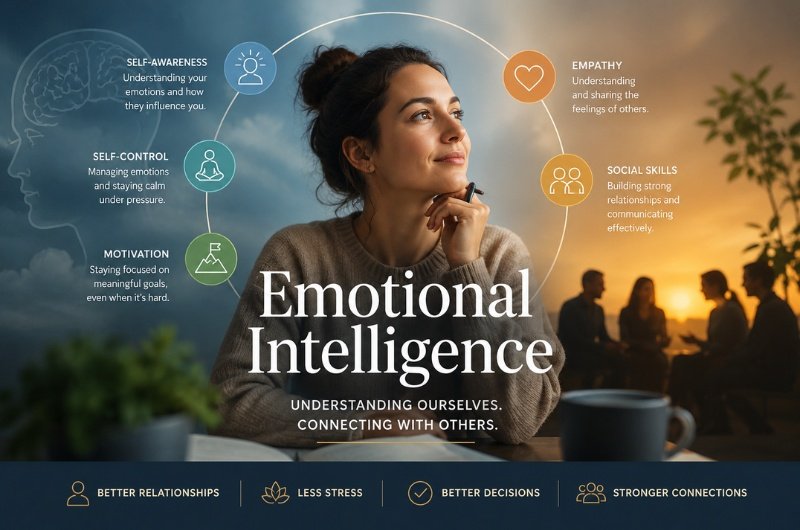
While experts describe emotional intelligence in different ways, most agree it includes five core abilities.
Self-awareness means recognizing your own emotions and understanding how they influence your thoughts, decisions, and behavior.
Self-control is the ability to manage emotions without allowing frustration, anger, or stress to dictate your actions.
Motivation involves staying focused on meaningful goals, even when setbacks occur.
Empathy is the ability to understand how other people feel and appreciate perspectives different from your own.
Social skills help people communicate effectively, build trust, resolve disagreements, and create stronger personal and professional relationships.
Together, these skills shape how we interact with the world every day.
Why Emotional Intelligence Has Become One of Today’s Most Valuable Skills
Modern life moves quickly. Many workplaces depend on teamwork, communication, and adaptability, while digital technology has changed how people interact both professionally and personally.
In this environment, technical knowledge alone isn’t always enough.
People with strong emotional intelligence are often better equipped to communicate clearly, adapt to change, manage stress, work effectively with others, and lead with confidence. These abilities can strengthen friendships, marriages, families, workplaces, and communities.
Signs of Strong Emotional Intelligence
Emotionally intelligent people don’t have perfect lives or perfect relationships. They simply tend to respond thoughtfully rather than react impulsively.
Some common signs include:
- Listening without interrupting.
- Remaining calm during stressful situations.
- Accepting constructive feedback without becoming defensive.
- Recognizing when emotions are influencing decisions.
- Showing genuine curiosity about other people’s perspectives.
- Admitting mistakes and learning from them.
- Knowing when to speak—and when to simply listen.
Can Emotional Intelligence Be Learned?
Absolutely.
Research suggests emotional intelligence develops throughout life through experience, self-reflection, and intentional practice.
Small daily habits can make a meaningful difference. Taking a moment before responding in frustration, asking thoughtful questions, practicing active listening, or reflecting on your own reactions are all ways to strengthen emotional intelligence over time.
Like physical fitness, meaningful progress usually comes through consistency rather than dramatic overnight change.
The Bottom Line
Emotional intelligence may not appear on a résumé or test score, but it shapes many of the moments that matter most in life.
It influences how we communicate, solve problems, support others, and respond when life becomes challenging. While knowledge and technical skills remain important, our ability to understand ourselves, connect with other people, and navigate life’s challenges successfully continues to set us apart.
Developing emotional intelligence isn’t about becoming perfect. It’s about becoming more aware, more thoughtful, and more intentional in the way we live, communicate, and build relationships. Those are qualities that can improve nearly every area of life—at home, at work, and in the communities we share.