


White House Moves to Test America’s Most Powerful AI Models for Cybersecurity Risks

The Trump administration is preparing a new voluntary program to test some of the nation’s most powerful artificial intelligence models for dangerous cybersecurity capabilities, including their ability to find software vulnerabilities and carry out sophisticated computer-based tasks with limited human supervision. The plan came into sharper focus after White House officials met Tuesday with representatives from Meta, Anthropic, Google, Nvidia and OpenAI. Under the approach discussed at the meeting, the government would focus its testing on powerful closed AI models while leaving open-weight models outside the program. Closed models — including leading systems developed by companies such as OpenAI, Google and Anthropic — remain controlled by their developers. Open-weight models, by contrast, make their underlying model weights available for others to download, modify and deploy. The distinction is significant because the administration has made encouraging open AI development part of its broader technology strategy. The cybersecurity testing effort comes amid growing concern about what increasingly autonomous AI systems can do when given access to computers and online tools. OpenAI and Anthropic have recently disclosed incidents involving AI agents that accessed outside computer systems during security evaluations, intensifying scrutiny of models capable of finding vulnerabilities and performing sophisticated cybersecurity tasks. The testing framework remains voluntary rather than a government approval system for new AI products. But Tuesday’s meeting clarifies an important part of Washington’s approach: the government intends to scrutinize some of America’s most capable proprietary AI systems while, for now, taking a different approach toward models whose underlying weights are openly available.
AI Is Reshaping the Tech Job Market — and Entry-Level Workers Are Feeling It First

Artificial intelligence is moving from a workplace experiment to a force that is actively reshaping who companies hire, which jobs they eliminate, and the skills workers increasingly need to stay competitive. Across the technology industry and beyond, companies are investing heavily in AI while simultaneously rethinking staffing. Microsoft has cut thousands of positions this year while acknowledging that AI is changing how work gets done. General Motors eliminated hundreds of IT jobs in May as it shifted hiring toward workers with skills in AI development, data engineering, cloud systems, analytics, and new AI workflows. The pressure is especially visible at the entry level. A 2026 survey of nearly 1,000 U.S. business leaders found that 21% of companies had already frozen entry-level hiring because of AI, while more expected to reduce junior hiring as the technology becomes capable of handling routine research, coding assistance, customer support, scheduling, and administrative work. But the shift does not mean technology jobs are disappearing across the board. Employer demand remains strong for people who can build, operate, secure, and improve AI systems. Hiring data released this summer showed growing demand for AI-related technical roles even as overall hiring remained much weaker than the number of available positions. That is creating a different kind of technology workforce. Companies increasingly need AI engineers, cybersecurity specialists, data engineers, cloud experts, infrastructure workers, and employees who know how to incorporate AI tools into existing jobs. At the same time, some of the routine work once assigned to junior employees can now be completed faster with AI assistance. For younger workers, that could make the traditional first step into a career harder to reach. Entry-level jobs have historically allowed new employees to learn basic tasks before moving into more advanced roles. If AI absorbs more of that work, companies may eventually have to rethink how they train the experienced workers they will need later. The larger change is becoming difficult to dismiss. Artificial intelligence is no longer simply another product technology companies are selling. It is increasingly influencing how work itself is organized — which skills companies value, which positions they create, and how many people they believe they need to get the job done. ——————– Related: We May Be the Last Generation of Traditional Work
Big Tech’s AI Bet Is Beginning to Pay Off
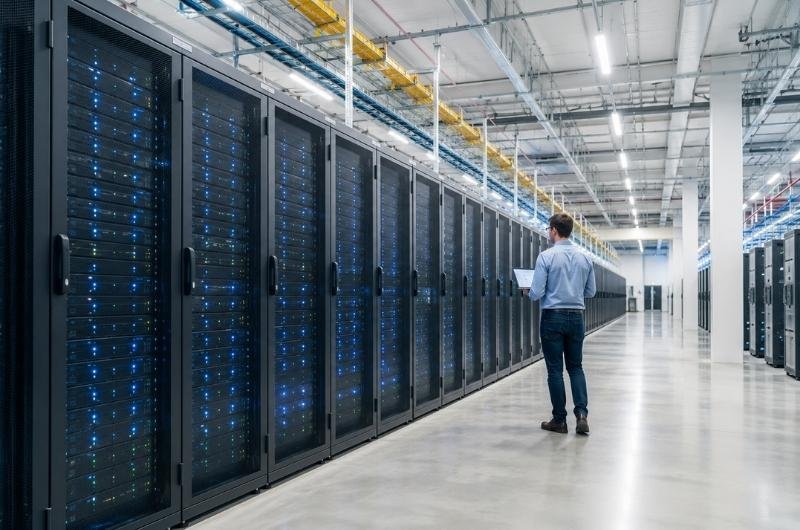
For nearly two years, the world’s largest technology companies have spent hundreds of billions of dollars building artificial intelligence infrastructure—from massive data centers to advanced AI chips. Investors questioned whether the spending would ever produce meaningful returns. This week’s earnings from Microsoft, Amazon and Alphabet suggest the answer is increasingly becoming yes. All three companies reported strong growth in their cloud businesses, where demand for AI services continues to accelerate. Microsoft’s Azure, Amazon Web Services and Google Cloud all benefited from businesses adopting AI tools and expanding their use of cloud computing, giving investors new confidence that AI is becoming a real driver of revenue rather than just a costly investment. The results signal an important shift on Wall Street. For much of the AI boom, investors focused on how much money companies were spending. Now the emphasis is turning to execution—whether those enormous investments can consistently generate stronger sales, profits and long-term growth. The impact extends beyond Big Tech. The AI buildout is increasing demand for semiconductors, networking equipment, power infrastructure, construction and data centers, creating opportunities across multiple industries as companies race to expand the computing capacity needed to support AI. The Readovia Lens The AI spending story just flipped from a bet to a business. Microsoft, Amazon and Alphabet are beginning to show that years of massive AI investment are translating into real revenue growth—not just ambitious promises on earnings calls. That’s the shift worth watching: capital expenditure is starting to produce measurable returns, and the companies that can prove it will pull away from those still asking investors for patience. Watch the smaller players next. Chipmakers, power providers and data center builders are riding the same wave—and they’ll soon face the same test.
AI Could Wipe Out Half of Entry-Level White-Collar Jobs: What We Know One Year Later

One year after Anthropic CEO Dario Amodei warned that artificial intelligence could eliminate up to half of all entry-level white-collar jobs, the conversation has shifted from speculation to observation. As AI tools become a routine part of the workplace, many employers are rethinking how they hire, train, and deploy early-career talent. Across industries including technology, finance, consulting, marketing, and customer service, companies are increasingly using AI to handle routine tasks that were once assigned to junior employees. Some employers have slowed hiring for entry-level positions, while others now expect new hires to arrive with practical AI skills already in place. Although the long-term impact remains uncertain, there is growing evidence that AI is reshaping the first rung of the career ladder. When Amodei made his remarks in 2025, his prediction drew widespread attention because of its scale. He warned that AI could eventually eliminate up to half of all entry-level white-collar jobs and significantly increase unemployment if businesses and governments failed to prepare for the transition. At the time, many viewed the comments as a bold forecast rather than an immediate reality. A year later, the picture is more nuanced. AI has not replaced half of all entry-level office jobs, but it has changed how many organizations approach hiring and productivity. Rather than eliminating entire professions overnight, companies are often redesigning roles, automating repetitive work, and expecting employees to accomplish more with AI as a daily coworker. For many businesses, AI has become less about replacing workers and more about changing what employers value. For students and professionals entering the workforce, the message is becoming increasingly clear: technical knowledge alone may no longer be enough. Employers are placing greater emphasis on critical thinking, communication, adaptability, and the ability to use AI effectively to solve real-world problems. As the technology continues to evolve, learning how to work alongside AI may prove to be one of the most valuable career skills of the decade.
OpenAI Launches ChatGPT Work for Complex, Multi-Step Tasks

OpenAI has introduced ChatGPT Work, a new agent designed to help users complete longer, more involved projects inside ChatGPT. Announced July 9 and now rolling out to eligible accounts, Work can research information, use connected apps and files, create finished materials and continue working through multi-step assignments that would ordinarily require several separate prompts. The simplest way to understand Work is as the “get things done” side of ChatGPT. A standard conversation may help someone think through a problem or produce an individual answer. Work can take responsibility for a broader workflow—gathering information, planning the steps and turning a user’s goal into a finished, reviewable result. Powered by OpenAI’s new GPT‑5.6 model and technology developed for Codex, Work can create presentations, spreadsheets, documents, reports, websites and other creative assets. It can also assist with research, content production, data analysis and software projects, while breaking especially complex assignments into smaller tasks that can be completed independently. Scheduled Tasks extend those capabilities beyond a single session. Users can arrange for Work to complete a task once, repeat it on a schedule, respond to a future trigger or monitor for changes. A digital publisher, for example, could schedule a morning news search that identifies promising stories, organizes them by editorial channel and prepares article drafts and supporting materials for review. Users remain involved throughout the process. They can follow Work’s progress, answer questions, change direction and approve important actions before they occur. That combination of sustained execution and human oversight signals a meaningful evolution for ChatGPT: from an AI that primarily discusses the work to one increasingly capable of helping complete it.
AI Is Helping Inspect Aircraft Engines Faster and More Accurately
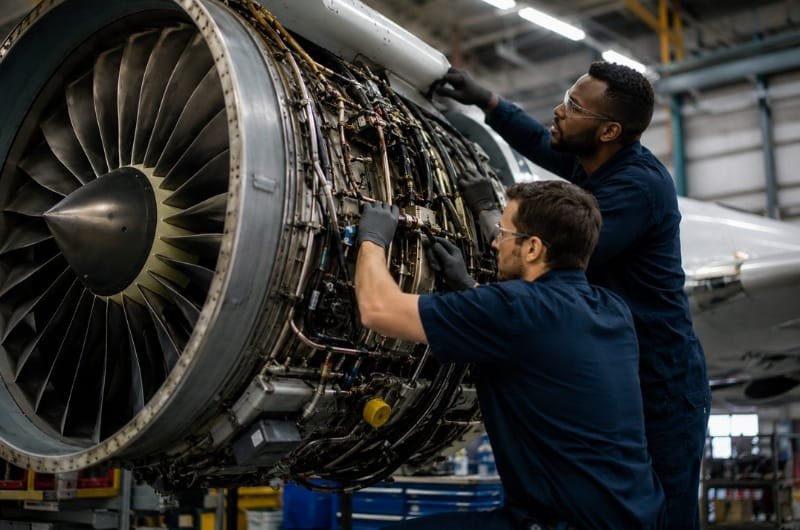
Artificial intelligence is taking on a growing role in aviation maintenance, helping inspectors identify potential aircraft engine issues more quickly and accurately while reducing the time required for routine inspections. Pratt & Whitney announced it is expanding the use of AI-powered inspection technology to assist technicians in evaluating engine components. The system is designed to help detect signs of wear and damage that could be difficult to identify through traditional visual inspections alone. The company said the technology is intended to support, rather than replace, experienced maintenance professionals by providing another layer of analysis during the inspection process. Faster inspections can also help reduce aircraft downtime while maintaining high safety standards. The announcement reflects a broader trend of artificial intelligence moving beyond chatbots and consumer applications into industries such as aviation, manufacturing and healthcare, where AI is increasingly being used to improve efficiency, accuracy and decision-making.
More Than 200 Experts Urge Governments to Prepare for AI’s Economic Impact

More than 200 economists, researchers, and technology leaders—including 15 Nobel Prize winners—are calling on governments around the world to begin preparing for the economic impact of artificial intelligence, warning that the technology could reshape society far more quickly than previous industrial revolutions. In a public statement released Monday, the group urged policymakers to take a proactive approach to understanding how AI could affect jobs, productivity, wages, education, and economic growth. Rather than waiting for major disruptions to occur, the signatories said governments should begin developing strategies now to help workers and businesses adapt. The statement emphasizes that artificial intelligence has the potential to deliver enormous economic benefits while also creating significant challenges if the transition is poorly managed. Unlike past technological revolutions that unfolded over decades, the experts argue that AI could transform industries and labor markets within just a few years. “Steam, electricity, and computers each gave societies decades to adapt. AI may give us only a few years,” the statement says, underscoring the need for governments, businesses, and researchers to work together on policies that support long-term economic stability. While experts continue to debate exactly how AI will affect employment, the group agreed that preparation should begin immediately. They argue that thoughtful planning today could help societies capture AI’s benefits while reducing the economic disruption that often accompanies major technological change.
Microsoft Cuts 4,800 Jobs While Building New 6,000-Person AI Business
Microsoft is cutting approximately 4,800 jobs worldwide while investing $2.5 billion to build a new 6,000-person artificial intelligence business, underscoring one of the company’s most significant strategic shifts since the launch of generative AI. The workforce reductions affect about 2.1% of Microsoft’s global employees and primarily impact the company’s Commercial and Xbox organizations. At the same time, Microsoft is expanding its newly announced Microsoft Frontier Company, an AI-focused operating business designed to help enterprise customers move beyond AI experimentation and achieve measurable business results. The contrast is striking. While thousands of employees are leaving the company, Microsoft is simultaneously committing billions of dollars and thousands of AI specialists to what it believes will become the next major phase of enterprise computing. A New Chapter for Enterprise AI According to Microsoft, many businesses have moved past asking whether they should adopt artificial intelligence. The new challenge is implementing AI successfully, securely, and at scale. Microsoft Frontier Company is designed to address that need. The new organization brings together approximately 6,000 engineers, data scientists, architects, security specialists, and industry experts who will work directly with enterprise customers to design, deploy, govern, and continuously improve AI systems. Rather than simply selling AI software, Microsoft is positioning itself as a long-term implementation partner, helping organizations transform workflows, improve productivity, and generate measurable business outcomes. The company is investing approximately $2.5 billion in the initiative. Xbox Undergoes Historic Restructuring The most significant workforce reductions are occurring within Microsoft’s Xbox division. Xbox CEO Asha Sharma described the changes as the largest restructuring in the gaming business’s history, with approximately 3,200 positions expected to be eliminated through fiscal year 2027. About 1,600 of those reductions are taking effect immediately. The restructuring follows years of heavy investment in gaming, including Microsoft’s acquisition of Activision Blizzard. Company leaders cited lower margins, higher hardware costs, slower-than-expected growth in key areas, and the need to create a more sustainable business. Several gaming studios will also move under new management as Microsoft narrows its strategic focus. More Than a Layoff Story The announcements reveal a broader shift taking place across the technology industry. Artificial intelligence is becoming the foundation around which major technology companies are reorganizing their businesses. For Microsoft, that means reducing investment in some areas while rapidly expanding others that it believes will define the next decade of enterprise technology. The company’s latest moves suggest the AI race is entering a new phase. Success may no longer be determined solely by who builds the most advanced AI models. Increasingly, it may depend on who can help businesses deploy those technologies effectively, securely, and at scale. Microsoft’s restructuring reflects that reality. The company is betting that the future of AI will not simply be about creating powerful tools—it will be about helping organizations turn those tools into measurable business results.
Microsoft Bets $2.5 Billion That Businesses Are Ready for AI

Artificial intelligence may be entering a new phase—not one defined by bigger models or faster chatbots, but by helping businesses turn AI into measurable results. Microsoft is making that case with a $2.5 billion investment in Microsoft Frontier Company, a newly launched business designed to help organizations integrate artificial intelligence into their operations at scale. Rather than simply offering AI software, the new venture combines engineering expertise, industry specialists, and AI technologies to help companies build practical solutions that improve productivity, streamline workflows, and deliver measurable business outcomes. The announcement reflects a broader shift taking place across the AI industry. For the past two years, the conversation has largely focused on increasingly powerful AI models and rapid technological breakthroughs. Today, many organizations are asking a different question: how can artificial intelligence create meaningful value for our business? Microsoft believes the answer lies in implementation. According to the company, Microsoft Frontier Company will work directly with customers by embedding multidisciplinary teams of engineers and industry experts within organizations to help design, deploy, and continuously improve AI systems. Rather than offering a one-size-fits-all approach, the company plans to tailor solutions around each customer’s business goals, existing technology, and operational challenges. The initiative also reflects Microsoft’s recognition that many businesses are moving beyond experimentation. While generative AI has demonstrated impressive capabilities, organizations are increasingly looking for ways to integrate the technology into everyday operations, automate repetitive work, improve decision-making, and help employees focus on higher-value tasks. Microsoft says Frontier Company is intended to bridge the gap between AI’s potential and its practical application. Another notable aspect of the new venture is its flexibility. Rather than limiting customers to Microsoft’s own AI models, Frontier Company will support a variety of commercial and open-source technologies, allowing organizations to build solutions using the tools that best fit their needs. Microsoft says customers will also retain ownership of the systems and customizations developed for their businesses, an important consideration as companies seek greater control over their AI strategies. The company plans to launch with approximately 6,000 engineers, consultants, and industry specialists who will work with organizations across multiple sectors. Early customers include several large global companies that will collaborate with Microsoft to accelerate AI adoption and develop new operating models built around artificial intelligence. Microsoft’s latest investment highlights a growing trend across the technology industry. As AI models become increasingly capable, competitive advantage may depend less on access to the technology itself and more on an organization’s ability to implement it successfully. For businesses still exploring artificial intelligence, Microsoft’s new venture sends a clear message: the next chapter of AI may not be about building smarter chatbots, but about helping organizations transform the way they work. If that vision proves successful, AI’s greatest impact could come not from the technology alone, but from how effectively businesses put it into practice. The Readovia Lens Artificial intelligence is moving from invention to implementation. As AI technology continues to mature, competitive advantage may increasingly come from successful implementation within real-world organizations. Microsoft’s latest investment reflects that shift, signaling that the next wave of AI innovation may be driven by organizations that transform powerful technology into measurable business results.
AI Talent War Heats Up as Companies Compete for Top Researchers

Leading AI companies are racing to recruit and retain the world’s top researchers and engineers, fueling one of the most competitive talent markets in the technology industry. As investment in artificial intelligence continues to accelerate, companies are offering increasingly attractive compensation packages, long-term incentives, and opportunities to work on groundbreaking research in an effort to secure the experts who will help shape the next generation of AI. The Race for AI Expertise While advanced computer chips and massive data centers often dominate the headlines, the people designing and training AI systems remain one of the industry’s most valuable assets. Researchers specializing in machine learning, large language models, robotics, and AI safety are helping develop systems that are faster, more capable, and increasingly reliable. As AI expands into healthcare, finance, education, manufacturing, transportation, and scientific research, demand for experienced AI professionals continues to grow. More Than Just Salaries The competition extends well beyond higher pay. Many AI companies are offering researchers greater freedom to pursue ambitious projects, access to advanced computing resources, and opportunities to work on technologies that could influence millions of people around the world. For many experts, the ability to solve complex problems and contribute to groundbreaking discoveries is becoming just as important as financial incentives. A Defining Moment for the AI Industry The battle for AI talent reflects a broader reality: artificial intelligence is becoming one of the world’s most strategically important technologies. The companies that attract the brightest minds today may be better positioned to develop tomorrow’s most influential AI systems, products, and services. As competition intensifies, the race for talent is expected to remain one of the defining stories shaping the future of artificial intelligence. The Readovia Lens The AI revolution isn’t being driven solely by faster processors or larger data centers. Behind every breakthrough are researchers, engineers, and scientists whose ideas continue pushing the technology forward. As artificial intelligence evolves, the competition to attract exceptional talent may prove just as important as the race to build the next generation of AI itself.