


How AI Is Changing the Way Americans Budget, Save, and Spend
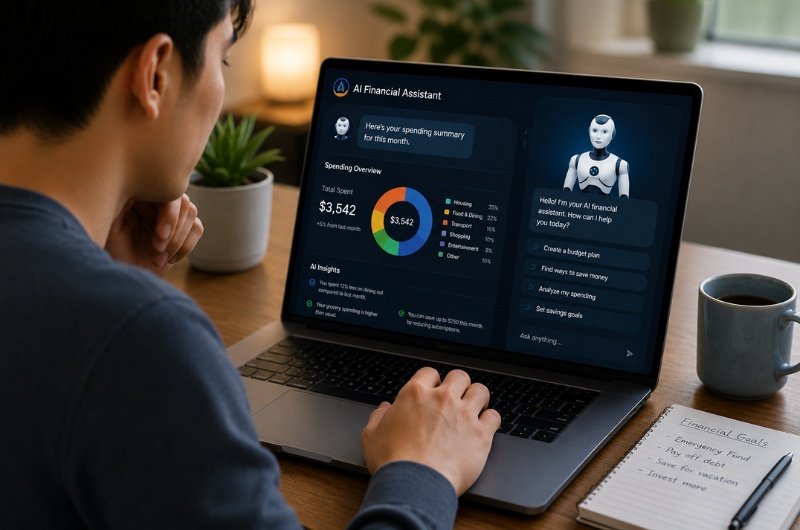
Artificial intelligence is increasingly becoming a personal financial assistant, helping Americans track spending, build budgets, and make smarter money decisions. Many banking apps and financial platforms now use AI to categorize purchases automatically, identify recurring expenses, and alert users when unusual transactions appear. Some tools can even analyze spending habits and suggest ways to cut costs or increase savings. For consumers trying to stay on top of rising expenses, these features can provide a clear picture of where their money is going. Instead of sorting through bank statements by hand, users can receive personalized insights in seconds. AI-powered assistants are also making budgeting more approachable. Rather than relying on complex spreadsheets, many people can now ask simple questions such as, “How much did I spend on dining out last month?” or “Can I afford this vacation if I stay on my current budget?” and receive easy-to-understand answers. Savings is another area where AI is making a difference. Some financial apps analyze your income and spending habits to identify opportunities to set aside small amounts of money without disrupting your monthly budget. Others highlight subscription services that may no longer be used or point out opportunities to reduce monthly bills. Even so, experts encourage consumers to treat AI as a helpful guide rather than a replacement for sound financial judgment. Recommendations are based on available data and may not account for every personal circumstance or long-term goal. As AI continues to evolve, its role in personal finance is likely to expand. For many Americans, the technology is already proving that smarter money management doesn’t always require more effort—it may simply require better tools.
Anthropic Puts $200 Million Behind Research on AI and the Future of Work

Anthropic, the company behind the Claude AI assistant, has announced a $200 million initiative to study how artificial intelligence could reshape jobs, wages, and the broader economy as AI adoption accelerates across industries. The investment will support research into labor markets, workforce transitions, and the long-term economic effects of increasingly capable AI systems. Researchers, economists, policymakers, and nonprofit organizations are expected to participate in the effort. Advertisement The announcement arrives as businesses continue experimenting with AI tools that can write content, analyze data, generate software code, conduct research, and perform a growing number of workplace tasks. While many organizations view AI as a productivity booster, concerns remain about how rapidly advancing systems could affect employment across both blue-collar and white-collar professions. What makes Anthropic’s announcement notable is that it comes from one of the companies helping drive the AI revolution itself. Rather than focusing solely on technological progress, the company is also investing in understanding the economic and social changes that may accompany it. For much of the past two years, the AI conversation has centered on capabilities — what the technology can create, automate, or improve. Increasingly, attention is shifting toward the people affected by those changes. Some analysts believe AI will unlock new industries, increase productivity, and create jobs that do not yet exist. Others warn that certain administrative, customer-service, and knowledge-based roles could face significant disruption as AI systems become more sophisticated. Anthropic’s investment reflects a growing recognition that the future of artificial intelligence will be measured not only by technological breakthroughs, but also by how successfully workers, businesses, and governments adapt to the changes those breakthroughs may bring. The workplace transformation many experts once discussed as a future possibility is already beginning to take shape. As AI capabilities continue to expand, understanding their impact on careers, wages, and economic opportunity may become one of the most important challenges of the decade.
Meta Employees Push Back Against AI Training Tool That Tracks Workplace Activity
A growing debate over artificial intelligence and workplace privacy is unfolding inside Meta, where employees are raising concerns about an internal system designed to collect workplace activity data to help train AI models. According to reports, the initiative tracks various forms of employee computer activity, including clicks, mouse movements, navigation patterns, and other interactions. Meta says the information is being used to improve AI systems and train more capable digital assistants. Some employees, however, argue that the program crosses privacy boundaries and raises questions about how workplace data should be used. The controversy highlights a broader challenge facing many organizations as artificial intelligence becomes increasingly integrated into business operations. Training advanced AI systems often requires large amounts of real-world data, but workers may be uncomfortable when that data comes directly from their daily activities. For some employees, the concern extends beyond privacy to the possibility that their work could be helping build systems that eventually automate portions of their jobs. Meta has defended the initiative as an important part of its AI development efforts and says safeguards are in place to protect employees. The company continues to invest heavily in artificial intelligence as competition intensifies among major technology firms seeking to build more capable AI platforms. The Readovia Cut The debate unfolding at Meta may offer an early glimpse into a workplace challenge many companies will eventually face. As AI systems become more sophisticated, organizations will increasingly look for ways to gather real-world human behavior data to improve them. But will employees view those efforts as innovation, surveillance, or something in between? How companies answer that question could shape the next phase of AI adoption in the workplace.
Anthropic Says AI Could Help Unlock a Nobel Prize-Level Discovery Within a Year

Artificial intelligence may be approaching a turning point that extends far beyond chatbots and productivity tools. According to Anthropic co-founder Jack Clark, AI systems could help humans achieve a Nobel Prize-level scientific breakthrough within the next year — a prediction that is fueling growing debate across the technology and research communities. Clark made the remarks during a recent lecture discussing the rapid pace of AI advancement and the expanding role these systems may soon play in scientific discovery. The prediction reflects a broader belief among some AI leaders that advanced models are beginning to move beyond information retrieval and coding assistance into areas involving scientific reasoning, hypothesis generation, and complex research support. The idea may sound ambitious, but recent developments are already beginning to reshape how researchers view AI’s capabilities. Advanced reasoning models have shown increasing potential in mathematics, biology, chemistry, and data analysis, leading some scientists to believe artificial intelligence could eventually accelerate discoveries that might otherwise take humans years to uncover. At the same time, AI companies are aggressively expanding into scientific research itself. Major firms are investing heavily in AI-assisted drug discovery, biological research, and advanced laboratory workflows as the race to commercialize scientific AI accelerates. Still, skepticism remains. Critics argue that AI-generated breakthroughs continue to rely heavily on human interpretation, validation, and scientific direction. Others warn that growing dependence on AI systems for intellectual work could eventually weaken human creativity and independent problem-solving. The Readovia Lens The real story may not be whether artificial intelligence helps produce a Nobel Prize-level discovery within a year. It may be that humanity is entering an era where AI increasingly participates in the discovery process itself. If that shift continues, artificial intelligence could evolve from being a tool humans use into an active collaborator in some of humanity’s most important scientific advances.
Inside the High-Stakes Clash Between Elon Musk and OpenAI

Elon Musk and OpenAI returned to court this week as closing arguments intensified in a high-profile legal battle over the future direction, governance, and commercialization of artificial intelligence. The increasingly public conflict between the billionaire entrepreneur and the company he once helped launch is evolving into far more than a courtroom dispute between former allies. Closing arguments in the latest phase of the legal fight have drawn renewed attention to Musk’s accusations that OpenAI abandoned its original nonprofit mission in pursuit of commercial dominance and massive corporate influence. OpenAI, meanwhile, has defended its evolution as necessary to compete in an AI race that now requires enormous computing power, infrastructure investment, and global-scale deployment. What began years ago as a research-focused effort to develop artificial intelligence responsibly has since transformed into one of the most influential technology companies in the world. OpenAI’s rapid rise — fueled in part by its partnership with Microsoft and the explosive adoption of ChatGPT — helped ignite a global AI arms race that is reshaping industries, governments, education, media, and the broader economy. For Musk, the dispute appears to center on whether artificial intelligence should remain open, transparent, and aligned with humanity’s interests rather than concentrated inside a handful of powerful corporations. But the broader implications now extend well beyond the individuals involved. The case has become symbolic of a much larger question facing the tech industry: whether AI will ultimately evolve as a public-serving technology ecosystem or become controlled primarily by a small number of companies with unprecedented influence over information, automation, and digital infrastructure. The stakes are enormous because artificial intelligence is no longer viewed as a niche technology sector. AI is increasingly becoming foundational infrastructure — comparable to electricity, the internet, or cloud computing — with the potential to shape economic power, military capability, scientific advancement, and global competitiveness for decades to come. The legal fight also arrives during a period of extraordinary investment across the AI economy. Companies are pouring billions into data centers, advanced semiconductors, cloud infrastructure, robotics, and large-scale AI systems as competition intensifies between the United States, China, and other global powers seeking leadership in the field. While the courtroom battle itself may take months or years to fully resolve, the public confrontation between Musk and OpenAI is already exposing the deeper tensions now emerging across the artificial intelligence industry: speed versus safety, openness versus control, and innovation versus concentration of power. The Readovia Lens The most important part of the Musk-OpenAI conflict may not be who wins the case. It may be what the battle reveals about the next era of technology itself. Artificial intelligence is rapidly becoming a new layer of global infrastructure — and the companies controlling it could hold extraordinary influence over how modern society functions in the years ahead.
Google Is Quietly Building the AI Brain for the World’s Robots
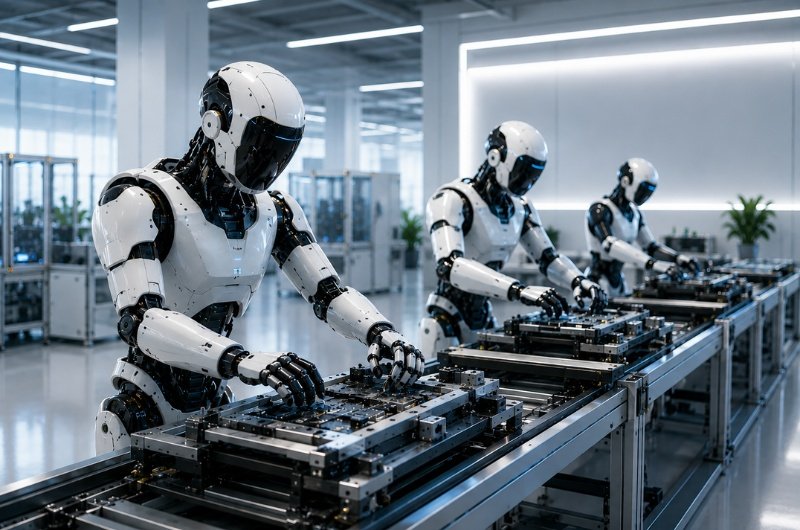
While much of the AI race has focused on chatbots and consumer tools, Google is now making a major push into something potentially far larger: giving industrial robots the ability to think, adapt, and operate more like humans inside real-world manufacturing environments. The company is expanding its robotics ambitions by integrating its Gemini AI models into industrial automation systems through a growing network of partnerships with some of the biggest names in robotics and manufacturing. Rather than building robots itself at scale, Google appears increasingly focused on becoming the intelligence layer powering the next generation of machines. One of the most significant developments came through a partnership with FANUC, the world’s largest industrial robot manufacturer. The collaboration allows FANUC systems to use Gemini Enterprise AI to process natural language instructions and better understand unpredictable environments — a major shift from the rigid, pre-programmed behavior that has traditionally defined factory robotics. Google is also working alongside Boston Dynamics to integrate Gemini models into the company’s Atlas humanoid robot platform, while DeepMind has partnered with Agile Robots to explore advanced AI-driven manufacturing systems. At the center of Google’s strategy is a growing focus on what the company calls “Physical AI” — systems designed not just to generate text or images, but to interact with and understand the physical world. Its Gemini Robotics-ER models are being developed to improve spatial reasoning, motion planning, safety awareness, and real-time decision-making inside industrial settings. Combined with emerging vision-language-action systems, the technology could allow robots to see, understand, and respond to their surroundings with far greater flexibility than traditional automation systems. The broader shift may fundamentally reshape manufacturing itself. Instead of relying on expensive hardware redesigns every time a factory changes processes, companies are increasingly moving toward software-defined robotics — machines that can adapt through AI updates rather than mechanical rebuilding. Google’s Intrinsic platform is also developing systems that allow multiple robots to coordinate tasks together using AI-optimized motion planning, potentially opening the door to smarter, more autonomous production lines. For years, robotics has struggled to move beyond repetitive factory work performed inside carefully controlled environments. Google’s growing push into AI-powered automation signals a much larger ambition: creating machines capable of handling dynamic, unpredictable tasks across industries ranging from electronics manufacturing to logistics and advanced assembly. If successful, the next major AI revolution may not happen on screens — but on factory floors.
As AI Accelerates, Washington Faces a New Fight Over Control

Artificial intelligence is rapidly evolving from a technology race into a national security priority. Inside Washington, a growing debate is emerging over who should oversee increasingly powerful AI systems tied to cybersecurity, intelligence operations, and America’s global position against China. According to reports, tensions have surfaced inside the Trump administration over whether intelligence agencies or the Commerce Department should take the lead on evaluating advanced AI systems. Officials are reportedly concerned about cybersecurity risks, misinformation, infrastructure vulnerability, and the speed at which AI capabilities are advancing. The debate reflects a much larger shift taking place in Washington. Artificial intelligence is no longer being viewed as just another technology sector. Governments are increasingly treating AI as strategic infrastructure connected to national security, economic power, cyber warfare, and global influence. The timing is especially significant as the United States and China continue competing aggressively in AI, semiconductor manufacturing, cloud infrastructure, and advanced computing. Officials across multiple agencies are becoming increasingly concerned about how AI could shape military operations, economic decision-making, communications, and cybersecurity in the years ahead. For years, AI discussions mostly focused on innovation and consumer technology. That conversation is now changing. In Washington and other world capitals, artificial intelligence is increasingly being viewed as one of the most important power shifts of the modern era.
The Next AI Battleground: Compute Power
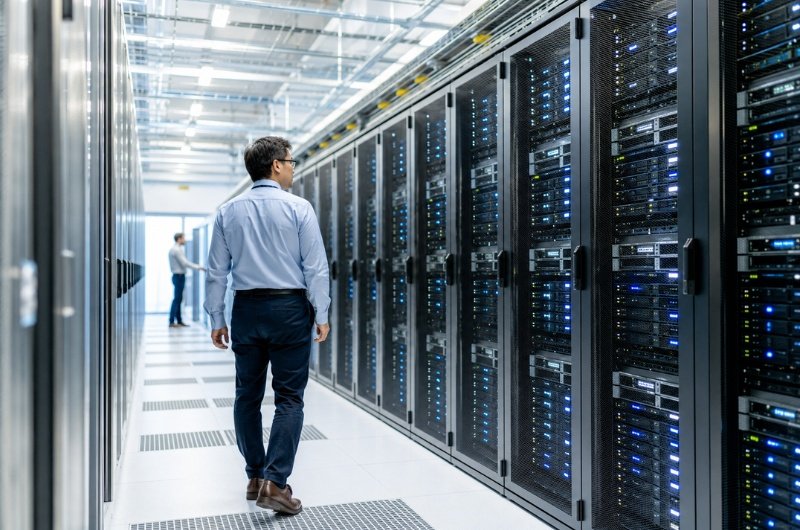
For much of the AI boom, public attention focused on chatbots, image generators, and consumer AI tools. But behind the scenes, a different race is accelerating — one centered on the massive computing power required to build and run advanced AI systems. That shift came into clearer focus this week following reports tied to Anthropic’s growing infrastructure relationship with Elon Musk’s xAI and SpaceX ecosystem. As companies push to train larger AI models and deploy more advanced AI agents, the real bottleneck is compute power. Training modern AI systems requires enormous amounts of processing capacity, advanced AI chips, energy, and large-scale data centers. Demand has grown so quickly that infrastructure itself is becoming one of the most valuable assets in the AI industry. That is changing the nature of competition. In the early phase of the AI boom, companies competed mainly on product features and model performance. Now, many of the biggest advantages may belong to the companies that can secure the most computing resources. The shift is also concentrating power across a relatively small group of firms controlling cloud infrastructure, semiconductor supply chains, networking systems, and large AI data centers. The Readovia Lens As AI systems continue expanding, the industry’s center of gravity may slowly move away from flashy chatbot demos and toward the infrastructure quietly powering the entire AI economy. ——————– Related: Why AI Infrastructure Stocks Are Surging AI Infrastructure Surge: Billions Pledged at India Summit Signal Global Compute Race Up 1,000% in One Year: The Stock That’s Turning Heads on Wall Street Broadcom Gains Fresh Attention as AI Infrastructure Demand Grows and Meta Deal Adds Momentum
Pentagon Turns to Google as AI Expands Into National Security

Google has reportedly signed a classified artificial intelligence agreement with the Pentagon that would allow the U.S. military to use the company’s AI models in secure government environments, marking a major expansion of AI into national defense operations. Reports indicate the agreement includes restrictions on uses such as domestic mass surveillance and fully autonomous weapons without human oversight. Even so, critics argue those guardrails may be difficult to measure once systems operate inside classified networks. That tension highlights a larger reality: AI governance is now being tested in real national-security environments, not just in public debate. For Google, the deal represents both opportunity and risk. Defense contracts can bring long-term revenue and strategic influence, but they also reopen ethical questions that many tech companies once tried to avoid. For Washington, it reflects a growing belief that future military strength may depend as much on software and intelligence systems as traditional weapons. The next chapter of artificial intelligence may be driven less by consumer buzz and more by institutional adoption behind closed doors. As governments, militaries, and major enterprises choose their AI partners, influence could shift toward the companies trusted to power critical systems.
Google Debuts New TPU Chips Built for the Agentic AI Era

Google has unveiled two new custom AI chips designed to handle the growing demands of advanced artificial intelligence, marking one of the company’s biggest infrastructure announcements of the year. The new processors, called TPU 8t and TPU 8i, were introduced during Google Cloud Next and are aimed at powering the next generation of AI systems. The company says the chips were built for what it calls the “agentic era” — a shift toward AI tools that can reason, make decisions, and complete tasks with less human input. One chip is optimized for training large AI models, while the other is focused on inference, the real-time work of responding to prompts and serving AI applications at scale. The move strengthens Google’s long-running effort to reduce dependence on outside suppliers such as Nvidia, whose graphics processors have become the gold standard for AI workloads. Rather than replacing those partnerships entirely, Google appears to be building a hybrid strategy that combines in-house chips with access to third-party hardware through its cloud platform. For businesses, the announcement signals that the race to build AI is increasingly about who controls the computing power behind the scenes — and who can deliver that power fastest, cheapest, and at global scale. ——————– Related: Broadcom Gains Fresh Attention as AI Infrastructure Demand Grows and Meta Deal Adds Momentum