


Could a Shingles Shot Lower Dementia Risk?

Can a routine vaccine do more than prevent illness—and actually help protect the brain? Emerging research suggests that the shingles vaccine may be linked to a significantly lower risk of dementia, adding to a growing body of evidence connecting immune health to long-term cognitive function. In one recent study, individuals who received the latest Shingrix vaccine showed a notably lower risk of developing dementia compared to those who were not vaccinated. The findings held even after accounting for differences in lifestyle, income, and overall health, pointing to a potentially meaningful connection between vaccination and brain health. Researchers believe there are a couple of possible explanations. One theory is that certain viruses, including the one responsible for shingles, may quietly contribute to long-term inflammation in the body—a process that has been linked to cognitive decline. By preventing reactivation of the virus, the vaccine may reduce that underlying stress on the immune system. Another possibility is that vaccines may have broader effects beyond their primary purpose, helping the immune system function more efficiently in ways that extend to other areas of health, including the brain. While scientists caution that more research is needed to fully understand the relationship, the implications are notable. At a time when effective strategies for preventing dementia remain limited, even the possibility that a widely available vaccine could play a role is drawing increased attention.
Top U.S. Counterterrorism Chief Resigns, Says Iran Posed “No Imminent Threat”

In a sudden and highly consequential move, former National Counterterrorism Center Director Joe Kent announced his resignation, citing deep opposition to the United States’ involvement in the ongoing war with Iran. The decision immediately raises questions about internal divisions at the highest levels of U.S. national security leadership. In a statement posted publicly on X, Kent made his reasoning clear: “After much reflection, I have decided to resign from my position as Director of the National Counterterrorism Center, effective today. I cannot in good conscience support the ongoing war in Iran. Iran posed no imminent threat to our nation, and it is clear that we started this war due to pressure from Israel and its powerful American lobby. It has been an honor serving under @POTUS and @DNIGabbard and leading the professionals at NCTC. May God bless America.” Kent’s resignation comes just weeks after President Donald Trump nominated him to lead the National Counterterrorism Center in early February, underscoring the abrupt nature of his departure from one of the government’s most sensitive intelligence positions. The resignation is notable not only for its timing, but for the bluntness of his criticism. Senior intelligence officials rarely break publicly with an administration’s foreign policy, especially on active military operations. His remarks suggest a serious fracture within parts of the national security apparatus over both the justification for the conflict and the influence shaping U.S. decision-making. The National Counterterrorism Center plays a central role in coordinating intelligence efforts across agencies, meaning Kent’s departure leaves a critical leadership gap at a time of heightened global tension. It also places additional scrutiny on the administration’s strategy in Iran, which has already sparked debate in Washington and beyond. For now, the White House has not issued a detailed response to Kent’s resignation. But the implications are clear: this is a signal that the war in Iran may be facing growing resistance from within the very institutions tasked with carrying it out.
Credit Card Debt Hits Record High as Americans Adapt to Economic Pressures

Credit card debt in the United States has reached a new record, surpassing $1 trillion, as higher prices and elevated interest rates continue to strain household budgets. For many Americans, everyday expenses — from groceries to utilities — are increasingly being charged rather than paid in cash. But beneath the headline numbers, a shift is quietly taking place. More consumers are becoming strategic about how they manage their debt. Instead of carrying balances indefinitely, many are prioritizing aggressive repayment tactics such as the avalanche method, focusing on high-interest balances first, or consolidating debt into lower-rate personal loans. Others are taking advantage of balance transfer offers to buy time and reduce interest costs. Advertisement At the same time, spending behavior is beginning to change. Households are cutting back on discretionary purchases, canceling unused subscriptions, and rethinking how often they rely on credit for non-essential items. The psychological shift is subtle but meaningful: credit is increasingly being treated as a tool, not a safety net. Financial institutions are also adapting, offering more flexible repayment options and tools to help consumers track and manage balances in real time. While debt levels remain elevated, the growing awareness around interest costs and long-term financial impact may signal a more disciplined phase ahead. For now, the numbers show rising debt, but the behavior behind them signals a more intentional approach to managing it.
Millions of Americans Are Winning with Side Hustles — And the Trend Is Growing

For millions of Americans, a single paycheck is no longer enough. Across the country, workers are increasingly turning to side hustles and second income streams to keep up with rising living costs and economic uncertainty. Recent surveys show the trend is widespread. Roughly 27% of U.S. adults earned income from a side hustle in 2025, while other estimates suggest that as many as 40% of Americans have taken on some form of side work in recent years. Advertisement The reasons are largely practical. Rising costs for housing, groceries, insurance, and everyday essentials have pushed many households to find additional income. In one survey, 61% of Americans with a side hustle said life would be unaffordable without the extra income, highlighting how important secondary earnings have become for many families. Technology has also made it easier than ever to earn money outside a traditional job. Freelancing platforms, online marketplaces, and digital tools now allow people to launch small businesses, sell digital products, or offer services from home with relatively low startup costs. As a result, the idea of relying on a single job for financial security is gradually fading. For many Americans, building multiple streams of income is becoming a new model for financial stability in an unpredictable economy.
Why the Future of AI May Depend on Data Centers, Not Just Algorithms

Artificial intelligence may grab headlines for what it can do, but the real battle powering the AI revolution is happening behind the scenes. Technology companies are now racing to build the massive infrastructure needed to support the next generation of AI systems. Training modern AI models requires enormous computing power. Thousands of specialized chips must work together while moving huge amounts of data between machines in real time. To make that possible, companies are investing billions of dollars in new data centers, faster networking systems, and advanced semiconductor technology. This rapid expansion has sparked what many experts now describe as a global AI infrastructure race. Tech giants are building new data centers across the United States, Europe, and Asia while competing for access to the powerful chips required to run advanced AI models. Unlike earlier waves of software innovation, artificial intelligence is increasingly limited by computing power. The companies that can build and operate the largest and fastest AI systems may gain a major advantage in the next phase of the technology revolution. In the end, the future of artificial intelligence may depend not only on who creates the smartest algorithms, but on who controls the machines powerful enough to run them.
Bank of America Settles Epstein Victims Lawsuit, Avoiding Trial That Could Have Exposed Banking Ties

Bank of America has reached a settlement with women who accused the financial giant of enabling the sexual abuse network run by disgraced financier Jeffrey Epstein, bringing a closely watched lawsuit to a sudden halt just weeks before key testimony and a potential trial. The agreement was disclosed during a court proceeding in Manhattan and must still receive final approval from a federal judge. The lawsuit, filed by a woman identified in court records as “Jane Doe,” alleged that the bank ignored suspicious financial activity connected to Epstein despite warning signs surrounding his trafficking operation. Plaintiffs argued that financial institutions often serve as a critical line of defense against crimes such as money laundering and human trafficking, and that in this case those safeguards failed. Bank of America has denied any wrongdoing, maintaining that it provided routine banking services and was not aware of criminal activity tied to the accounts involved. Still, a federal judge earlier allowed key claims in the case to move forward, including allegations that the bank knowingly benefited from Epstein’s financial network. The settlement effectively ends what could have become a high-profile courtroom battle. A scheduled deposition of billionaire investor Leon Black, who previously acknowledged paying Epstein millions for tax and estate planning advice, is now unlikely to move forward if the agreement receives final approval. The case is part of a broader wave of litigation examining the role major financial institutions may have played in handling Epstein’s finances. In recent years, several large banks have faced lawsuits and settlements connected to the disgraced financier’s network, intensifying scrutiny on how global banks monitor suspicious activity tied to powerful clients. The litigation surrounding Epstein’s finances has already produced hundreds of millions of dollars in settlements. JPMorgan Chase agreed to pay roughly $290 million to victims, while Deutsche Bank paid $75 million in a separate case. Additional settlements tied to Epstein’s estate and related claims have pushed total payouts well into the hundreds of millions of dollars. The settlement is the latest chapter in the financial reckoning tied to Epstein’s network. A compensation fund established by the Epstein estate has already distributed about $121 million to more than 130 survivors through the Epstein Victims’ Compensation Program, underscoring the continuing legal and financial fallout from one of the most notorious trafficking cases in recent history.
Trump Supports FCC Warning That Broadcasters Could Lose Licenses Over Iran War Coverage

President Donald Trump has backed a warning from Federal Communications Commission Chair Brendan Carr that U.S. broadcasters could face penalties for spreading misinformation about the war with Iran. Those penalties could include the revocation of a station’s FCC broadcast license. Carr indicated that television stations operating under federal broadcast licenses must ensure their reporting serves the public interest, cautioning that outlets promoting what he described as “news distortions” about the conflict could face scrutiny during future license reviews. Broadcast licenses in the United States are granted by the federal government and must be periodically renewed, giving regulators oversight over stations that use the public airwaves. Trump endorsed the FCC chair’s stance, accusing some news organizations of spreading misleading narratives about the war. The president has also argued that Iran and its allies are attempting to influence global opinion through digital propaganda, including the use of artificial intelligence to circulate fabricated images and misleading battlefield claims. The warnings have drawn criticism from lawmakers and free-speech advocates who argue that threatening broadcast licenses over wartime coverage risks crossing into government pressure on the press. Critics say the First Amendment protects the ability of news organizations to scrutinize government actions, particularly during military conflicts when public accountability is most critical. The dispute reflects a broader struggle over how modern wars are reported in a fragmented media landscape. As military conflict increasingly intersects with disinformation campaigns and sharply divided political narratives, the fight over public perception is unfolding not only on the battlefield but across television networks, digital platforms, and the global information ecosystem.
Congress Advances Major Plan to Tackle America’s Housing Shortage

The U.S. housing crisis has reached a point where policymakers in Washington are now moving forward with new legislation aimed at expanding the nation’s housing supply. The proposal focuses on encouraging new construction, easing development barriers, and helping communities convert unused commercial buildings into residential housing. For many Americans, the push comes years after housing affordability began slipping out of reach. Home prices and rents have climbed sharply across much of the country, leaving first-time buyers and younger families struggling to find attainable options. Economists say the root of the problem is simple: the country does not have enough homes. Years of underbuilding, population growth, and changing migration patterns have created a housing gap that continues to put pressure on both buyers and renters. The proposed legislation aims to encourage more development and remove obstacles that slow down housing construction. While the plan still faces debate in Congress, it reflects a growing recognition that the housing shortage is reshaping how Americans live, where they move, and whether homeownership remains possible for the next generation.
Trump Says 100 Million Barrels of Venezuelan Oil Are Coming — But Gas Prices Are Rising
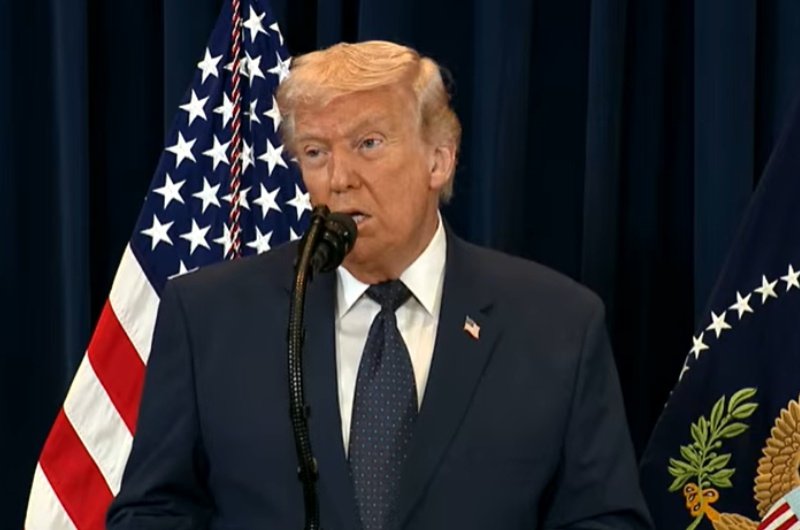
President Donald Trump sought to reassure Americans about the nation’s energy supply during a March 9 press conference, saying the United States has more than enough oil despite rising global tensions. “It doesn’t really affect us. We have so much oil. We have tremendous oil and gas, much more than we need,” Trump said. He added that Venezuela has become “our new partner, great partner,” describing the country as “a massive source of oil, gas, everything.” The comments come as the administration highlights new oil shipments from Venezuela, with more than 100 million barrels projected to enter the supply chain and be refined for U.S. use. Officials say the additional supply is intended to help offset market anxiety tied to conflict in the Middle East and uncertainty surrounding major global shipping routes. Yet across the United States, drivers are beginning to see gasoline prices climb. Energy markets often react quickly to geopolitical risk, and the possibility of disruption in major oil-producing regions can push prices higher even before any real supply shortages appear. For consumers, the situation underscores how closely domestic fuel costs are tied to global events. While new partnerships and additional supply may ease pressure over time, uncertainty in international energy markets can quickly translate into higher prices at the pump.
Entry-Level Jobs Are Becoming the First Casualty of the AI Shift

Artificial intelligence is beginning to reshape the workforce in ways that are most visible at the entry level, where many of the tasks traditionally assigned to junior employees can now be handled by AI systems. Across industries such as marketing, finance, customer support, and software development, companies are increasingly using AI tools to summarize documents, generate reports, analyze data, and respond to routine inquiries. Work that once helped early-career employees gain experience is now being completed in seconds by automated systems. Some labor analysts say the shift is beginning to show up in hiring patterns. While demand for experienced professionals remains strong in many sectors, companies are becoming more cautious about expanding junior roles that focus primarily on repetitive or administrative tasks. The change does not necessarily mean fewer jobs overall, but it could alter how careers begin. As automation expands, entry-level positions may increasingly require higher-level skills such as critical thinking, strategy, and oversight of AI systems rather than basic task execution. For workers entering the job market, the message is becoming clear: understanding how to work alongside AI may soon be as important as traditional professional experience.