


U.S. Submarine Sinks Iranian Warship, Leaving 87 Dead in Major Naval Escalation
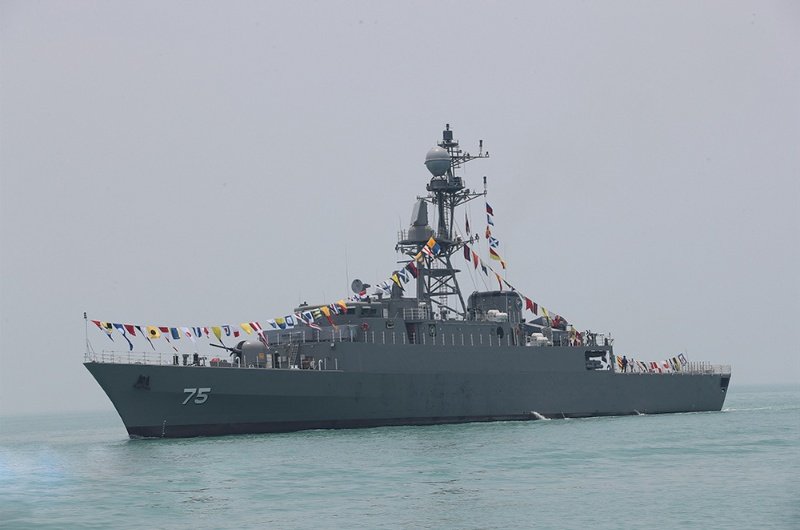
An Iranian naval vessel has been sunk in the Indian Ocean after being struck by a torpedo fired from a U.S. submarine, marking a dramatic escalation in the widening confrontation involving Iran and its adversaries. The ship, identified as the Iranian frigate IRIS Dena, had recently taken part in international naval events hosted by India before beginning its return journey. The attack occurred in international waters south of Sri Lanka, where the vessel issued a distress signal before ultimately sinking. Sri Lanka’s navy responded to the emergency and launched a rescue operation in the area. Officials reported that 32 Iranian sailors were rescued, while 87 bodies were recovered as search efforts continued around the site of the sinking. Military analysts note that the incident is highly unusual in modern naval warfare. The use of a submarine-launched torpedo to destroy a surface warship is rarely seen in contemporary conflicts and has not occurred often since World War II. Iran has condemned the attack and warned of consequences, raising concerns that tensions in the region could expand further into key maritime corridors and international shipping lanes.
Markets Jittery as Oil Surge and Conflict Fears Shake Wall Street

Financial markets are showing signs of strain today as rising oil prices and escalating geopolitical tensions inject new uncertainty into the global economy. U.S. stocks wavered as energy prices surged following the latest developments in the Middle East, with investors increasingly concerned that disruptions to oil supply could ripple across the global financial system. Energy markets reacted quickly, pushing crude prices higher and adding pressure to already fragile inflation expectations. Advertisement For Wall Street, the risk is twofold. Higher oil prices can drive up transportation, manufacturing, and shipping costs, while also complicating the Federal Reserve’s ongoing effort to stabilize inflation and guide the economy toward a soft landing. Market analysts say investors are closely watching whether the current surge in oil prices becomes a short-term spike or the beginning of a longer disruption. Extended volatility could push energy costs higher across the economy and trigger broader market instability. For American households, the first signs of the shift may appear at the gas pump. If energy prices continue climbing, drivers could begin seeing higher fuel prices in the coming weeks, adding another layer of pressure to already stretched household budgets.
Who Decides War? Congress Prepares Vote as Iran Conflict Widens
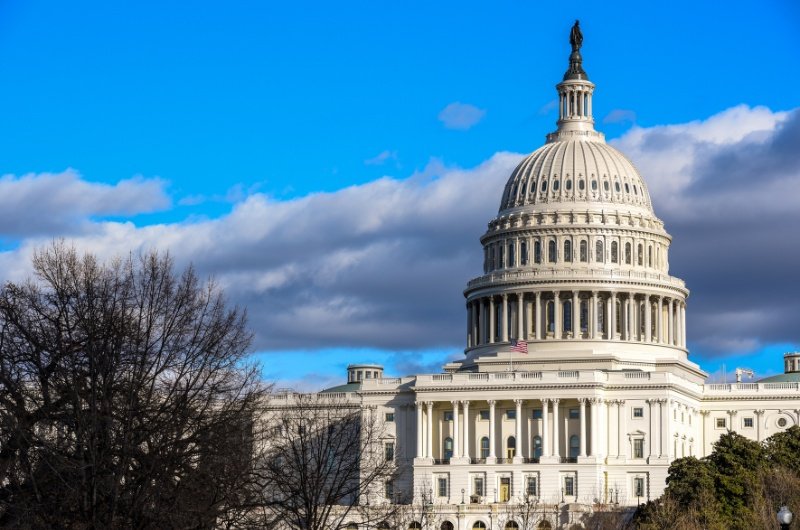
As the military conflict between the United States, Israel, and Iran intensifies, Congress is preparing for a pivotal vote that could redefine who controls America’s path to war. The U.S. Senate is set to vote Wednesday on a bipartisan war powers resolution requiring congressional approval for continued military action against Iran, with the House expected to follow Thursday. The measure, led by Senator Tim Kaine and supported by several Democrats and a small group of Republicans, is designed to reassert Congress’s constitutional authority over decisions of war and peace. Critics argue the recent air campaign against Iran, launched without explicit congressional authorization, raises fundamental questions about the balance of power between the White House and Capitol Hill. Supporters of the resolution say the United States risks sliding into a broader Middle East conflict without a clear debate or vote by the nation’s elected representatives. Opponents, including many Republican leaders, warn that restricting presidential authority during an active military confrontation could weaken U.S. strategy and signal division to adversaries. Even if the resolution passes Congress, its future remains uncertain. President Donald Trump is expected to veto any measure that limits his authority to continue military operations, meaning lawmakers would need a two-thirds majority to override the veto — a difficult political hurdle. The vote revives a long-running constitutional debate over war powers in Washington. As tensions with Iran continue to escalate, lawmakers are once again confronting a central question: who ultimately decides when America goes to war.
State Department Warns Americans Overseas: Depart Immediately

The U.S. Department of State has issued urgent guidance urging American citizens in parts of the Middle East to depart immediately, expanding evacuation advisories as regional tensions intensify. Officials are advising U.S. travelers and residents in more than a dozen countries to use available commercial transportation to leave as soon as possible, citing escalating security risks and an increasingly unpredictable environment. The advisory now covers Bahrain, Egypt, Iran, Iraq, Israel (including the West Bank and Gaza), Jordan, Kuwait, Lebanon, Oman, Qatar, Saudi Arabia, Syria, the United Arab Emirates, and Yemen. The expansion follows rising hostilities linked to recent U.S.- and Israeli-led military actions targeting Iranian leadership and infrastructure. Officials warn that retaliatory actions and shifting security conditions could affect civilian safety, airspace access, and regional travel routes with little notice. Americans currently in the affected countries are encouraged to enroll in the State Department’s Smart Traveler Enrollment Program (STEP) for real-time alerts and to maintain contact with the nearest U.S. embassy or consulate. Travelers are urged to monitor local developments closely and to consider all available departure options where safe and feasible. The broadened advisory underscores the widening impact of the conflict and signals continued concern from U.S. officials that conditions across the region may deteriorate further in the coming days.
AI in the Kill Chain: How the Speed of Modern Warfare is Changing
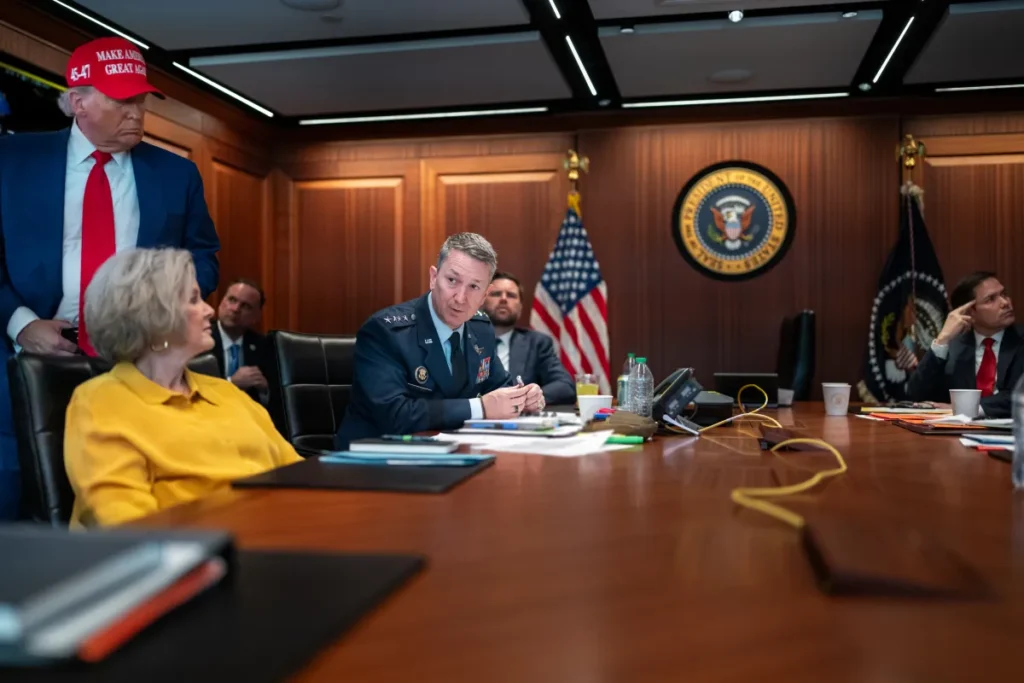
Modern warfare is entering a new and unsettling phase. Artificial intelligence systems are accelerating military decision-making, dramatically shortening the time between identifying targets and authorizing strikes. In some cases, that timeline has been reduced to near real time. Recent reports indicate that U.S. military leaders employed advanced artificial intelligence tools during the latest joint U.S.-Israeli strikes on Iran. These systems were used to assist with intelligence assessment, target identification, and battlefield modeling, helping commanders process massive volumes of data at unprecedented speed. Defense analysts say AI-driven platforms are increasingly capable of analyzing satellite imagery, drone feeds, intercepted communications, and other intelligence streams within seconds. What once required layered review and hours of coordination can now unfold in compressed timeframes, fundamentally altering what military strategists refer to as the “kill chain.” Supporters argue that such systems enhance precision and responsiveness in fast-moving conflicts, allowing commanders to adapt quickly to emerging threats. But critics warn that compressing decision timelines may reduce opportunities for human scrutiny — particularly in complex environments where civilian infrastructure and non-combatants are present. The central debate is how much authority AI should wield in life-and-death decisions. Artificial intelligence has moved beyond the realm of research labs and battlefield simulations. It is now embedded in active military strategy. As global powers continue integrating AI into combat operations, policymakers face mounting questions about oversight, accountability, and whether legal frameworks can evolve quickly enough to keep pace with machines operating at what some describe as the “speed of thought.”
Iran Closes Strait of Hormuz After Strikes, Threatening Global Oil Supply
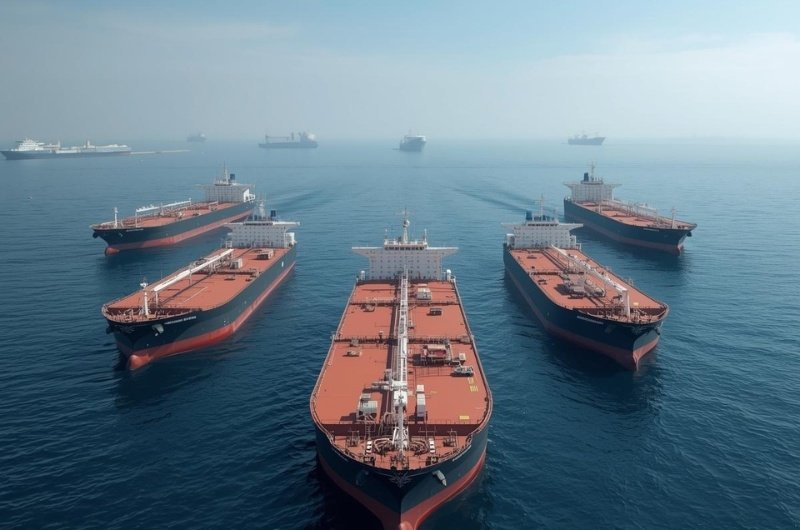
In a direct response to the U.S. and Israeli strike, Iran has closed the Strait of Hormuz — one of the world’s most strategically critical oil shipping routes. The narrow passage serves as a major shipping route for oil exports from Saudi Arabia, the United Arab Emirates, Qatar, Kuwait, and Iraq. A significant portion of the world’s energy supply passes through this corridor. With the strait effectively blocked, global oil markets are already reacting. Analysts warn that prolonged disruption could send energy prices sharply higher, fueling inflation concerns and adding new pressure to economies still navigating post-pandemic recovery and global instability. The closure may also shift global demand patterns. Russia, another major oil producer, could see increased interest from buyers seeking alternative supply routes. Venezuela, which holds some of the largest crude reserves in the world, remains a more complicated option due to refining challenges tied to the quality of its oil. U.S. energy companies have historically expressed hesitation about scaling Venezuelan imports for that reason. The ripple effects extend far beyond the Middle East. Shipping insurers, commodity traders, and central banks are all recalculating risk exposure as volatility increases. If the standoff continues, the economic consequences could reach consumers quickly in the form of higher fuel prices and broader cost increases. As military tensions rise and economic uncertainty spreads, the Strait of Hormuz is once again at the center of a global power struggle — with implications that stretch from regional security to household budgets worldwide. ——————– Related: BREAKING NEWS: U.S. and Israel Strike Iran; Supreme Leader Reported Dead as Region Erupts
BREAKING NEWS: U.S. and Israel Strike Iran; Supreme Leader Reported Dead as Region Erupts
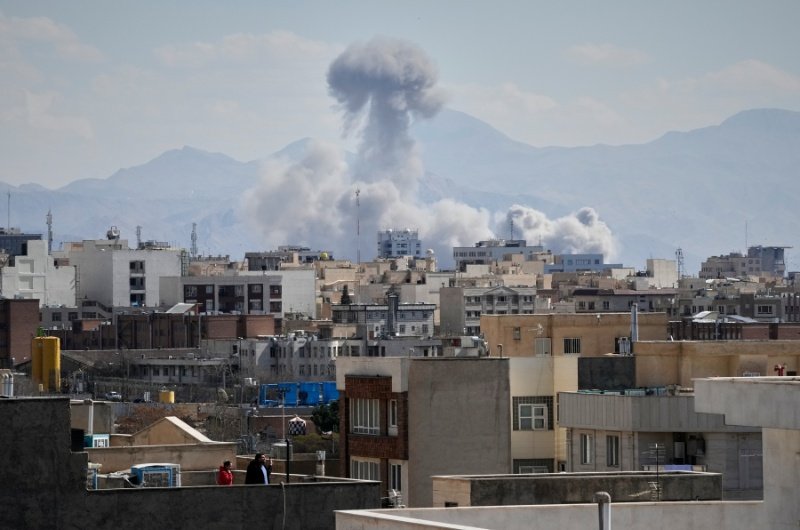
A coordinated military strike by the United States and Israel has dramatically escalated tensions in the Middle East, with reports confirming that Iran’s Supreme Leader, Ayatollah Ali Khamenei, has been killed in the operation. The surprise attack targeted high-level leadership compounds and military infrastructure after weeks of U.S. force buildup across the region. President Trump ordered the strike and later released a video statement in the early morning hours explaining the decision. He said a significant number of Iran’s top decision-makers were eliminated and described the operation as necessary for regional stability. Republican leaders have largely voiced support for the action, while many Democrats are signaling concern and are expected to push for limits on any further military escalation. In the hours following the attack, Iran launched retaliatory strikes across parts of the region. Explosions lit the night sky in multiple locations as missile and drone activity intensified. Civilian casualties have been reported, adding to fears of a broader and more prolonged conflict. Inside Iran, reactions appear mixed. In some areas, reports describe people celebrating in the streets following the death of the country’s longtime leader. In other areas, scenes of mourning and uncertainty are unfolding as questions swirl about who will assume control and how Iran’s government will respond next. The situation remains fluid, with global leaders urging restraint as markets and militaries brace for what could become one of the most consequential geopolitical turning points in decades. ——————– Related: Iran Closes Strait of Hormuz After Strikes, Threatening Global Oil Supply
The Return of Rail: Why Trains Are Gaining Ground in 2026

Airports remain busy, but a quieter shift is underway across global travel: rail is making a comeback. In both Europe and parts of the United States, rail travel is attracting renewed interest from leisure and business travelers alike. High-speed routes abroad and expanded regional corridors domestically are offering an alternative to congested airports, fluctuating airfare, and unpredictable delays. For many travelers, the appeal is simple — fewer security lines, city-center arrivals, and a more relaxed journey. Advertisement The resurgence is not purely nostalgic. Sustainability concerns are influencing booking decisions, particularly among younger travelers and corporate clients with emissions targets. Rail often carries a smaller carbon footprint than short-haul flights, making it an attractive option for environmentally conscious travel. There is also a psychological shift at play. After years of rushed itineraries and packed schedules, travelers are showing greater appreciation for the journey itself. Rail travel encourages a slower rhythm — scenic views, uninterrupted work time, and fewer logistical disruptions. The experience feels less transactional and more immersive. Airlines are unlikely to lose dominance in long-distance travel, but rail is carving out a stronger role in regional and intercity routes. As infrastructure investments continue and traveler preferences evolve, the rails may prove to be one of the more understated winners of the 2026 travel landscape.
Global CEOs Shift From Expansion Mode to Risk Containment

Corporate strategy is undergoing a subtle but meaningful shift. After years of aggressive expansion, many global companies are now pivoting toward risk containment — tightening capital allocation, slowing hiring growth, and reinforcing balance sheets. The move reflects a more cautious economic outlook shaped by geopolitical volatility, higher borrowing costs, and shifting consumer behavior. Earnings reports this quarter reveal a common theme: disciplined spending and selective investment. Companies are prioritizing automation, efficiency, and core revenue drivers over splashy new ventures. AI adoption, in particular, is being framed less as experimentation and more as a cost-optimization tool. Investors appear to welcome the prudence. Markets have responded favorably to firms demonstrating operational discipline rather than ambitious overreach. The tone of corporate leadership has changed. The focus is no longer growth at all costs — it’s resilience.
The 6-Hour Workday Experiment Gains Quiet Momentum

The idea of a shorter workday once sounded radical. Now, it’s quietly gaining traction. Across startups, creative firms, and even some mid-sized corporations, pilot programs are testing six-hour workdays at full pay. The premise is simple: reduce burnout, sharpen focus, and eliminate unnecessary meetings. Early results suggest productivity does not fall — and in some cases, improves. Beyond performance metrics, the concept taps into something deeper: time. A six-hour workday at full compensation could dramatically improve work-life balance, giving employees more space for family, caregiving, fitness, creative pursuits, personal development, or simply rest. In an era where burnout and digital fatigue have become normalized, reclaiming two hours a day represents a meaningful shift in how people experience their lives — not just their jobs. What the Early Trials Show The concept is not purely theoretical. Pilot programs in parts of Europe, including Sweden, tested six-hour workdays in sectors such as healthcare and municipal services. The results were mixed financially but notable in human terms: employees reported lower stress levels, improved overall well-being, and reduced sick leave compared to traditional schedules. Broader research on reduced-hour work models has produced similar findings. Shorter workdays have been associated with better sleep, stronger mental health indicators, and stable productivity levels in knowledge-based roles. In some trials, output remained consistent despite fewer logged hours — suggesting that concentrated focus may offset time reductions. While not every industry can adopt the model seamlessly, the early evidence challenges a long-standing assumption that longer hours automatically drive better performance. In certain environments, fewer hours may simply mean fewer inefficiencies. Impact & Focus vs Time Logged The movement reflects a broader cultural recalibration. Workers are reassessing how much of their time is spent on low-impact tasks, while employers are rethinking whether longer hours truly equal better outcomes. In knowledge-based industries especially, focus has become more valuable than sheer time logged. Critics argue the model may not translate across sectors, particularly in customer-facing or operational roles. But proponents say the experiment is less about universal adoption and more about redefining efficiency. The Takeaway If the six-hour model proves sustainable, it could reshape workplace expectations — not by reducing ambition, but by refining how work gets done — and how much life exists outside of it.