


The 6-Hour Workday Experiment Gains Quiet Momentum

The idea of a shorter workday once sounded radical. Now, it’s quietly gaining traction. Across startups, creative firms, and even some mid-sized corporations, pilot programs are testing six-hour workdays at full pay. The premise is simple: reduce burnout, sharpen focus, and eliminate unnecessary meetings. Early results suggest productivity does not fall — and in some cases, improves. Beyond performance metrics, the concept taps into something deeper: time. A six-hour workday at full compensation could dramatically improve work-life balance, giving employees more space for family, caregiving, fitness, creative pursuits, personal development, or simply rest. In an era where burnout and digital fatigue have become normalized, reclaiming two hours a day represents a meaningful shift in how people experience their lives — not just their jobs. What the Early Trials Show The concept is not purely theoretical. Pilot programs in parts of Europe, including Sweden, tested six-hour workdays in sectors such as healthcare and municipal services. The results were mixed financially but notable in human terms: employees reported lower stress levels, improved overall well-being, and reduced sick leave compared to traditional schedules. Broader research on reduced-hour work models has produced similar findings. Shorter workdays have been associated with better sleep, stronger mental health indicators, and stable productivity levels in knowledge-based roles. In some trials, output remained consistent despite fewer logged hours — suggesting that concentrated focus may offset time reductions. While not every industry can adopt the model seamlessly, the early evidence challenges a long-standing assumption that longer hours automatically drive better performance. In certain environments, fewer hours may simply mean fewer inefficiencies. Impact & Focus vs Time Logged The movement reflects a broader cultural recalibration. Workers are reassessing how much of their time is spent on low-impact tasks, while employers are rethinking whether longer hours truly equal better outcomes. In knowledge-based industries especially, focus has become more valuable than sheer time logged. Critics argue the model may not translate across sectors, particularly in customer-facing or operational roles. But proponents say the experiment is less about universal adoption and more about redefining efficiency. The Takeaway If the six-hour model proves sustainable, it could reshape workplace expectations — not by reducing ambition, but by refining how work gets done — and how much life exists outside of it.
The AI Arms Race Moves to Washington: Federal Agencies Accelerate Internal AI Rollouts

The U.S. government is no longer just regulating artificial intelligence — it’s deploying it at scale. From federal health agencies to financial regulators, departments are quietly expanding internal AI systems to speed up document review, fraud detection, compliance audits, and data analysis. What began as pilot programs has evolved into structured adoption strategies, complete with AI governance frameworks and risk assessments. The shift signals something bigger: AI has moved from experimental to operational inside the federal government. For agencies under pressure to process mountains of paperwork, enforce regulations, and modernize aging systems, AI tools are being positioned as efficiency multipliers. But the acceleration raises questions around oversight, bias monitoring, and cybersecurity safeguards — especially as federal systems handle sensitive citizen data. The Readovia Lens The real story isn’t hype. AI is essentially becoming embedded in institutional infrastructure, and that changes how policy, enforcement, and even public services are delivered.
World Economic Forum CEO Børge Brende Steps Down Following Epstein Scrutiny
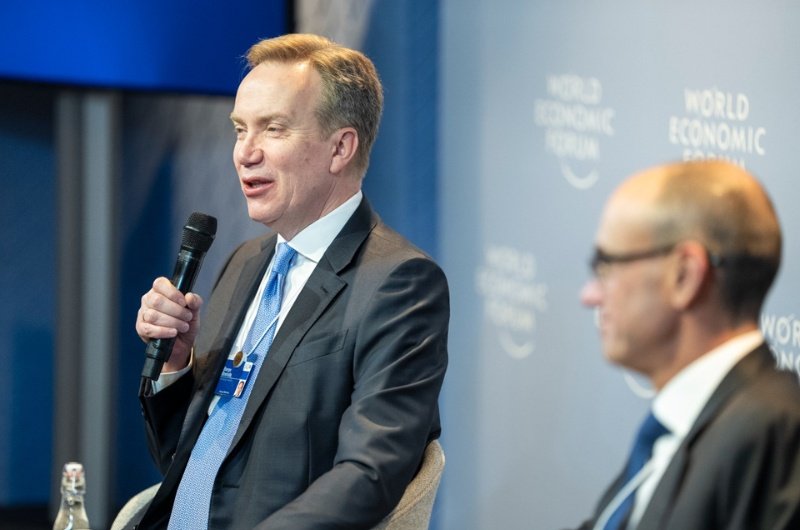
Børge Brende has resigned as president and CEO of the World Economic Forum, stepping down Thursday after mounting scrutiny over previously disclosed interactions with convicted sex offender Jeffrey Epstein. Brende, who has led the Forum since 2017 and previously served as Norway’s foreign minister, said he made the decision after careful consideration and in the interest of allowing the organization to move forward without distraction. His tenure included overseeing annual gatherings in Davos that convened heads of state, CEOs, academics, and civil society leaders to address global economic and geopolitical challenges. The renewed attention stems from U.S. Justice Department materials that revealed Brende attended several business dinners with Epstein in 2018 and 2019 and exchanged communications during that period. Brende has said he was unaware of the full scope of Epstein’s criminal conduct at the time and expressed regret that he did not scrutinize the relationship more closely. Earlier this month, the Forum initiated an independent review to assess the matter. According to the organization’s leadership, the review did not uncover additional concerns beyond what had already been publicly reported. Still, the growing public focus on past associations with Epstein created reputational pressure for global institutions and their leaders. The Forum’s board has appointed Managing Director Alois Zwinggi as interim president and CEO while it begins the search for a permanent successor. The leadership transition comes at a sensitive moment for the organization, as it seeks to maintain credibility and influence amid heightened global scrutiny of elite networks and governance standards. Brende’s departure adds to a broader pattern of institutional fallout linked to the ongoing release of Epstein-related records. While no criminal charges have been brought against him, the episode underscores how even limited past associations are reshaping leadership conversations across politics, finance, and global policy circles.
Clintons Testify in Epstein Probe as Congressional Scrutiny Intensifies

Former President Bill Clinton and former Secretary of State Hillary Clinton are facing renewed national attention this week as both provide sworn testimony in the congressional investigation tied to convicted sex offender Jeffrey Epstein. The depositions, conducted by the Republican-led U.S. House Oversight Committee, are part of a broader probe into Epstein’s network and the federal government’s handling of related investigations. Hillary Clinton testified in a closed-door session in New York, with Bill Clinton scheduled to follow. The proceedings are being recorded and transcribed, with lawmakers expected to release portions publicly. Neither Clinton has been charged with wrongdoing, and both have denied knowledge of Epstein’s criminal conduct. The inquiry is focused on uncovering what high-profile associates knew and whether federal agencies mishandled aspects of the case. Committee Chair James Comer has argued that testimony from prominent political figures is necessary to understand how Epstein maintained access to elite circles for years. Republicans say the depositions are about transparency and accountability. Democrats have countered that the investigation risks becoming politically selective, noting that Epstein had connections across party lines, business, and academia. Bill Clinton has previously acknowledged flying on Epstein’s private jet during the early 2000s for trips connected to foundation work, while maintaining he was unaware of Epstein’s crimes. Hillary Clinton has stated she never met Epstein directly and has characterized the investigation as politically motivated. Recently released Justice Department materials include photographs and travel logs but have not resulted in new charges against the Clintons. The testimony marks a rare moment in which a former president is compelled to answer questions under oath in a congressional setting. While the depositions are not criminal proceedings, they add another chapter to the long-running public examination of Epstein’s network and the institutions that failed to stop it sooner. Transcripts are expected to fuel further political debate in the days ahead.
Samsung Galaxy S26 Debuts With AI at the Core of the Smartphone Experience

Samsung has officially unveiled the Samsung Galaxy S26 series, positioning artificial intelligence at the center of its 2026 flagship strategy. Announced at its latest Unpacked event, the new lineup signals a clear shift: smartphones are no longer just faster and brighter — they are becoming more predictive, contextual, and autonomous. The S26 series includes three models: the standard S26, S26+, and S26 Ultra. Across the lineup, Samsung is expanding its “Galaxy AI” capabilities, integrating deeper on-device intelligence for everyday tasks such as smart scheduling, real-time language tools, contextual search, and advanced photo editing. Rather than operating as a separate feature layer, AI is embedded directly into the system experience, surfacing suggestions and automations based on user behavior. Under the hood, the devices are powered by next-generation processors optimized for neural performance, enabling faster AI processing without relying solely on cloud connectivity. Samsung says this allows for improved privacy protections, as more data processing occurs directly on the device. The Ultra model also introduces a new privacy-focused display technology designed to reduce side-angle screen visibility in public spaces. Design refinements remain evolutionary rather than dramatic, with high-refresh AMOLED displays, upgraded durability, and enhanced battery efficiency. The Ultra continues to lead in camera performance and storage capacity, offering configurations that push into professional-grade territory. Pricing reflects premium positioning, with the base model entering the high-end smartphone tier and the Ultra anchoring the lineup at flagship levels. The bigger story, however, is strategic. The Galaxy S26 series underscores a broader industry shift toward AI-first mobile ecosystems. As smartphones mature in hardware innovation, the competitive edge is increasingly defined by intelligence — how seamlessly devices anticipate needs, automate tasks, and integrate across digital life. With the S26 launch, Samsung is making clear that the future of the smartphone is not just faster — it is smarter.
Beyond Nvidia: 4 Under-the-Radar AI Stocks Analysts Are Watching for 2026

Nvidia has dominated the artificial intelligence boom, but some analysts are increasingly asking a different question: what companies positioned deeper in the AI supply chain could grow even faster in 2026? While Nvidia designs the GPUs powering advanced AI systems, other firms are building the infrastructure, memory, data services, and cloud capacity that make those systems possible. As AI demand expands beyond model training into large-scale deployment, several lesser-known names are drawing attention. Advertisement Innodata (NASDAQ: INOD) operates in a niche but essential corner of the AI ecosystem: data annotation and engineering. Large language models require massive volumes of structured, labeled data, and demand for high-quality datasets has surged as companies move AI tools into production environments. Analysts point to rapid revenue growth projections as a key reason the company has gained attention. Nebius Group (NASDAQ: NBIS) focuses on AI-optimized cloud infrastructure. Rather than designing chips, it provides dense GPU clusters and specialized software environments for AI workloads. With AI compute capacity in high demand globally, companies offering ready-to-deploy infrastructure are seeing strong utilization rates and aggressive expansion plans. Micron Technology (NASDAQ: MU) plays a different role. The semiconductor manufacturer produces high-bandwidth memory, a critical component for advanced AI chips. As AI systems grow more complex, memory demand is increasing alongside processing power, creating supply constraints that have benefited memory producers. Finally, several former cryptocurrency mining firms are pivoting toward AI cloud hosting. With existing data center footprints and energy contracts in place, these companies are repurposing infrastructure to support AI workloads, seeking to capitalize on the surge in compute demand. Still, investors should recognize that higher growth potential often comes with higher volatility. Many of these companies are smaller, less diversified, and more sensitive to shifts in AI spending cycles. Nvidia remains the dominant player, and betting against an established market leader carries risk. For investors in 2026, the bigger story may not be replacing Nvidia — but understanding the broader AI supply chain. From memory to data engineering to cloud infrastructure, the AI boom is creating opportunity well beyond a single stock.
State of the Union Tonight: Trump Faces High-Stakes Moment in Divided America
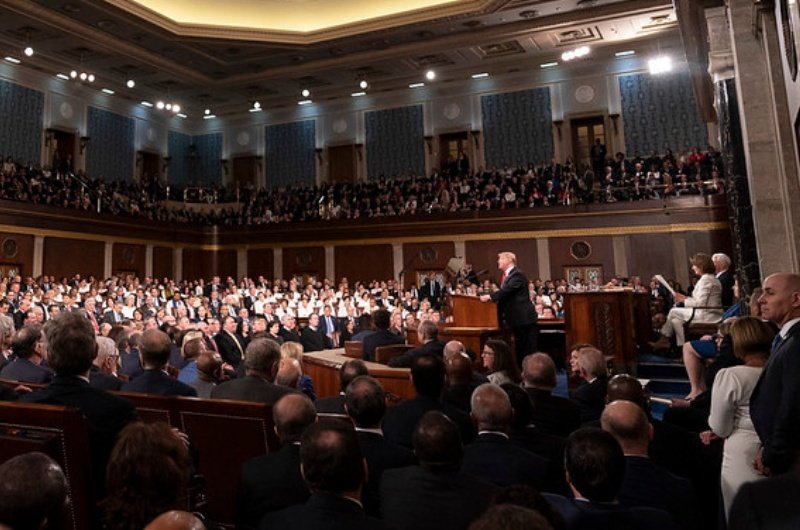
President Donald Trump will deliver the first State of the Union address of his second term tonight at 9 p.m. ET, stepping into a chamber — and a country — sharply divided over the direction of the economy, immigration policy, and America’s global posture. The speech arrives at a politically sensitive time, with midterm elections looming and approval ratings under pressure. The White House has signaled that Trump will emphasize economic performance, including job growth and broader market strength, while defending his trade strategy and tariff policies. Yet public sentiment remains mixed. Many Americans continue to express frustration over cost-of-living concerns, even as headline economic data shows resilience. How the president reconciles those competing realities may define the tone of the address. Immigration is also expected to feature prominently. Ongoing disputes over border enforcement and Department of Homeland Security funding have sharpened partisan tensions in Washington. Trump is likely to frame his administration’s approach as a matter of national security and sovereignty, while critics argue the policies have fueled division and legal battles. Foreign policy could round out the evening’s major themes. Trade negotiations, tariff disputes, and geopolitical tensions abroad provide a complicated backdrop. Allies and adversaries alike will be listening closely for signals about the administration’s next moves, particularly as global markets remain sensitive to U.S. policy shifts. The Democratic response will follow the president’s speech, offering a contrasting vision ahead of the 2026 midterms. For Trump, the address represents more than a constitutional obligation. It is a defining political moment — a chance to reset the narrative, rally supporters, and shape the national conversation for the year ahead.
India’s Young Adults Are Driving the AI Surge — And Their Future May Depend on It

India’s AI moment is being powered by its younger generation. At a recent AI summit, OpenAI revealed that users between 18 and 24 years old account for nearly half of ChatGPT usage in the country. It is a striking figure for a nation already home to more than 100 million weekly active users of the platform, according to OpenAI CEO Sam Altman. That makes India second only to the United States in total ChatGPT usage, with Indian students representing the largest share of student users globally. The numbers tell a deeper story about where the global AI workforce may be heading. India’s population skews young, and that generation has adopted digital technology faster than almost anywhere else in the world. For millions of students and early-career professionals, AI tools are becoming foundational infrastructure for learning, coding, marketing, entrepreneurship, and remote work. But opportunity comes with disruption. Venture capitalist Vinod Khosla, founder of Khosla Ventures, warned that sectors such as IT services and business process outsourcing could largely disappear within five years due to automation. Instead of defending legacy roles, he suggested that India’s estimated 250 million young people should pivot toward building and selling AI-driven products and services to the global market. OpenAI appears to be doubling down on India’s momentum. The company announced plans to open new offices in Bengaluru and Mumbai, signaling long-term investment in the country’s talent ecosystem. As AI reshapes global labor markets, India’s youth are not waiting to adapt. They are already experimenting, building, and learning at scale. For young adults worldwide, the message is clear. AI fluency is quickly becoming a competitive advantage. In India, it may also become a defining economic lever for an entire generation.
Powerful Winter Storm Blasts Mid-Atlantic, Shutting Down Schools & Travel

A powerful winter storm is sweeping across the Mid-Atlantic and Northeast, bringing heavy snowfall, dangerous travel conditions, and widespread disruptions. Forecasters say parts of the region are experiencing snowfall rates as high as 2 to 3 inches per hour, rapidly reducing visibility and overwhelming road treatment efforts. While snow began falling Sunday afternoon, the system is intensifying as it pushes north. Areas of New York and New Jersey have already seen more than a foot of snow, and some areas are forecast to receive as much as 20 – 24 inches before the storm tapers off. The combination of heavy accumulation and gusty winds has led to school closures, flight cancellations, and treacherous road conditions across multiple states. Wet, dense snow is clinging to trees and power lines in some communities, raising the risk of scattered outages. Officials are urging residents to avoid unnecessary travel as plow crews work to keep primary roads passable. With temperatures hovering near or below freezing, untreated surfaces may remain icy even after snowfall slows, extending impacts into the evening commute.
Supreme Court Limits Presidential Trade Authority in Tariff Decision

In a major separation-of-powers ruling, the Supreme Court concluded Friday that the Trump administration exceeded its statutory authority when imposing certain tariffs, drawing clearer boundaries around executive power in trade matters. The decision underscores that while presidents are granted flexibility in responding to economic and national concerns, Congress retains primary constitutional authority over taxation and commerce. The Court’s opinion reinforces that delegated powers cannot be expanded beyond what lawmakers explicitly authorize. The ruling may reshape how future administrations approach tariff policy and emergency trade measures, particularly when broad economic actions are undertaken without direct congressional approval. More broadly, the decision signals that courts remain willing to scrutinize executive actions that test the limits of delegated authority. ——————– Related: Supreme Court Rules Trump Tariffs Unlawful, Billions Could Be Returned