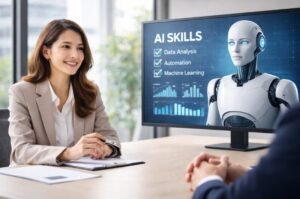



The age of “nice-to-have AI pilot projects” may be ending. A newly announced enterprise partnership between OpenAI and global consulting giant Accenture will deploy advanced AI tools, including ChatGPT Enterprise, to tens of thousands of employees — signaling a turning point in how major firms integrate artificial intelligence into daily operations. Rather than experimenting at the edges, companies are beginning to embed AI directly into the core infrastructure of work.
Under the deal, Accenture consultants will use AI across everyday functions, from internal productivity and research assistance to client-facing deliverables and large-scale transformation projects. The message is clear: AI is no longer being framed as a supplement or an innovation showcase — it is evolving into operational infrastructure and competitive necessity.
That shift is expected to ripple across industries. For businesses, enterprise-scale AI offers efficiency gains, faster execution, and the potential for new strategic advantages among early adopters. For employees, it represents both opportunity and disruption: workers who learn to partner with AI may accelerate their careers, while others risk displacement as routine tasks become automated.
But the move comes with significant challenges. As AI moves from experimentation into mission-critical systems, companies must confront questions around governance, accuracy, bias, and compliance. Overreliance on automated systems or failure to manage risk could have real consequences — especially as regulatory scrutiny increases globally.
For business and operations leaders, the moment marks a sharp pivot. The question is no longer whether AI will transform work — but how fast organizations can adapt, balance innovation with accountability, and build strategies that scale without losing the human core of enterprise performance.