The U.S. job market is showing fresh signs of strain as companies accelerate their adoption of artificial intelligence.
According to new data released by Challenger, Gray & Christmas, employers announced 153,074 job cuts in October 2025 — the highest for any October since 2001. Roughly 31,000 of those cuts were tied directly to AI-related automation and restructuring, marking one of the sharpest technology-driven shifts in the modern labor market.
The firm’s report points to a new reality: while AI is boosting productivity and profits in certain sectors, it’s simultaneously displacing traditional roles in operations, customer service, logistics, and data processing.
Manufacturing, media, and financial services saw the heaviest AI-linked reductions, with several major corporations citing “efficiency gains through automation” as the reason for workforce downsizing.
“Employers are clearly recalibrating their headcounts for an AI-assisted future,” said Challenger CEO Andrew Challenger in a statement. “Many roles are being redefined, and some are disappearing altogether.”
Rewriting the Workforce Map
October’s total layoffs pushed year-to-date job cuts to more than 1.2 million, up nearly 40 percent compared with the same period in 2024. Analysts say the trend reflects a deeper structural adjustment: companies are using generative and predictive AI tools not just to automate repetitive tasks, but to streamline decision-making layers.
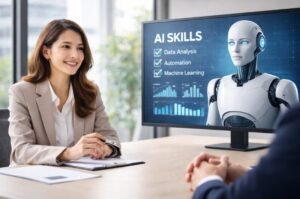
In parallel, job openings have narrowed in sectors once considered immune — including HR, marketing, and legal — as firms integrate machine-learning models into everyday workflows. Yet demand for AI-literate professionals remains strong, particularly in data science, cybersecurity, and model-governance roles.
A Cautious Outlook
Economists warn that the combination of sustained layoffs and uneven rehiring could test consumer confidence heading into the holiday season. At the same time, businesses face growing pressure to retrain or redeploy affected employees rather than rely solely on downsizing. The Bureau of Labor Statistics has already begun monitoring “AI displacement” as a standalone metric in its quarterly employment outlook.
For now, the data underscores a defining paradox of the AI era: technology designed to enhance human productivity is also rewriting what “human work” means in the first place.