Elon Musk’s push into artificial intelligence just took a dramatic turn — and it’s not about software. It’s about control.
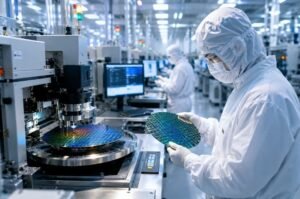
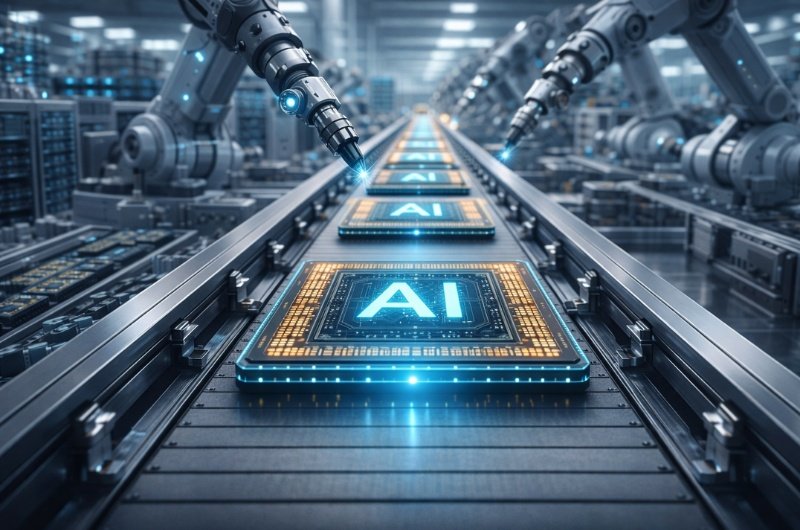
Tesla is preparing to launch what Musk calls the “Terafab” project, an ambitious effort to build its own artificial intelligence chips and reduce reliance on traditional semiconductor giants. The move signals a deeper shift in how the world’s most influential tech companies are approaching AI: not just building smarter systems, but owning the infrastructure that powers them.
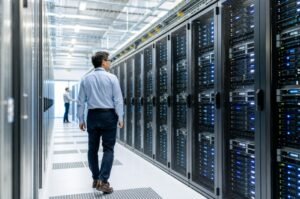
At its core, Terafab is about scale. Musk has repeatedly warned that existing chip manufacturers cannot produce enough advanced processors to support the growing demands of autonomous vehicles, robotics, and large-scale AI systems. Instead of waiting for suppliers to catch up, Tesla is moving to build its own pipeline from design to production, bringing one of the most critical layers of the AI stack in-house.
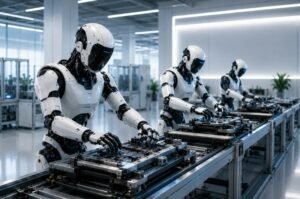
The implications extend far beyond Tesla’s self-driving ambitions. These chips are expected to power everything from next-generation vehicle intelligence to humanoid robotics and large-scale AI training systems. In Musk’s broader vision, they could even support future computing infrastructure that operates beyond traditional limits.
But the move also reflects a growing tension across the tech industry. As demand for AI accelerates, reliance on a small group of chipmakers has become a strategic vulnerability. By investing in its own fabrication capabilities, Tesla is positioning itself not just as an AI user, but as a potential AI infrastructure player.
The question now is whether Musk can deliver. Semiconductor manufacturing remains one of the most complex and capital-intensive industries in the world. Even with Tesla’s resources and Musk’s history of bold execution, Terafab stands as one of the company’s most ambitious and uncertain bets yet.
Between The Lines – The Readovia Lens
This “Terafab” move is about independence and leverage.
Chips, data centers, and energy are quickly becoming a battleground. The next phase of the AI economy won’t be defined by who builds the smartest models, but by who controls the systems that make them possible.
Tesla is positioning itself to operate without constraints — in a world where access to compute may determine who leads and who falls behind.