


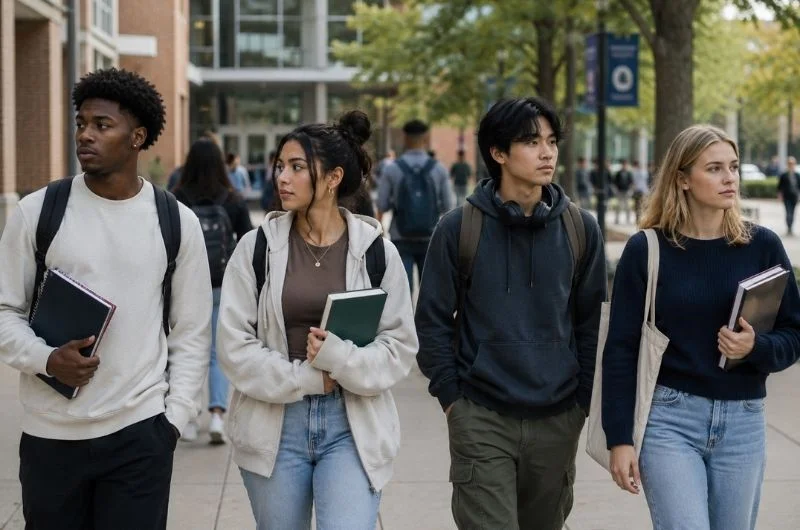
Declining international student enrollment at American colleges and universities could cost the U.S. economy more than $2.4 billion and reduce support for more than 31,000 jobs, according to new research released November 16 by NAFSA: Association of International Educators and its research partner, JB International. The findings highlight financial consequences that extend beyond university campuses into American businesses, employment, and local communities.
The economic estimates draw on the Fall 2026 Snapshot on International Student Enrollment from the Institute of International Education (IIE), which surveyed 809 U.S. higher education institutions and found a 15% decline in new international student enrollment. The survey also recorded a 9% decline in total international enrollment, including students participating in Optional Practical Training, and a 15% decrease in international graduate enrollment. The updated economic estimates are less severe than NAFSA’s August projection, which warned of as much as $3.4 billion in lost economic activity and nearly 40,000 jobs affected.
The financial consequences reach beyond tuition revenue. International students contribute to local economies through housing, groceries, transportation, dining, and other everyday expenses. NAFSA’s state-level estimates project potential economic losses of $352.2 million in California, $334 million in New York, and $195.9 million in Massachusetts during the 2026–27 academic year. Those figures illustrate how declining enrollment could affect landlords, restaurants, retailers, and other businesses in communities surrounding major universities.
The decline also presents challenges for American research and innovation. International graduate students participate in university laboratories, engineering programs, scientific investigations, and technology development, making them an important part of the nation’s academic research workforce. Reduced graduate enrollment could place additional pressure on institutions that depend on international students for research assistance and advanced academic programs. In the IIE survey, institutions reporting enrollment declines cited visa application difficulties, travel restrictions, competition from universities in other countries, and educational costs among the contributing factors.
The Readovia Lens
Declining international student enrollment threatens an economic relationship that connects American universities with businesses, workers, and communities across the country. Colleges face potential reductions in tuition revenue and research participation, while surrounding communities risk losing spending that supports local employment. The latest findings demonstrate that international education contributes far more than classroom diversity, and continued enrollment declines could carry lasting consequences for America’s economic competitiveness and scientific leadership.