
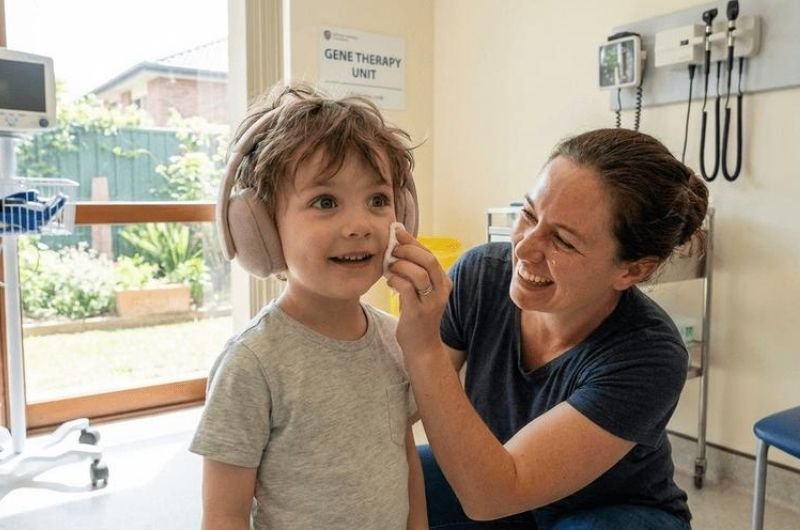
A pioneering gene therapy is helping children born with a rare inherited form of deafness hear sounds for the first time, offering new hope for families affected by genetic hearing loss. In a clinical study involving 12 children, nine experienced significant hearing improvements following treatment, including several who achieved hearing levels approaching or reaching the normal range.
Researchers at Cincinnati Children’s Hospital Medical Center are among the specialists advancing the treatment, known as Otarmeni. It targets mutations in the OTOF gene, which prevents the inner ear from producing a protein called otoferlin that is essential for transmitting sound signals to the brain.
Among the children benefiting from the therapy are a brother and sister from Uzbekistan whose parents traveled to Cincinnati seeking treatment. Both children were born with profound hearing loss. After receiving the experimental therapy, they began responding to sounds without cochlear implants, marking a remarkable milestone for their family and medical team.
The treatment involves delivering a functioning copy of the affected gene directly into the inner ear through a specialized surgical procedure. Results published in The New England Journal of Medicine showed that nine of the first 12 participants achieved substantially improved hearing within six months. Six could hear soft speech without assistive devices, while three reached average hearing sensitivity within the normal range.
Although the results are encouraging, the treatment targets a specific genetic cause of deafness and is not suitable for all forms of hearing loss. Researchers are continuing to evaluate its long-term safety, durability and effectiveness. The findings nevertheless represent an important advance in gene therapy and could help guide future treatments for other inherited hearing conditions.