

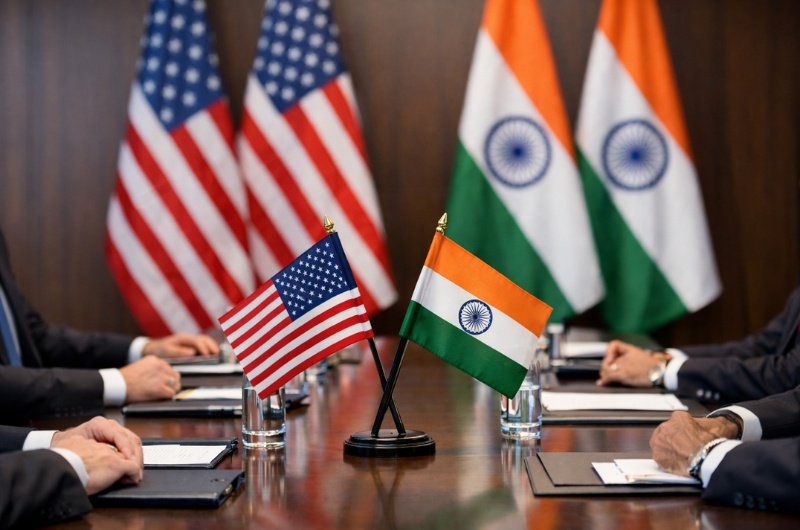
The White House has announced a new trade framework with India, signaling a major step toward strengthening economic and strategic alignment between the two countries. The agreement outlines plans to reduce tariffs, expand market access, and accelerate negotiations toward a broader bilateral trade pact.
Under the framework, both governments committed to easing long-standing trade barriers that have restricted exports and strained commercial relations. The United States plans to lower tariffs on selected Indian goods, while India agreed to eliminate or significantly reduce tariffs on a wide range of American industrial and agricultural products. Officials describe the approach as an effort to rebalance trade while creating clearer pathways for growth.
A central component of the deal is India’s commitment to large-scale purchases of U.S. goods across sectors including energy, agriculture, technology, and manufacturing. The move is designed to reinforce supply chains and reduce dependence on rival powers for critical materials and products, reflecting the growing geopolitical dimension of global trade.
The framework also expands cooperation in digital trade and technology policy, with both countries aiming to reduce digital barriers and align more closely on innovation, data flows, and emerging technologies. Additional provisions focus on supply-chain security and economic resilience, underscoring the deal’s strategic importance beyond commerce alone.
While the agreement stops short of a full trade pact, it establishes a clear roadmap for continued negotiations. If finalized, a comprehensive U.S.–India trade agreement could reshape economic relations between the two democracies and strengthen their influence in an increasingly competitive global economy.