


Some College Students Are Waiting Weeks for Federal Loan Money as New Rules Cause Delays

Some college students have been left waiting weeks for federal loan money they expected to use for rent, transportation and other living expenses as schools struggle to implement sweeping new federal student-loan rules. The delays affected students during the summer and are fueling concerns about whether similar problems could affect students expecting financial aid this fall. The problems follow major changes to the federal student-loan system that took effect July 1. Colleges have had to adjust their financial-aid systems and procedures to accommodate new borrowing limits and eligibility requirements while also working through changes to the federal systems used to process student loans. For students who depend on loan proceeds for more than tuition, a delay can quickly create financial problems. Federal student loans may also help cover eligible education-related living costs, including housing, food and transportation, leaving students who experience delayed disbursements to find other ways to cover those expenses while they wait. Federal rules generally require schools to disburse federal student-aid funds promptly once the requirements for payment have been met. When federal aid credited to a student’s account creates an eligible credit balance after school charges are paid, schools generally have 14 days to provide that balance to the student or parent. But the transition to the new loan rules has complicated processing at some institutions. The Readovia Lens For students who rely on financial aid to cover everyday expenses while attending college, receiving the money on time can be nearly as important as receiving it at all. With the fall semester underway at colleges across the country, students expecting federal loan funds should keep an eye on their financial-aid accounts and contact their school’s financial-aid office if expected money does not arrive.
Two Killed, Six Injured Including Three Police Officers in Minneapolis Shooting
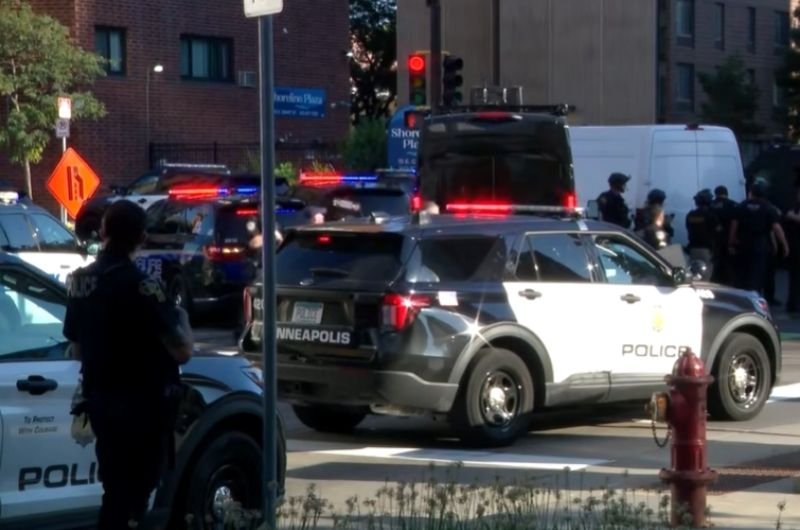
Two people were killed and six others were injured, including three Minneapolis police officers, after gunfire erupted inside a downtown apartment building Wednesday afternoon, triggering a major law-enforcement response and sending officers into the building while shots were still being fired. Police were dispatched to the building at 15 East Grant Street shortly after a 911 call at 4:36 p.m. reporting that someone had been shot. Officers arrived within two minutes, found victims and heard additional gunfire coming from an upper floor. As they moved toward the shots, police said they encountered a haze that significantly reduced visibility. Two officers were struck by gunfire during the response. One was shot in the leg, while another was shot twice in the abdomen and underwent surgery. A third officer suffered a separate, non-life-threatening injury. All three were reported in stable condition and are expected to recover. One civilian victim died at the scene and another died after being taken to Hennepin County Medical Center. Three other civilians were wounded. The suspected shooter was also found dead inside the building. Police said Wednesday night that investigators were still working to determine exactly what led to the shooting and the circumstances surrounding the suspect’s death. The Readovia Lens The shooting turned an emergency call at a downtown residential building into an exceptionally dangerous response for Minneapolis police, with officers entering while gunfire was continuing and ultimately becoming victims themselves. Investigators are now working to establish what triggered the violence and the sequence of events inside the building as Minneapolis confronts another deadly mass shooting.
FAA Expands Runway Safety Technology to 100 U.S. Airports
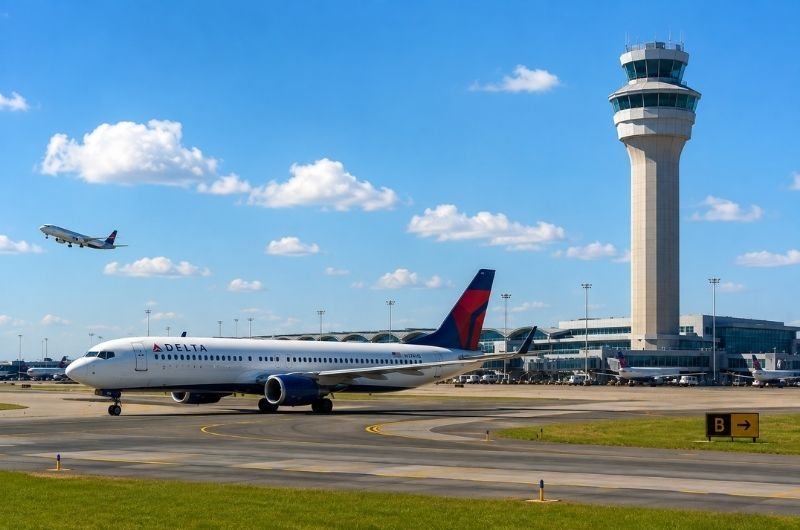
The Federal Aviation Administration has reached a major milestone in its effort to improve safety on airport runways and taxiways, with new surveillance technology now operating at 100 air traffic control towers across the United States. The Surface Awareness Initiative, or SAI, gives air traffic controllers a real-time view of aircraft and equipped vehicles moving around an airport. The technology can continue tracking that traffic during poor weather and in areas that may not be visible from the control tower, giving controllers additional information to help prevent dangerous conflicts on the ground. The FAA is targeting 220 airports that previously lacked surface-surveillance capabilities for the technology. The agency began installing SAI systems in 2024 and says another 44 airports are scheduled to receive them by the end of 2026. Recent installations include Ann Arbor Municipal Airport in Michigan, Billings-Logan International Airport in Montana, Gulfport-Biloxi International Airport in Mississippi, Greenville-Spartanburg International Airport in South Carolina and Corpus Christi International Airport in Texas. SAI relies on Automatic Dependent Surveillance-Broadcast, or ADS-B, data transmitted by aircraft and properly equipped vehicles. That information is displayed for controllers on a map of the airport surface, allowing them to see activity on runways, taxiways and other movement areas. The FAA says the technology is intended to improve situational awareness and reduce runway incursions — incidents involving an aircraft, vehicle or person where they should not be on a protected airport surface. The Readovia Lens For travelers, the milestone represents another layer of protection being added where some of aviation’s most dangerous situations can develop: on the ground, when aircraft and airport vehicles are operating in close proximity. Reaching 100 towers means the FAA is approaching the halfway point of a 220-airport deployment designed to give controllers a clearer picture of what’s happening across the airport surface, including when weather or distance makes that activity difficult to see.
SNAP Changes Could Cost Some Children Their Free School Meals

Changes to federal food-assistance rules are beginning to create a potential financial burden for families: some children who lose Supplemental Nutrition Assistance Program (SNAP) benefits could also lose automatic eligibility for free meals at school. Children in households receiving Supplemental Nutrition Assistance Program benefits generally qualify automatically for free school breakfast and lunch, without their parents having to submit a separate meal application.. That connection means losing SNAP can also end one of the easiest pathways to receiving free school meals, even though some children may still qualify based on household income or another eligibility category. The impact may extend beyond individual families. SNAP participation is also used in determining eligibility and federal reimbursement under the Community Eligibility Provision, which allows qualifying schools and districts in high-poverty areas to provide free breakfast and lunch to all enrolled students without collecting individual applications. Fewer students directly certified through SNAP can reduce a school’s qualifying percentage and potentially affect its ability to participate in the program. The changes stem from provisions in the 2025 federal tax-and-spending law that tightened SNAP eligibility, including expanded work requirements and changes affecting some noncitizens. An estimate cited by CBS News from the nonpartisan Center on Budget and Policy Priorities says roughly 4.5 million people have lost SNAP benefits since the law was enacted, including about 1.5 million children. The Readovia Lens For families, losing SNAP may now have consequences beyond the grocery budget. Parents whose children are no longer automatically certified should not assume that free school meals are necessarily gone, however: children may still qualify under separate income guidelines or another eligibility category. The important step is checking with the child’s school or district rather than allowing an automatic SNAP-based certification to lapse without determining whether another route to free or reduced-price meals remains available.
Uber Is Cutting 3,300 Jobs in Major Workforce Overhaul

Uber is cutting about 3,300 jobs worldwide as the ride-hailing giant moves to simplify a workforce that executives say has become too complicated as the company has grown. The reduction amounts to roughly 10% of Uber’s global workforce and is the company’s largest round of layoffs since 2020. The restructuring will reach across the organization, with Uber reducing management positions, combining some teams and eliminating smaller groups that have accumulated as the business expanded. The overhaul will also dramatically reduce remote work at Uber. The company plans to concentrate more of its workforce around major office hubs, including New York and San Francisco, while limiting fully remote positions to about 1% of employees. Most workers currently classified as remote will be expected to relocate within commuting distance of an Uber office. The cuts come despite strong recent financial performance. Uber reported $14.2 billion in second-quarter revenue last month, up 12% from a year earlier, while operating income climbed 30% to $1.9 billion. Customers completed 3.9 billion trips during the quarter, an 18% increase, and the company said it added more first-time users during the previous 12 months than in any comparable period over the past five years. Uber is simultaneously directing more attention toward the next phase of transportation, including autonomous vehicles. CEO Dara Khosrowshahi has described autonomous technology as an important part of the company’s future, with Uber working to position its platform as a major marketplace for robotaxi operators. The company said the workforce restructuring is intended to simplify operations and free resources for future growth and innovation.
USPS Whistleblower Warns New Mail Ballot System Could Disrupt Midterm Voting
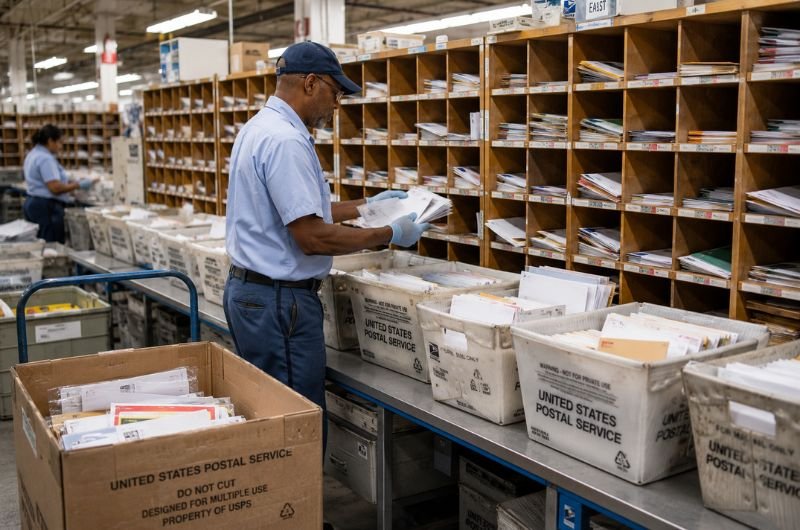
A U.S. Postal Service whistleblower is warning that a new system being developed to process mail ballots could prevent large batches of ballots from reaching voters if it is implemented for the November midterm elections. The system was developed in response to President Trump’s March executive order seeking new restrictions on mail voting. Under the Postal Service’s new procedures, states would submit lists of mail-ballot recipients through a federal portal, while ballot envelopes would be required to meet new design and barcode standards before the Postal Service accepts them for delivery. The whistleblower, whose allegations were released Tuesday by Sen. Richard Blumenthal of Connecticut, says the system was developed under an unusually compressed timetable and without sufficient testing. One of the biggest concerns involves what the disclosure describes as a zero-percent failure policy: if a sampled barcode in a batch cannot be properly scanned or matched, the entire batch could be rejected and returned to election officials. Because election offices can submit thousands or tens of thousands of ballots at once, a single problem could potentially delay many otherwise valid ballots. The Postal Service says it is reviewing the allegations and maintains that development of its Federal Ballot Mail Portal has complied with court orders. USPS describes the portal as a secure way for election officials to provide lists of people receiving ballots and says its goal is reliable election-mail delivery. The White House has also disputed suggestions that the technology is unusually difficult to implement, arguing that the Postal Service already handles large-volume mailings and barcode systems. Whether the new requirements will actually be used during the November election remains unresolved. A federal judge has temporarily blocked USPS from enforcing the new verification procedures while allowing continued development of the portal for voluntary use. A hearing scheduled for Thursday could determine whether that temporary restriction is extended as litigation over the administration’s mail-voting order continues. The Readovia Lens The stakes surrounding the Postal Service’s new mail-ballot procedures are amplified by the sheer number of Americans who vote by mail. Nearly three in 10 U.S. voters cast their ballots by mail in the 2024 election, making any significant change to Postal Service procedures potentially consequential for millions of voters and election offices across the country.
Duane Davis Found Guilty of Murder in 1996 Killing of Tupac Shakur
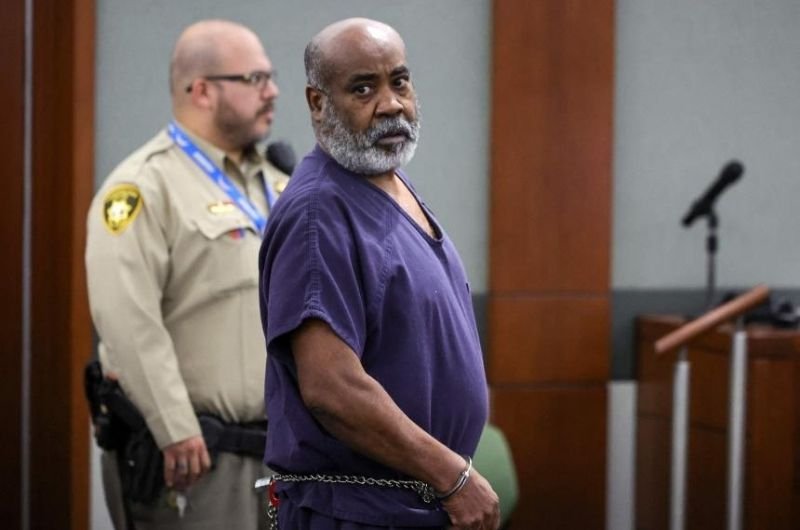
A Las Vegas jury has found Duane “Keffe D” Davis guilty of first-degree murder in the 1996 killing of Tupac Shakur, delivering the first conviction in a case that remained unsolved for nearly three decades. Jurors deliberated for less than three hours Monday before convicting the 63-year-old former gang leader of murder with the use of a deadly weapon. Davis was the only person ever charged in Shakur’s killing. He now faces the possibility of life in prison, with sentencing scheduled for October 13. A judge had set Davis’s bail at $750,000 in 2024, with house arrest and electronic monitoring as conditions of release. Davis remained in custody through his trial and is now being held without bail following his guilty verdict. Prosecutors did not accuse Davis of firing the shots that killed Shakur. Instead, they argued that he orchestrated the attack, obtained the gun used in the shooting and provided it to others in the white Cadillac that pulled alongside the car carrying Shakur and Death Row Records co-founder Marion “Suge” Knight on September 7, 1996. Shakur, who was 25, was shot multiple times and died six days later. Much of the prosecution’s case was built around Davis’s own words. Over the years, he discussed the killing in interviews, conversations with investigators and his 2019 memoir, Compton Street Legend. Prosecutors said his accounts repeatedly placed him inside the Cadillac and described his role in obtaining and passing along the gun. Davis’s defense argued that he had exaggerated or fabricated those accounts for money and notoriety and emphasized the lack of physical evidence directly tying him to the scene. The verdict closes a major chapter in one of the most enduring murder cases in American music history. Shakur was already one of hip-hop’s biggest stars when he was killed, and the absence of a prosecution for decades fueled speculation about what happened and whether anyone would ever be held criminally responsible. Davis told the judge after the verdict that he intends to appeal his conviction.
House to Vote Today on Bill to Avoid Another Government Shutdown
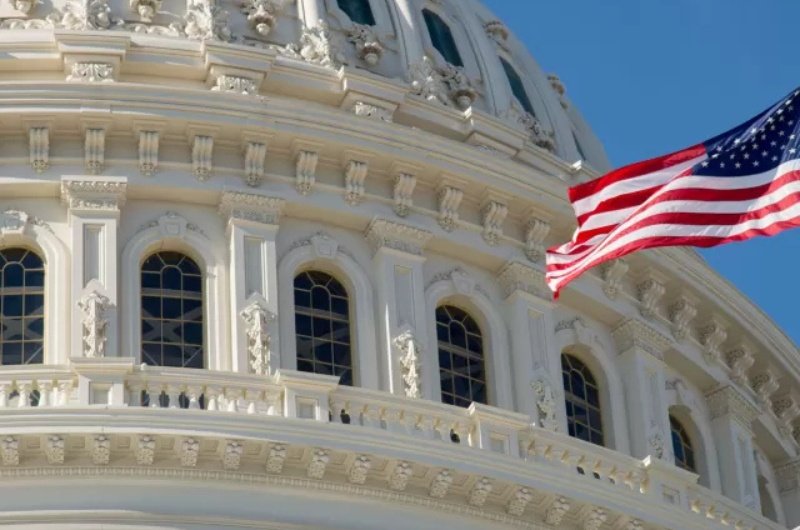
The House is expected to vote Tuesday on a stopgap spending bill that could remove the immediate threat of another federal government shutdown, with lawmakers facing a September 30 deadline to keep agencies funded. The measure would extend most current federal funding through December 11, pushing the next major spending deadline beyond the November midterm elections. The Senate overwhelmingly approved the legislation in August in a 90–6 vote, leaving the House as the remaining congressional hurdle before the bill can be sent to President Donald Trump. House leaders are expected to bring the measure to the floor using a fast-track procedure known as suspension of the rules. That approach avoids a separate procedural vote but requires support from two-thirds of lawmakers voting, meaning Republicans will need significant Democratic support for passage. The Senate made several changes to an earlier House funding measure. Among them, the bill would delay until December 11 a proposed Office of Management and Budget rule that would give political appointees greater authority over federal grants. It also contains provisions limiting the administration’s ability to redirect funding to Border Patrol. A separate provision delaying a federal ban on certain intoxicating hemp THC products for roughly one month has drawn opposition from some Republicans. If the House approves the Senate version without changes, the legislation can go directly to Trump’s desk. Enactment would keep the government funded into December and avert a shutdown when the new fiscal year begins October 1, but it would only postpone the larger spending fight: Congress would still need to reach agreement on longer-term government funding before the December deadline.
Grand Canyon Flooding Cripples Water System and Forces Hotel Closures
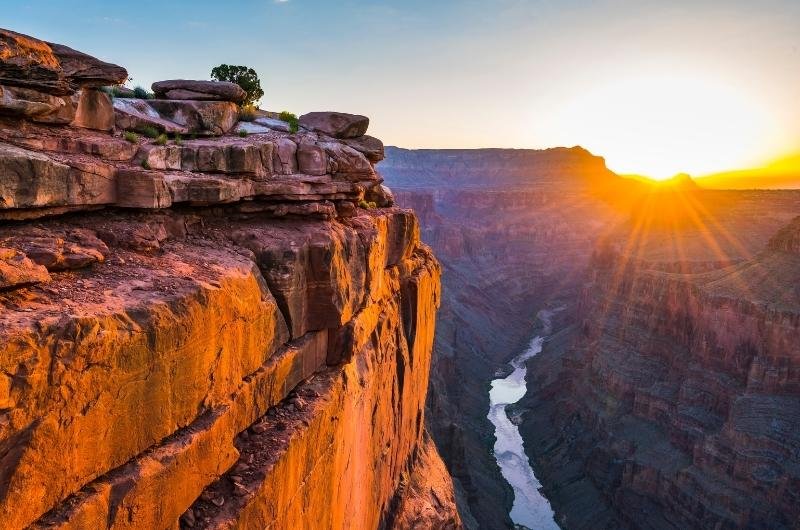
Visitors to Grand Canyon National Park are facing hotel closures and strict water restrictions after weekend flash flooding severely damaged the only pipeline supplying water to much of the park, with officials estimating that roughly 40% of the 12.5-mile system has been damaged or destroyed. The Transcanyon Waterline is currently out of service following Saturday’s flooding in Bright Angel Canyon. The National Park Service has halted overnight accommodations inside the park and imposed its highest level of water restrictions on the South Rim as officials work to preserve limited stored supplies. The South Rim remains open to daytime visitors, but overnight lodging has been suspended at hotels and other accommodations inside the park, including El Tovar, Bright Angel Lodge, Maswik Lodge, Yavapai Lodge and Trailer Village. Only dry camping is permitted, campground water spigots have been turned off and wood and charcoal fires are prohibited. Hotels outside the park in the nearby town of Tusayan are not affected by the restrictions. Repairing the water system could prove particularly difficult. The Transcanyon Waterline carries water through some of the Grand Canyon’s most rugged terrain, where even routine repairs can require helicopters. Park officials say they anticipate that miles of pipeline may have been destroyed, although crews are still assessing the full extent of the damage. The flooding also threatens to disrupt a more than $200 million project already underway to replace and upgrade the aging system. The infrastructure damage follows a deadly weekend at the park. At least two people were killed in the flash flooding and roughly 80 people were rescued as rushing water and debris tore through the Bright Angel Creek area, destroying footbridges and damaging trails and other facilities. Search efforts have continued for anyone who may still be unaccounted for. The National Park Service has not announced when overnight accommodations will reopen, saying the restrictions will remain in place for the foreseeable future. Travelers with upcoming Grand Canyon reservations should check directly with their lodging provider and review current park conditions before arriving, particularly as damage assessments and repair plans continue.
Google Maps Changes Lake Ontario to ‘Lake America’ for U.S. Users

Google Maps has changed the name of Lake Ontario to “Lake America” for users in the United States, days after President Donald Trump signed an executive order directing the federal government to rename the Great Lake. Google says the change follows its longstanding practice of using names listed in the U.S. Geographic Names Information System. U.S. users will now see Lake America, Canadian users will continue to see Lake Ontario, and users outside the two countries will see both names. Trump did not order Google to make the change; the company updated Maps after the federal geographic database was changed. Trump signed the executive order Thursday amid an escalating trade dispute between the United States and Canada. In the order, the White House argues that the United States provides much of the security and investment that supports the Great Lakes, pointing to U.S. Coast Guard icebreaking operations and nearly $4 billion in U.S. spending on Great Lakes ecosystem protection over the past decade. Trump said Lake Ontario is an important economic resource and part of America’s heritage, directing federal agencies to use Lake America on government maps, documents and communications. The timing has made the renaming another flashpoint in deteriorating U.S.–Canada relations. Trump criticized Canadian trade policies while signing the order, although he told reporters the name change was not intended to send Canada a message. Canadian Prime Minister Mark Carney rejected the new name, while Ontario Premier Doug Ford responded with a large lakeside sign declaring that it remains Lake Ontario. The name change is also facing a challenge in Congress. Rep. Debbie Dingell, D-Mich., plans to introduce the Hands Off Our Great Lakes Act to reverse Trump’s executive order, while Rep. Tim Kennedy, D-N.Y., is working on separate legislation. Dingell says more than 100 House Democrats have also signed a letter urging the administration to change its diplomatic approach toward Canada. With Republicans controlling Congress, however, legislation overturning the order faces a difficult path. Google’s decision does not mean the lake has been universally renamed. The executive order establishes Lake America as the official U.S. federal name, but Canada continues to recognize Lake Ontario. Google has essentially created two versions of the map depending on where a user is viewing it — turning an already contentious presidential name change into a visible reminder of the growing divide between two countries that share the lake.