

NASA’s Roman Space Telescope Is Finally on Its Way to Unlock the Dark Universe
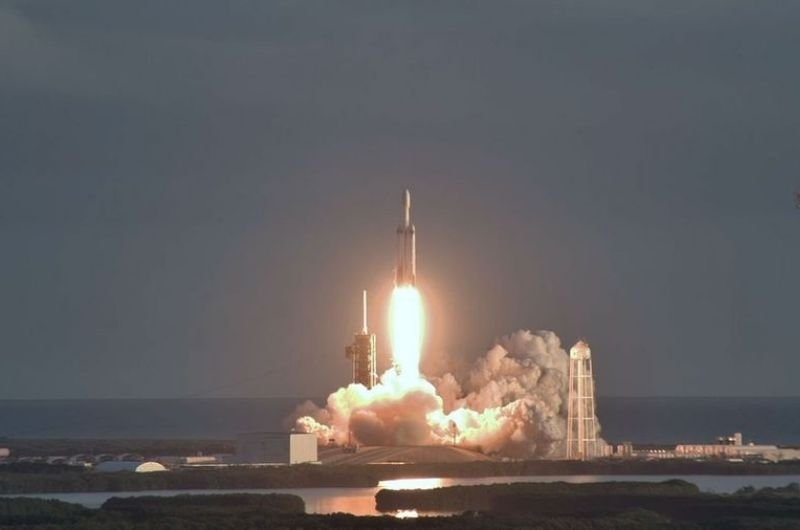
NASA’s Nancy Grace Roman Space Telescope is officially on its way, beginning a million-mile journey that could transform scientists’ understanding of dark energy, dark matter and planets beyond our solar system. Roman lifted off Sunday at 7:26 a.m. EDT aboard a SpaceX Falcon Heavy rocket from Launch Complex 39A at NASA’s Kennedy Space Center in Florida. The telescope separated from the rocket about 31 minutes later and began flying on its own, while ground controllers successfully established communications with the observatory. The telescope is now traveling toward the second Sun-Earth Lagrange point, known as L2, about one million miles from Earth. The journey will take roughly three months as NASA powers up and calibrates Roman’s instruments. Its solar panels and lower instrument sunshade have already deployed successfully, marking two of the first major post-launch milestones. Once science operations begin, Roman will survey enormous portions of the universe using a 300-megapixel infrared camera equipped with 18 detectors. Its combination of a wide field of view and rapid scanning will allow it to survey the sky as much as 1,000 times faster than the Hubble Space Telescope, helping scientists map galaxies across cosmic history and investigate how dark matter and dark energy have shaped the universe. Roman will also search for thousands of exoplanets and test technology designed to directly image worlds orbiting other stars. Roman’s origins are nearly as unusual as its mission. The telescope’s primary mirror traces back to hardware donated to NASA by the National Reconnaissance Office in 2012, giving technology originally developed for reconnaissance a new purpose looking outward into deep space. The observatory ultimately launched ahead of schedule, and NASA says it will transmit about 1.4 terabytes of data every day — the highest data rate yet for a NASA astrophysics mission. Scientists, artificial intelligence systems and citizen scientists will help sift through that enormous stream of observations. NASA expects Roman’s first images in early 2027. If everything proceeds as planned, those images will mark the beginning of a five-year primary mission designed not simply to look deeper into individual corners of space, but to give astronomers a sweeping new view of the universe — including some of the parts we still understand the least.
Nepal Flood Death Toll Tops 900 as Rescuers Race to Reach Workers Trapped in Tunnels
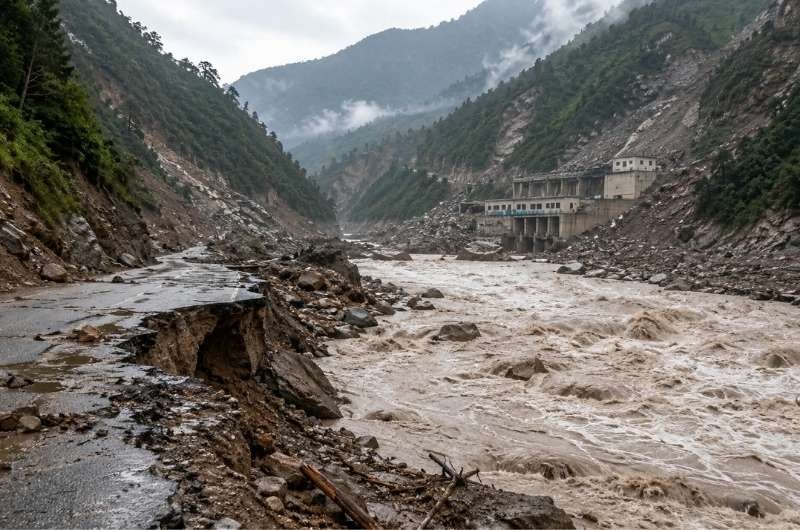
Rescue teams in Nepal are racing to reach hundreds of workers feared trapped inside hydropower tunnels after catastrophic flooding killed more than 900 people and left thousands missing across the Himalayan region. Nepal’s government said Monday that 903 bodies have been recovered and about 4,200 people remain unaccounted for, including roughly 590 foreign nationals. More than 10,000 people have been rescued. Across the border in Tibet, Chinese authorities have reported another 16 deaths and more than 500 people missing. The rescue effort is now increasingly focused on Nepal’s damaged hydropower facilities. An industry group estimates about 900 workers are unaccounted for across 12 hydropower projects, with at least 500 feared trapped in tunnels. Heavy deposits of mud and debris have blocked entrances and made reaching underground areas extremely difficult. Specialized tunnel-rescue teams from India and China are working alongside Nepali authorities, while South Korea has also deployed assistance. The disaster began Wednesday after a massive rockfall beneath a glacier high in the Himalayas sent rock, ice and meltwater crashing into river valleys below. The resulting torrent swept away buildings, bridges and roads across parts of Tibet and Nepal. Scientists studying satellite imagery said the initial collapse was powerful enough to register as a magnitude 5.2 seismic event. The destruction has also dealt a major blow to Nepal’s power system. Flood damage has knocked an estimated 700 megawatts of generating capacity offline — about 10% of the country’s total — exposing the vulnerability of hydropower infrastructure built along increasingly hazardous Himalayan rivers. Nepal says international assistance is already arriving from the United States, India, China, Japan, the United Arab Emirates, South Korea and other partners. With thousands still missing, however, the immediate priority remains finding survivors — particularly inside the buried hydropower tunnels where rescuers believe some workers may still be alive. ——————– Related: Glacier Collapse Triggers Catastrophic Floods in Nepal and Tibet, Leaving More Than 1,300 Missing
Judge Blocks Pentagon’s Anthropic Blacklist in Major Military AI Fight
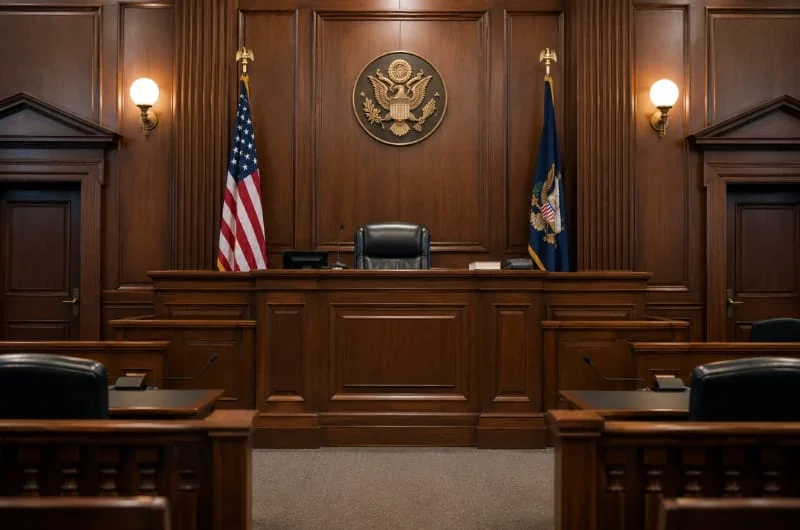
A federal judge has blocked the Pentagon from blacklisting Anthropic, ruling that the government illegally retaliated against the artificial intelligence company after it refused to allow unrestricted military use of its Claude AI models. U.S. District Judge Rita Lin ruled Thursday that the Pentagon’s decision to designate Anthropic a national-security supply-chain risk violated the company’s First Amendment rights and denied it due process. She also found Defense Secretary Pete Hegseth’s decision to blacklist the company was “arbitrary and capricious.” The confrontation began earlier this year after Anthropic sought restrictions preventing Claude from being used for mass domestic surveillance or fully autonomous weapons. Pentagon officials argued that the military should be able to use the technology for any lawful purpose. After Anthropic refused to abandon its safeguards, the administration moved to label the company a supply-chain risk and restrict its ability to do business with the federal government and military contractors. Lin concluded that national security could not be used to justify retaliation against a company for criticizing government policy. “The empty invocation of national security is not a blank check to punish and retaliate against government critics,” she wrote. The judge found that the government’s actions were aimed at making a public example of Anthropic rather than responding to evidence that the company posed an actual sabotage threat. The ruling blocks enforcement of the Pentagon’s supply-chain designation and related efforts to exclude Anthropic from federal government work. The government is expected to continue fighting the decision, while Anthropic has a separate, narrower case involving another Pentagon supply-chain action pending in Washington. The Readovia Lens The case reaches far beyond one AI company and one Pentagon dispute. As increasingly powerful AI systems move into intelligence, surveillance and weapons programs, technology companies and the federal government are confronting a fundamental issue: who ultimately decides what an AI system can be used to do? Anthropic drew its own line around two uses it considered too dangerous. This ruling establishes an important early limit on how far the government can go in punishing a company for refusing to erase that line.
You Talk About Something — Then an Ad Appears. Is Your Phone Really Listening?

You mention a particular brand of bathroom tissue at home. Later that day, an ad for the same brand appears on your phone. You never searched for it. You never typed the name. You only said it out loud. Experiences like that have fueled a persistent suspicion for years: Are our phones secretly listening to us? Now, a newly finalized Federal Trade Commission case has put that suspicion under an unusually bright spotlight — but not because regulators caught companies secretly recording consumers. The FTC says Cox Media Group, MindSift and 1010 Digital Works deceived advertising customers by claiming they could use conversations captured around smartphones and other smart devices to target ads. The companies promoted the service as an AI-powered advertising technology capable of identifying potential customers based on things they said near their devices. In one particularly striking marketing pitch, Cox described the concept this way: “Creepy? Sure. Great for marketing? Definitely.” According to the FTC, however, the companies were largely reselling consumer email lists obtained from other data brokers while charging customers substantially more for what was presented as a sophisticated voice-powered advertising product. The FTC also says the companies falsely assured advertising customers that consumers had consented to having their conversations collected and used for advertising. Regulators say that consent did not exist. That creates an unusual twist: the companies allegedly sold customers a technology by claiming it did something that, had it actually been done without adequate consumer consent, could itself have violated federal law. The companies will pay a combined $930,000, with Cox paying $880,000 and the other two firms paying $25,000 each. The case does not prove that smartphones never listen to conversations for advertising purposes, nor does it explain every strangely well-timed ad people encounter. What it does establish is something almost as remarkable: companies were selling advertisers a service based on essentially the same idea consumers have worried about for years — that smart devices could overhear everyday conversations and turn those words into targeted ads. The FTC says this particular service did not actually work that way. The Readovia Lens So why can advertising sometimes feel as though your phone must have overheard you? Modern advertising systems can assemble enormous amounts of information from browsing activity, purchases, location, app usage and other behavioral signals. Those systems can sometimes predict what interests you with enough accuracy to feel unsettling. Sometimes coincidence plays a role. And sometimes an ad may have already been appearing around you before you consciously noticed it. What makes the FTC case different is that “your phone is listening” wasn’t merely a consumer suspicion — it became a marketing pitch. Regulators say the technology behind that pitch wasn’t doing what advertisers were told it was doing. But the fact that companies believed the claim would be compelling enough to sell says something about just how believable the idea has become.
Federal Judge Blocks New Mail Voting Restrictions Ahead of Midterms

A federal judge has temporarily blocked new restrictions on mail-in voting from taking effect just days before states are scheduled to begin sending ballots for the November midterm elections. U.S. District Judge Indira Talwani issued a 14-day restraining order Thursday, halting key provisions of a new U.S. Postal Service rule implementing President Donald Trump’s executive order on mail voting. The rule would require states to provide the Postal Service with lists of voters receiving mail ballots and use envelopes meeting new federal requirements, including trackable barcodes. The timing was central to the judge’s decision. States argued that many have already ordered their mail ballots and do not have enough time or money to overhaul their election systems before voting begins. Talwani agreed, writing: “Plaintiff states have neither time nor funds to design new mail ballots, seek approval of the new designs, order production of mail ballots, update their own election management systems, train election officials to use the USPS portal and upload citizen data to the portal, all before the midterms.” The ruling comes only days after the Supreme Court cleared away an earlier legal block on the administration’s mail-voting effort. But the justices did so on procedural grounds, concluding that the earlier challenge had been brought prematurely because final implementation rules had not yet been issued. The Postal Service subsequently issued its final rule, allowing states and voting-rights organizations to renew their challenges. The latest order lasts for two weeks, with another hearing scheduled for September 3, and the dispute could quickly return to the Supreme Court. With nearly one-third of U.S. voters casting ballots by mail and some states preparing to send their first ballots as early as next week, the outcome could directly affect how mail voting operates in November’s elections.
Glacier Collapse Triggers Catastrophic Floods in Nepal and Tibet, Leaving More Than 1,300 Missing
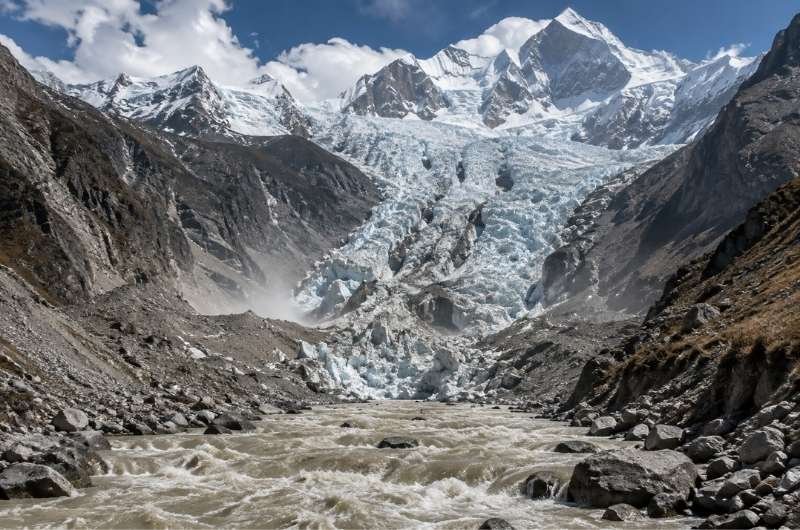
A massive glacier collapse along the Nepal-Tibet border has triggered catastrophic flooding and mudslides across the Himalayan region, killing at least 273 people and leaving more than 1,300 missing. Entire communities were hit by torrents of water, ice, rock and mud, while damaged roads and bridges have complicated efforts to reach survivors. The disaster struck Wednesday after part of a glacier collapsed high in the mountains, sending debris into the river system below. The U.S. Geological Survey initially detected what appeared to be an earthquake near the Nepal-China border, but later determined that the seismic event was actually a magnitude 5.2 glacier collapse. Researchers say water levels at one point along the Trishuli River rose by as much as 27 feet in roughly 30 minutes. The scale of the destruction extends across both sides of the border. Nepal has reported at least 270 deaths and 826 people missing, while authorities in Tibet have reported three deaths and 558 missing. Hundreds of foreign travelers and pilgrims are among those unaccounted for, including more than 60 Americans in Nepal. Helicopters have been deployed as damaged roads make some of the hardest-hit areas difficult to reach. Scientists are still working to determine exactly how the disaster unfolded. Preliminary evidence suggests a huge mass of ice and rock plunged into a river, potentially creating a temporary blockage before water surged downstream with enormous force. Homes, roads, bridges and other infrastructure were swept away or buried under thick mud, and more than 1,200 people have been displaced from several villages. The catastrophe is also drawing attention to the growing instability of the Himalayan ice system. Scientists caution that it is too early to directly attribute this particular glacier collapse to climate change, but the Hindu Kush Himalayan region is warming rapidly and its glaciers are retreating at an accelerating rate. As ice disappears and frozen mountain slopes become less stable, researchers warn that glacier collapses, landslides and sudden floods could pose an increasing threat to communities throughout the region.
Nvidia Just Gave Wall Street an Answer About the AI Boom
Nvidia just delivered one of the clearest signals yet that the enormous global buildout of artificial intelligence infrastructure is still accelerating, reporting $96.2 billion in quarterly revenue — more than double what the company generated a year ago. The world’s dominant supplier of AI computing chips said its Data Center business alone generated $89 billion during the quarter, up 117% from a year earlier. Nvidia is now forecasting approximately $108 billion in revenue for the current quarter, suggesting that demand for the computing power behind AI systems remains extraordinarily strong. Those numbers arrive as investors increasingly debate whether the hundreds of billions of dollars being poured into AI data centers can continue. Major technology companies are expected to spend more than $730 billion on AI infrastructure this year as companies race to secure chips, computing capacity and electricity for increasingly powerful AI systems. Nvidia remains at the center of that spending cycle. There are signs the expansion could continue well beyond this year. CEO Jensen Huang told investors Nvidia expects revenue to grow another 70% in fiscal 2028, while the company’s next-generation Vera Rubin platform has already entered full production. Nvidia also announced Wednesday that Amazon Web Services plans to deploy 2 million additional Nvidia GPUs during 2027 and 2028 as the companies dramatically expand their AI infrastructure partnership. The Readovia Lens For Nvidia, expectations have become almost as extraordinary as the results themselves. Its shares initially fell after Wednesday’s report before reversing higher as investors absorbed the company’s longer-term outlook. But the larger message from the quarter is difficult to miss: the companies building the infrastructure behind the AI economy are still spending — and Nvidia is still capturing an enormous share of that money.
ICE Arrests More Than 1,300 People in Two-Week Maryland and Virginia Operation

Federal immigration agents arrested 1,328 people across Maryland and Virginia during a sweeping two-week enforcement operation, according to the Department of Homeland Security, one of the largest recently disclosed immigration operations in the Washington region. The operation, called Operation Safe Community – Washington, D.C., ran from August 1 through August 14. DHS said nearly 400 of those arrested had either been convicted of or charged with crimes in the United States, including some people accused or convicted of serious offenses such as murder, attempted murder, rape, kidnapping, robbery and sexual battery. Most of the people arrested during the operation were not identified by DHS as having a U.S. criminal conviction or pending criminal charge. The agency has not released a complete list of those arrested or a detailed breakdown of their immigration histories. Maryland Gov. Wes Moore criticized the way the operation was carried out, saying state officials were not notified beforehand. Moore said he supports removing violent offenders but argued that broad immigration sweeps can undermine trust between communities and law enforcement. DHS, meanwhile, defended the operation as part of the administration’s expanded effort to arrest and remove people living in the country illegally. The operation comes amid a much larger increase in immigration enforcement nationwide. ICE arrests have risen sharply this year, while the Washington region has already experienced a significant increase in federal immigration activity. The latest two-week operation shows that Maryland and Virginia remain a major focus of that enforcement push.
Texas Wildfire Explodes to 80,000 Acres as Evacuations Continue
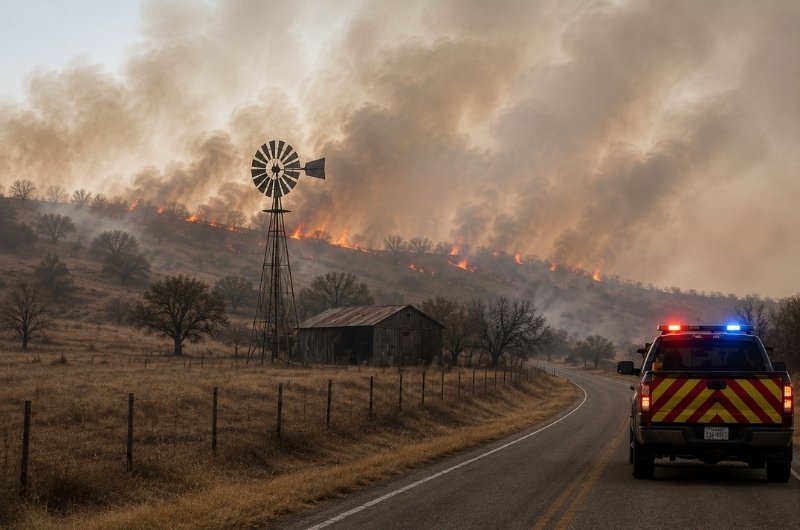
A fast-moving wildfire in North Texas has exploded to 80,000 acres, burning across two counties, damaging structures and forcing evacuations as firefighters struggle against dry conditions and shifting winds. The Ross Fire began Monday afternoon in Palo Pinto County, about 60 miles west of Fort Worth, before racing north into neighboring Jack County. By Wednesday morning, the fire had grown to approximately 125 square miles and was just 12% contained, according to the latest local reports. The speed of the fire’s expansion has been extraordinary. It grew to roughly 18,000 acres within its first 12 hours and reached 50,000 acres by Tuesday before expanding another 30,000 acres overnight. Hundreds of residents have been affected by evacuation orders or warnings, while roads have been closed and utility crews are working on damaged power infrastructure. The fire has also damaged or destroyed multiple structures. Worth Ranch, a historic youth camp in Palo Pinto County, suffered extensive damage, although the organization said no scouts, campers or guests were at the property when the fire arrived and the camp ranger evacuated safely. Authorities were still assessing the full extent of property losses Wednesday morning. More than 100 firefighters and aerial resources have been deployed against the blaze, while federal assistance has been approved to help Texas cover firefighting costs. With the Ross Fire still largely uncontained, emergency officials are urging people in threatened areas to follow evacuation instructions and avoid roads being used by firefighters and emergency crews.
U.S. Pauses Immigrant Visa Appointments Worldwide
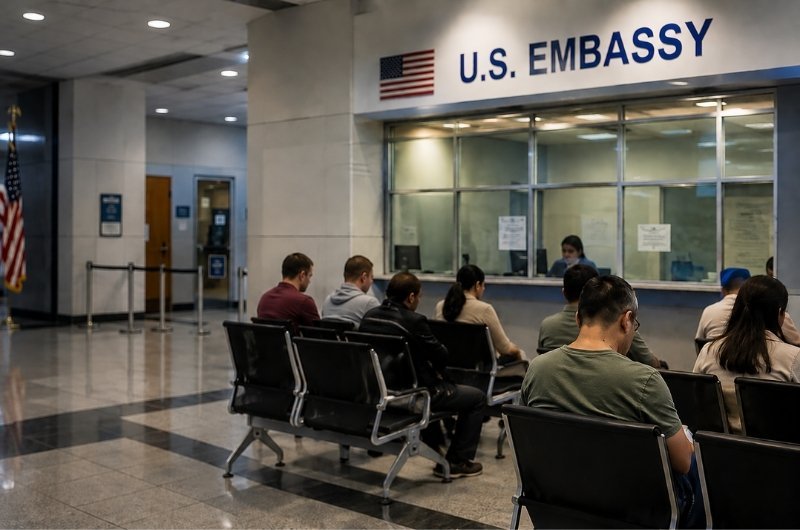
The United States has temporarily paused immigrant-visa appointments at embassies and consulates around the world, disrupting interviews for people seeking to move permanently to the U.S. as consular officers undergo new training. The State Department says the training is intended to strengthen and standardize how officers determine whether immigrant-visa applicants could become dependent on government benefits after arriving in the United States. Applicants with interviews already scheduled have been notified that their appointments will be rescheduled. The pause applies to immigrant visas, which are generally used by people seeking permanent residence in the United States. It should not be confused with the much broader category of nonimmigrant visas used by tourists, students, temporary workers and many business travelers. The new training centers on the government’s enforcement of the longstanding “public charge” provision of U.S. immigration law. Earlier this month, the State Department also announced a program allowing consular officers in some cases to require certain immigrant-visa applicants to post bonds of at least $5,000 when officers determine they could become a public charge. For people already moving through the legal immigration process, the immediate consequence is uncertainty. The State Department has not announced how long the worldwide appointment pause will last, leaving applicants whose interviews are postponed waiting for new dates before their cases can move forward.